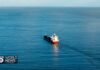
(PatriotNews.net) – President Trump’s U.S. Navy launches a naval blockade on Iranian ports today, spiking oil prices 7% to $102 per barrel and risking a wider war as Iran vows retaliation in the Strait of Hormuz.
Story Snapshot
- U.S. implements partial blockade at 10 a.m. EDT on April 13, 2026, targeting Iranian ports after failed peace talks.
- Brent crude surges 7% to $102/barrel, threatening global energy costs and economic stability.
- Iran labels U.S. action “piracy,” threatens to make no Gulf ports safe, heightening clash risks.
- UK and France refuse to join, pursuing separate diplomatic efforts for strait security.
Blockade Launch and Timeline
U.S. Central Command activated the naval blockade at 10 a.m. EDT on April 13, 2026, deploying the USS Abraham Lincoln carrier strike group, 11 destroyers, and USS Tripoli. President Trump ordered the Navy via Truth Social to interdict vessels paying tolls to Iran and destroy Iranian-laid mines. This partial measure exempts non-Iranian port traffic, focusing on ending Iran’s wartime control of the strait, through which 20% of global oil flows. The action followed collapsed U.S.-Iran talks in Pakistan on April 12, where Iran refused nuclear concessions.
Iran’s Response and Escalation Threats
Iran’s Khatam al-Anbiya Central Headquarters condemned the blockade as “piracy” and warned that no ports in the Persian Gulf will remain safe if Iranian ones are threatened. Iranian commanders vowed retaliation, including permanent control mechanisms for the strait, amid their use of mines, fast-attack boats, and “dark transits” for sanctioned oil. Trump countered by threatening to eliminate any approaching Iranian ships, signaling readiness for asymmetric threats. Ship traffic has dropped to just 10 vessels in the last 24 hours.
Global Allies Diverge from U.S. Strategy
UK Prime Minister Keir Starmer refused participation, deploying planners and minesweepers for post-hostility security while demanding unconditional strait reopening. French President Emmanuel Macron coordinated with the UK on a defensive multinational mission and plans a conference for post-conflict shipping. These allies prioritize diplomacy over U.S. pressure tactics, straining transatlantic ties during the ongoing war that began in late February. U.S. naval superiority faces Iranian disruptions despite the divergence.
The blockade represents targeted leverage for nuclear negotiations and energy market stability, avoiding full strait closure or bombing resumption. Analysts describe it as a “muted” escalation compared to prior options.
The Hormuz Blockade Starts Today. Oil Jumped 7%. Iran Is Preparing a Kill Zonehttps://t.co/nLxnsir4iu
— Harry J. Kazianis (@GrecianFormula) April 13, 2026
Economic and Broader Impacts
Brent crude jumped 7% to around $102 per barrel immediately after the announcement, with pre-war levels at $70. This disrupts 20% of global oil, fertilizer, and goods shipments, raising short-term energy costs worldwide and risking food insecurity from fertilizer shortages. Long-term, Iranian retaliation could expand the war, stall nuclear talks, and entrench strait control battles. Markets fell except oil, while defense sectors gain from tensions. Americans face higher pump prices, echoing frustrations with past policies that weakened energy independence.
Both conservatives and liberals share concerns over elite-driven foreign entanglements that burden working families with inflation and insecurity. This blockade underscores the need for America First resolve against regimes holding global commerce hostage, yet highlights government failures to shield citizens from elite wars and economic fallout.
Sources:
Live Updates: U.S. military blockade on Iranian ports in the Strait of Hormuz begins
Fortune article on US Navy blockade
ABC7 live updates on Iran war and Hormuz blockade
Copyright 2026, PatriotNews.net