
(PatriotNews.net) – Lava is once again on the move at Kilauea, and each eruption is a reminder that the world’s most active volcano holds the power to reshape Hawaii’s landscape and our sense of stability, at a moment’s notice.
Story Snapshot
- Kilauea, one of the world’s most active volcanoes, has erupted again on Hawaii’s Big Island.
- Lava began flowing from the crater following renewed activity, continuing a pattern of periodic eruptions since December 2024.
- These eruptions force locals and scientists alike to confront the volatility of living near, and depending upon, a restless giant.
- The United States Geological Survey continues to monitor the ongoing threat, as Kilauea’s behavior shapes both the physical and cultural landscape of Hawaii.
Kilauea’s Relentless Activity Redefines Normal
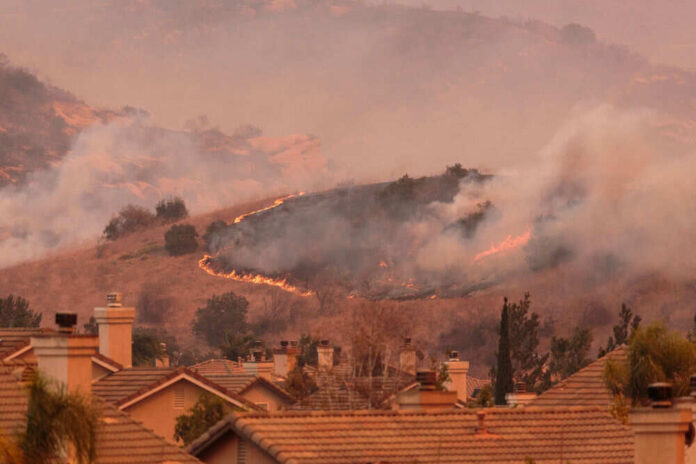
Kilauea’s eruptions have never been mere geological events, they are recurring reminders that nature’s timeline and human expectations rarely align. On Hawaii’s Big Island, the sight of molten lava snaking from the volcano’s crater has become almost routine since December 2024. This latest eruption underscores a reality that residents know intimately: stability here is always provisional, and every plume of smoke signals both risk and renewal. The United States Geological Survey’s declaration of ongoing activity at Kilauea is not just a scientific update; it’s a call for vigilance and respect in the shadow of a force that never truly rests.
Each eruption disrupts not only the land, but also the rhythm of daily life. Emergency services brace for potential evacuations. Air quality warnings ripple through communities as volcanic gases drift on prevailing winds. Tourists, drawn by the spectacle, sometimes find themselves uncomfortably close to the unpredictability of nature. For locals, the constant hum of scientific monitoring, seismographs, satellite imagery, and field reports, has become a background beat to everyday existence, a reminder that paradise is always on the edge of change.
Living in the Shadow of a Restless Giant
Residents of the Big Island do not just experience Kilauea’s eruptions, they adapt around them. The volcano’s periodic outbursts have shaped everything from local infrastructure to cultural identity. Schools and businesses practice evacuation drills with the same regularity as fire alarms. Families keep emergency kits at the ready, and public meetings about lava flow projections are as common as town festivals. Yet, there is also a strange sense of opportunity in the destruction: new land forms, ecosystems are reborn, and ancient cultural stories gain new chapters as lava reshapes the coastline.
Kilauea’s landscape tells a story of relentless transformation. Fresh lava fields from past eruptions jut into the sea, their black rock still warm beneath the sun. Roads are rerouted in real time, and generations of families build and rebuild in the volcano’s shadow, balancing hope with hard-earned caution. The volcano is both a threat and a guardian, its eruptions feared and revered in equal measure. For many Hawaiians, Kilauea embodies the living spirit of Pele, the goddess of fire, a presence to honor, not simply avoid.
Science, Faith, and the Unpredictable Future
Modern technology has improved our ability to predict Kilauea’s next moves, but certainty remains elusive. The United States Geological Survey’s monitoring network captures every tremor and temperature shift, offering critical minutes or hours of warning. Yet, as each fresh eruption begins, it is clear that science and tradition must work together to interpret what comes next. Scientists publish their findings; elders recount past eruptions. Both voices help communities prepare for what may come, but neither can guarantee safety in the face of Kilauea’s power.
Copyright 2025, PatriotNews.net