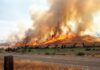
(PatriotNews.net) – Human carelessness ignites massive wildfires in drought-stricken Georgia, razing over 120 rural homes and exposing families to relentless flames fueled by government-neglected dry conditions.
Story Highlights
- Two major fires in southeast Georgia have destroyed more than 120 homes and threaten nearly 1,000 others across 38,000 scorched acres.
- Accidental human causes—a mylar balloon sparking a power line and welding on private property—triggered the blazes amid prolonged drought and high winds.
- Governor Brian Kemp toured the devastation, deploying National Guard aircraft while new evacuations and curfews displace around 200 residents.
- Containment remains critically low at 10-15%, with officials warning winds could erase progress overnight, demanding soaking rains that forecasts fail to deliver.
Fire Origins and Rapid Escalation
The Pineland Road fire ignited on April 18 in Clinch County from welding on private property, burning 31,000 acres and destroying 35 homes while threatening 160 more. Two days later, the Highway 82 fire erupted in Brantley County, likely when a mylar balloon contacted a power line, scorching 7,500 acres, leveling 87 homes, and endangering over 800 structures. Gusty winds and tinder-dry pine forests propelled both blazes, turning accidental sparks into infernos that state forestry battles daily.
Government Response Under Pressure
Governor Brian Kemp visited the burn zones on April 24, announcing over 120 homes lost and 1,000 at risk. He activated Georgia National Guard aircraft for aerial suppression and coordinated with the Georgia Emergency Management Agency for mandatory evacuations near Nahunta along Highway 110. Brantley County Manager Joey Cason imposed a curfew from 8:30 p.m. to 6:30 a.m., urging swift evacuations as containment hovers at 15% for the Highway 82 fire.
Crews deploy 25 fire trucks, tankers, and bulldozers to carve firebreaks and wet down threatened homes. The Georgia Forestry Commission handled 31 new small fires on April 23 alone, amid a statewide burn ban covering 91 southern counties. No injuries or deaths occurred, but around 200 residents fled, many fretting over pets and property returns.
Impacts on Rural Families and Economy
Rural communities in Brantley and Clinch Counties near the Florida border suffer most, with pine-heavy landscapes reduced to ash. Scorched vehicles and structures compound losses for working families who built lives through hard work, now facing rebuilding amid resource strains on insurance and forestry sectors. Agriculture takes a hit from 39,000 charred acres, disrupting local livelihoods.
Growing Georgia wildfires have destroyed 120 homes, forcing new evacuations https://t.co/IpMOTSm3wh
— The Washington Times (@WashTimes) April 24, 2026
Social fallout includes school closures in Brantley County and air quality alerts from smoke plumes reaching metro Atlanta. Residents voice fears over animal welfare and home security, highlighting how federal drought mismanagement and lax enforcement of burn bans leave everyday Americans vulnerable to elite oversight failures.
Expert Warnings and Path Forward
Forestry officials stress wind shifts could drop containment to zero, demanding “soaking rain” beyond the 20-40% weekend shower odds. Human ignition sources underscore prevention needs in flammable rural zones. While state leaders like Kemp rally resources, frustrations mount across political lines—conservatives decry green policies worsening drought vulnerability, liberals lament aid shortfalls—revealing a shared distrust in distant bureaucrats prioritizing power over people.
Sources:
WSB-TV: Georgia wildfires, Gov. Brian Kemp touring damage
KIRO7: Wildfire updates in Georgia
Copyright 2026, PatriotNews.net