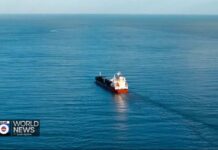

As cheap naval drones spread around the globe, America’s hard‑won control of the seas is being quietly tested in the very chokepoints that keep our economy and security alive.
Story Snapshot
- Ukraine’s sea drones show how low-cost boats can push major fleets back from key waters.[1][2]
- Analysts warn that swarms of unmanned boats and subs could threaten carriers and sea lanes.[2][3][7]
- The U.S. Navy is racing to add its own unmanned ships, but says they will supplement, not replace, traditional fleets.[4][5][7]
- Strategic chokepoints like the Black Sea and Taiwan Strait could become “drone kill zones” if America falls behind.[1][2][5]
How Ukraine’s Sea Drones Shook Old Ideas About Naval Power
Ukraine’s war at sea has become the main case study for how small states can hit big navies using cheap, unmanned boats.[1][2] Analysts at Georgetown University say Ukraine “redefined maritime warfare” by using uncrewed surface vessels to wear down Russia’s Black Sea Fleet.[1] These boats, loaded with explosives and guided by remote operators and sensors, helped force Russian warships away from parts of the Black Sea and even threatened ports, bridges, and bases that once looked safe.[1][2][4]
Small Wars Journal explains that Ukraine’s low-cost, explosive unmanned surface vessels proved that “small, inexpensive drones can damage or deter much larger naval forces.”[2] Ukraine did not need a big navy to deny Russia full freedom of action near Crimea and in key coastal zones.[1][2] A study on sea denial notes that strikes on Russian ships and infrastructure in Sevastopol became one of the clearest examples of drones blocking an enemy’s use of the sea. Together, these examples show how sea power is no longer only about giant ships and big budgets.[1][2]
Why Autonomous Swarms Turn Chokepoints Into Vulnerable “Kill Zones”
Experts warn that drone boats gain even more power in tight, narrow waters where ships have less room to maneuver.[1][2][5] Georgetown’s research points to “constrained seas, like the Black Sea, Baltic, and Taiwan Strait,” as places where uncrewed surface vessels gain huge leverage.[1] In these chokepoints, swarms of cheap drones can attack from many angles, soak up defensive fire, and still slip through to hit high-value targets like carriers, tankers, and logistics ships.[1][2]
Small Wars Journal describes a future “hellscape” at sea where massed drones could overwhelm a carrier strike group’s layered defenses by saturating radars and burning through interceptor missiles.[2] A paper from Liverpool John Moores University calls these systems “a strategic equaliser,” arguing that drones can “compensate for numerical and economic disadvantages” and challenge the “global naval hierarchy.”[3] Another study on autonomous systems says that weaker navies can now impose risk “at a fraction of the cost,” especially in sea lanes and chokepoints that America has long relied on.
America’s Navy Bets Big On Unmanned Ships – But Says Carriers Still Matter
The United States Navy is not ignoring this shift; it is trying to harness it.[4][5][7] A detailed modernization briefing says the Navy is “officially integrating unmanned vessels directly into its long-term shipbuilding strategy,” including medium unmanned surface vessels and extra-large unmanned underwater vehicles.[4][7] These craft are meant to scout ahead, carry sensors and weapons, and extend the reach of crewed ships in what the Navy calls distributed maritime operations and the “Ghost Fleet” concept.[4][5][7]
French shipbuilder Naval Group, which works with allied navies, advertises a full line of underwater and surface drones to support “dronisation” of naval forces.[6] A separate study on underwater autonomous systems notes that Western navies already use remotely operated underwater vehicles for mine warfare and see “a limitless revolution” coming as more missions go unmanned.[7] However, these sources stress that unmanned systems are being added to traditional fleets, not replacing carriers, destroyers, and submarines outright.[4][6][7] That means sea control still depends on strong manned forces backed by smart technology, not tech alone.
What This Means For Pax Americana And Conservative Concerns
The phrase “End of Pax Americana at Sea” appears often in media and think tank debates, but the hard evidence is mixed.[1][2][3][4][6] The Ukraine case proves that drones can deny parts of the sea to a stronger fleet and raise costs for an occupying power.[1][2] It does not yet prove that America has lost control of global shipping lanes, or that aircraft carriers are suddenly obsolete.[2][3][4] Analysts admit that most data comes from the Black Sea and a few high-profile incidents, not from every ocean.[1][2][3][4]
⭕️ The first combat rescue operation using an American drone in the Arabian Sea
The U.S. Navy announced that to rescue two Apache helicopter pilots shot down near the Strait of Hormuz, it used the "Corsair" unmanned surface vehicle drone.
This is the first time an autonomous…— Alex kennedy (@Alexkennedy213) June 10, 2026
For conservatives who care about a strong defense and free trade, the stakes are clear. If hostile regimes and non-state actors can cheaply threaten tankers, undersea cables, and patrol ships with swarms of drones, then American deterrence at sea must adapt fast.[2][5] Studies warn that media hype, defense-industry marketing, and limited public data can all distort the debate.[1][2][3][4] But they also warn that ignoring the shift would be worse.[1][2] A serious, constitutional approach means staying strong at sea, controlling costs, and demanding real proof that new systems work before betting our security on them.
Sources:
[1] Web – The End of Pax Americana at Sea
[2] Web – Swarm at Sea: Autonomous Naval Drones and the Erosion of …
[3] Web – Unmanned Maritime Warfare: A New Naval Era – Small Wars Journal
[4] Web – [PDF] The autonomous navy – LJMU Research Online
[5] YouTube – Drone Warships Are Changing Naval Warfare Forever
[6] Web – [PDF] Enhancing maritime infrastructure security through AI-driven …
[7] Web – Drones | Naval Group
© patriotnews.net 2026. All rights reserved.