
patriotnews.net — Taiwan’s new president says he is “happy” to talk directly with Donald Trump, turning a routine arms decision into a high‑stakes test of American strength against communist China.
Story Snapshot
- Taiwan President Lai Ching-te says he is willing to speak directly with President Trump as Washington weighs a multibillion-dollar weapons sale.
- Trump has publicly confirmed he plans to talk with “the person that’s running Taiwan” as part of his decision on the arms package.
- Beijing warns that high-level contact violates its “one China” red line, but Taiwan urges continued U.S. support to deter aggression.
- The episode shows how Trump’s second-term America First approach is reshaping the delicate balance between peace and capitulation in the Taiwan Strait.
Trump Signals Direct Talk With Taiwan’s Leader
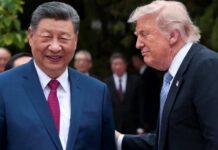
President Donald Trump told reporters he is preparing to speak with Taiwan’s President Lai Ching-te as part of his decision on a major new arms package for the island democracy, confirming that he wants to hear directly from “the person that’s running Taiwan” before signing off on the deal.[1] Trump has already described recent talks with Chinese leader Xi Jinping as “great,” but added that “we’ll work on that, the Taiwan problem,” signaling he views the issue as unfinished business.[1][4]
Taiwan’s Ministry of Foreign Affairs quickly responded that President Lai is open to talks with Trump and committed to maintaining a stable status quo in the Taiwan Strait. Taiwanese officials have urged Washington to continue and even expand arms sales to ensure “regional peace and security,” arguing that deterrence is the only language Beijing respects.[2] Their position aligns with long-standing American commitments under the Taiwan Relations Act, but the format of leader-to-leader contact would mark a rare escalation in visibility.
Lai Says He Is ‘Happy’ To Talk – And What He Wants From Trump
Public comments from Taipei emphasize that Lai would be “willing” and even “happy” to speak directly with Trump, framing such a call as a chance to underscore that Beijing’s behavior, not Taiwan’s democracy, is destabilizing the region. Taiwan’s government has consistently called for more advanced fighter jets, air defense systems, and coastal missiles to counter China’s rapid military build-up just across the strait, and it views the proposed multibillion-dollar package as essential to raising the cost of any invasion attempt.
Taiwan’s top representative in Washington has said talks with the Trump administration on defense cooperation are “ongoing” as the arms deal looms, describing a sense of urgency as China increases sorties, naval drills, and gray-zone pressure around the island. For conservative Americans who believe peace comes through strength, Lai’s outreach fits a straightforward logic: a free ally wants to buy American weapons, stand on its own feet, and resist communist coercion, rather than ask for American troops. That model contrasts sharply with decades of globalist nation-building that spent trillions while delivering little security at home.
Beijing’s Red Lines Collide With America First Realism
Chinese officials and state media portray any direct talk between a United States president and Taiwan’s elected leader as an unacceptable breach of diplomatic protocol, rooted in Beijing’s claim that Taiwan is part of its territory.[3][4] China has repeatedly warned that mishandling Taiwan could create a “very dangerous situation” and insists that “Taiwan independence and cross-strait peace are as irreconcilable as fire and water,” treating even symbolic contact as a threat to its narrative. Every American move is therefore tested against these loud, choreographed warnings.
This standoff fits a long-running pattern where the symbolism of contact matters as much as the substance. Since Washington switched formal recognition from Taipei to Beijing in 1979, direct leader-to-leader interactions have been extremely rare, which is why even the possibility of a Trump–Lai call generates diplomatic shockwaves.[2][3] Analysts describe United States policy as “strategic ambiguity” — keeping China guessing about what Washington would do in a crisis while still providing Taiwan the means to defend itself.[2][4] Trump’s America First approach pushes against that ambiguity by tying decisions more openly to American leverage, trade, and deterrence rather than vague multilateral assurances.
Why This Matters To U.S. Conservatives
For many conservative voters, the Taiwan episode is a litmus test of whether Washington finally stands up to authoritarian bullies instead of bending to globalist pressure. Trump has been clear that he is “not looking to have somebody go independent,” signaling he is not chasing some utopian redrawing of maps, but he has also rattled ties with China simply by saying he will speak to Taiwan’s president when it serves American interests.[2] That posture treats diplomacy as a tool, not a sacred script written in Beijing or Foggy Bottom.
US President signals possible talks with Taiwan President Lai
This as the Taiwan Strait remains a flashpoint in China-US relations
President Lai welcomes a possible Trump call@BislaDiksha has more on this pic.twitter.com/ynTB7rvbCI
— WION (@WIONews) May 21, 2026
The stakes go beyond one phone call. A strong arms deal supports American manufacturing, deters war without deploying U.S. troops, and tells every ally and adversary that the United States will not abandon free societies under threat. If China’s outrage once again pressures Washington to water down support, it would echo the same pattern conservatives resent at home: unelected elites lecturing about “stability” while undermining sovereignty, strength, and common sense. If Trump follows through, listens directly to Lai, and approves serious defensive firepower, it would be a rare win for clarity in a world addicted to empty talking points.
Sources:
[1] Web – Trump says he’ll talk to Taiwan’s president amid arms deal … – …
[2] YouTube – Trump rattles ties with China after claiming he will speak …
[3] Web – Trump–Tsai phone call – Wikipedia
[4] Web – Media Briefing: Making Sense of the Trump-Xi Summit
© patriotnews.net 2026. All rights reserved.