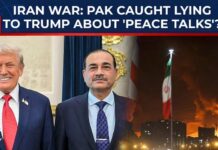

(PatriotNews.net) – Trump just ordered a pause on strikes against Iran’s power grid based on “very good” talks that Tehran says don’t even exist—leaving Americans to wonder who is steering U.S. war policy, and how close we are to the next escalation.
Story Snapshot
- President Trump says the U.S. and Iran are in “good and productive” talks and ordered a five-day delay of planned strikes on Iranian power plants and energy infrastructure.
- Iran’s foreign ministry and Iranian state-linked outlets flatly denied negotiations, framing Trump’s claim as a tactic to lower energy prices and buy time.
- The pause applies to energy infrastructure strikes, not necessarily every military action, and it arrives on Day 24 of the Iran war after major February strikes.
- The public contradiction adds to uncertainty about who is negotiating, what terms are on the table, and what happens when the five-day window ends.
Trump’s five-day pause: what was announced, and what wasn’t
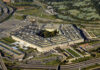
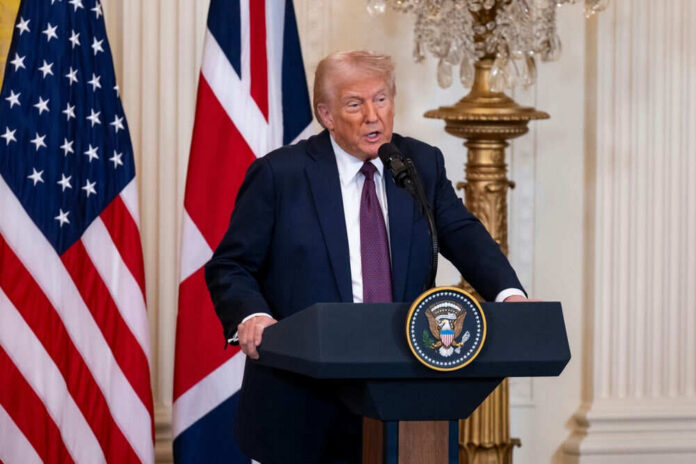
President Trump announced on March 23, 2026, that the U.S. is engaged in “good and productive” talks with Iran and said he instructed the Pentagon to postpone planned strikes on Iranian power plants and energy infrastructure for five days, contingent on the talks’ success. The announcement did not clarify the location of any talks, who the Iranian interlocutors are, or how the U.S. will verify progress while active hostilities continue.
Trump later reinforced the message while speaking to reporters, projecting optimism and saying there is a “very good chance” of a deal. He also described a possible outcome that includes the U.S. taking control of Iran’s enriched uranium. That claim—if accurate—would represent a major shift in leverage and verification, but the public record available so far does not include a signed framework, agreed inspection mechanism, or confirmation from Iran.
Tehran’s denial and the credibility gap in wartime messaging
Iran quickly rejected the premise of negotiations. Iranian media and the foreign ministry denied talks were underway and accused Trump of manufacturing the story to reduce energy prices and delay military action. The immediate clash—Washington describing “productive” diplomacy while Tehran says there is none—creates a credibility gap that matters operationally. In a shooting war, mixed signals can move markets, shape allied planning, and raise the risk of miscalculation.
The U.S. statement focuses on pausing attacks on energy infrastructure rather than nuclear sites. That distinction is important because strikes on power generation and related grids can carry significant humanitarian and regional economic consequences, while also impacting oil and gas price expectations. At the same time, the limited pause underscores that military pressure remains part of the posture. If negotiations are real, the five-day clock sets a near-term test—either for de-escalation, or for a sharper next phase.
How the war reached Day 24: deadlines, strikes, and the post-Khamenei vacuum
The current moment follows months of escalating deadlines and failed bargaining. Reporting summarized in Arms Control Association’s timeline describes Trump’s 2025 letter demanding sweeping Iranian concessions and a compliance deadline, followed by renewed talks in 2026. A third round of Geneva discussions—facilitated through Oman—produced claims of “substantial progress,” but the process quickly deteriorated. On Feb. 28, the U.S. and Israel launched “Operation Epic Fury” strikes, and Iran retaliated across the region.
That February escalation reportedly killed Ayatollah Ali Khamenei and senior advisers, leaving uncertainty about Iran’s command structure and who can authorize concessions. The IAEA, according to the same reporting, assessed in early March that it had not found evidence of a structured Iranian nuclear weapons program and urged restraint. Those findings complicate the public justification for widening strikes while also highlighting why verification and diplomacy—if genuine—remain central to avoiding an open-ended conflict.
What this means for MAGA voters: war powers, energy costs, and the “no new wars” promise
MAGA-aligned voters are split: many support tough pressure against Iran, while others are openly exhausted by another Middle East war and wary of commitments that look like regime-change by another name. The research indicates questions about congressional authorization have followed the earlier strikes, putting war powers and constitutional checks back into the spotlight. For voters already angry about inflation and high energy costs, the suggestion that wartime messaging is shaped by energy-price optics will intensify distrust.
The most immediate practical question is what happens when the five-day pause ends. If backchannels exist, the public contradiction could be cover for negotiations—or evidence that no workable channel is operating. Either way, Americans should watch for concrete indicators: named negotiators, verifiable terms on enrichment and inspections, clear limits on targets, and a defined end state that avoids a permanent U.S. military footprint. Limited public detail means key facts remain unclear.
Sources:
https://www.armscontrol.org/act/2026-03/news/trump-strikes-iran-amid-nuclear-talks
https://en.wikipedia.org/wiki/2025%E2%80%932026_Iran%E2%80%93United_States_negotiations
https://www.timesofisrael.com/liveblog_entry/watch-trump-speaking-to-reporters-about-iran/
Copyright 2026, PatriotNews.net