
(PatriotNews.net) – New York City mayor-elect’s plan to halt homeless encampment sweeps is raising red flags that the city could trade basic order and safety for a dangerous progressive experiment.
Story Snapshot
- Mayor-elect Zohran Mamdani wants to end NYPD-backed homeless encampment sweeps in New York City.
- A former top NYPD official warns the plan will fuel shanty towns and undermine public safety.
- The clash highlights the broader failure of left-wing urban policies on crime, homelessness, and quality of life.
- Conservatives see the episode as proof that ideology is again trumping common sense in blue cities.
Far-Left Mayor-Elect Targets Encampment Sweeps
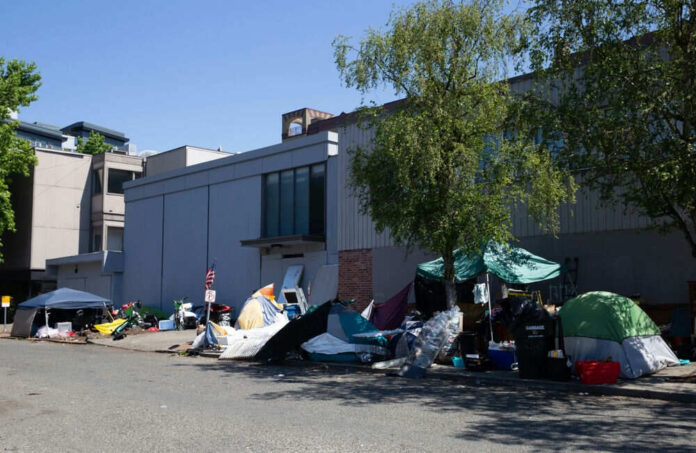
Mayor-elect Zohran Mamdani, a self-described far-left politician, is signaling that his administration will end homeless encampment sweeps across New York City. His approach reflects years of progressive rhetoric that treats enforcement as the problem, rather than the breakdown of order on city streets. Instead of backing police and sanitation teams that clear unsafe encampments, Mamdani’s plan prioritizes a softer posture likely to keep tents, trash, and open-air disorder embedded in neighborhoods already struggling.
A former senior NYPD official publicly blasted Mamdani’s proposal, warning that New Yorkers “don’t have time for experiments” when it comes to basic safety and livability. From a policing perspective, encampment sweeps are not about cruelty; they are about preventing public spaces from turning into lawless zones where crime, drug use, and exploitation flourish. The ex-cop’s criticism highlights a key concern: when leaders abandon enforcement, vulnerable people and law-abiding residents both pay the price.
Risks of Shanty Towns and Declining Quality of Life
The former NYPD chief predicts that ending sweeps will trigger a “sharp rise in shanty towns” along city streets, a scenario Americans have already watched unfold in cities like San Francisco, Portland, and Los Angeles. Once tent cities take root, they rarely stay small. Residents face blocked sidewalks, aggressive panhandling, and open drug markets, while businesses watch customers flee. Families who followed the rules and paid high city taxes are left wondering why public officials refuse to protect basic standards.
Zohran Mamdani ripped by ex-NYPD chief over ending homeless encampment sweeps: ‘Don’t have time for experiments’ https://t.co/7Bgc1DXuiX pic.twitter.com/5FQglEHGeQ
— New York Post (@nypost) December 5, 2025
Law enforcement veterans understand that encampments create magnets for crime and exploitation, even when most individuals there are simply down on their luck. Dealers move in, predators target the mentally ill, and social services struggle to operate in chaotic, unregulated spaces. When mayors order agencies to stand down, the result is not compassion but abdication. The people who suffer most are often the homeless themselves, who are left in dangerous conditions rather than moved toward structured help.
Progressive Experiment Versus Public Safety Reality
Mamdani’s push fits a broader pattern in progressive governance: treat enforcement as inherently oppressive, while promising that more “services” alone will solve complex problems. Over the past decade, left-leaning city halls have cut or constrained police activity, limited prosecutions, and tolerated encampments in the name of “equity” and “decriminalization.” The results have rarely matched the rhetoric. Crime spiked, downtown cores emptied out, and families who could afford to leave did so, often heading to red or purple states.
For conservatives, New York’s latest experiment is a reminder of why strong borders, strong policing, and local accountability matter. While the federal government under President Trump focuses on closing the border, enforcing the law, and defending communities, many blue-city leaders seem determined to double down on failed ideas. When city halls decide sidewalks are optional housing and laws are merely suggestions, ordinary citizens lose confidence that government still sees their safety and property rights as worth protecting.
Homelessness Policy, Ideology, and Constitutional Concerns
Ending encampment sweeps also raises deeper questions about equal protection and the rule of law. When some residents must follow zoning rules, health codes, and tax laws while others are effectively allowed to set up long-term camps on sidewalks or in parks, government sends a clear message that the law no longer applies evenly. That kind of selective tolerance erodes faith in institutions and fuels resentment among working- and middle-class families already squeezed by taxes and inflation.
Conservatives argue that genuine compassion combines enforcement with real pathways off the street: addiction treatment, mental health care, job opportunities, and clear expectations. Sweeps, when paired with services, are one tool to prevent public spaces from becoming permanent encampments. By branding enforcement as inherently cruel, politicians like Mamdani sidestep their responsibility to protect both the homeless and the communities around them. The ex-NYPD chief’s warning underscores how dangerous that abdication can become in a city as dense as New York.
As New Yorkers brace for this policy shift, the contrast with the national mood under a new Trump administration is hard to miss. Many Americans voted for a course correction away from the chaos of unchecked urban disorder, open borders, and ideological experiments. If Mamdani proceeds, New York could become a test case in whether voters will again tolerate policies that ignore practical experience from police, undermine quality of life, and treat their city as a laboratory rather than a community to be protected.
Copyright 2025, PatriotNews.net








![🇺🇸 President Trump Delivers Remarks at Faith & Freedom Coalition Conference in Washington, DC [LIVE]](https://patriotnews.net/wp-content/uploads/sites/6/2026/06/maxresdefault-75-100x70.jpg "Religious Liberty ‘Under Siege,’ Trump Warns")