
(PatriotNews.net) – A private military figure long demonized by the Left is now at the center of a high-stakes African security deal involving drones, foreign contractors, and a strategic town in Congo.
Quick Take
- Reports say Erik Prince reached a 2025 agreement with the Democratic Republic of Congo and later deployed drone operators and Israeli contractors.
- The mission is described as supporting Congo’s army in securing a strategic town, but public details about the objective and rules of engagement remain limited.
- A Rwandan official has raised concerns with the African Union and United Nations, signaling regional friction over Congo’s reported use of foreign contractors.
- With sparse on-the-record specifics, the story highlights how modern conflicts increasingly rely on privatized expertise and drone surveillance.
What the Reports Confirm About Prince’s Congo Deployment
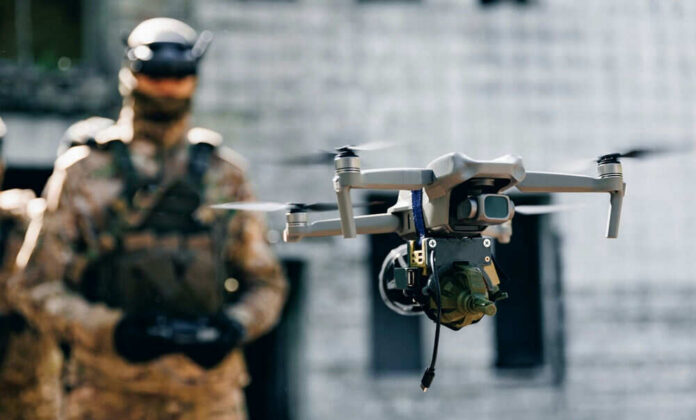
Reporting published February 11, 2026, says Erik Prince—founder of Blackwater—signed a deal with the Democratic Republic of Congo in 2025 and later sent a team to assist Congolese forces. The reporting describes a deployment that included drone operators and Israeli contractors working in support of Congo’s army to help secure a strategic town. The available information does not specify the town, the precise mission scope, or how success is being measured.
The limited public detail matters because contractor involvement can range from training and logistics to operational support, and those categories carry very different political and legal implications. The reporting available here does not provide a full breakdown of roles, command authority, or oversight structures. Without those specifics, outside observers are left to infer intent based on reputation—exactly the kind of information vacuum that tends to fuel propaganda, conspiracy claims, and international finger-pointing.
Regional Pushback: Rwanda Raises the Issue at the AU and UN
A second report states that Rwanda’s government, through a senior official, pressed concerns with the African Union and the United Nations over Congo’s use of mercenaries. That diplomatic escalation signals the issue is not merely a domestic security choice for Congo; it is now part of a broader regional dispute. What cannot be confirmed from the provided material is whether the complaint focuses on legality, escalation risk, cross-border security, or the wider politics of eastern Congo.
This is where Americans should separate confirmed facts from narrative framing. The confirmed point is the existence of regional opposition being raised in major international forums. The unconfirmed piece—based on the limited research provided—is the full evidentiary basis behind the complaint and how the AU or UN will respond. With the sources short on operational detail, it is not possible to fairly assess whether the criticism is grounded in documented misconduct or primarily reflects geopolitical rivalry.
Why Drones and Contractors Keep Appearing in Modern Conflicts
Drones and contractor expertise have become common in conflicts where governments want rapid capability without years of building a specialized force. The reporting indicates drone operators were part of the effort, suggesting surveillance, targeting support, or perimeter monitoring could be involved. Still, the sources provided do not spell out what the drones were used for, what systems were deployed, or how civilian-risk mitigation is handled—details that typically determine whether such a program stabilizes a region or worsens it.
For a U.S. audience burned out on elite “nation-building” theories, one clear lesson is that other governments continue to shop for private solutions when state institutions are strained. That is not automatically good or bad; it depends on transparency, accountability, and mission limits. The current research set does not include contract terms, host-government oversight, or independent verification of outcomes. Any stronger conclusion would require additional reporting beyond what is provided here.
What’s Still Unknown—and Why That Gap Matters
The most important missing facts are basic: the identity of the town, the timeline from the 2025 agreement to the 2026 deployment, the size of the team, and whether personnel are restricted to training or provide operational support. Those gaps affect how readers interpret the story, because the line between advising and direct combat involvement changes both legal exposure and political accountability. The existing sources also do not provide third-party audits, casualty figures, or concrete metrics tied to the security objective.
Until more documentation is public—contract language, official statements, or detailed on-the-ground reporting—the responsible takeaway is narrow: credible outlets report that Prince-linked personnel and drones were sent to support Congo’s army, and that Rwanda has elevated concerns to international bodies. Everything beyond that is still a matter of incomplete information. Readers should watch for specifics about command-and-control, rules of engagement, and any UN or AU actions that follow.
Sources:
Nduhungirehe presses AU, UN over DR Congo’s use of mercenaries
Copyright 2026, PatriotNews.net