(PatriotNews.net) – America’s military is about to break free from China’s chokehold on critical supplies, and the shockwaves will be felt far beyond the Pentagon’s gates.
Story Snapshot
- Defense Secretary Pete Hegseth vows to end U.S. military reliance on foreign, especially Chinese, suppliers for key defense materials.
- Congress and the Trump administration are backing this shift with a $150 billion domestic investment and sweeping policy reforms.
- China’s control of 80% of the world’s lithium-ion battery supply has triggered urgent U.S. action.
- Industry leaders, lawmakers, and security experts warn the stakes are nothing less than national survival.
U.S. Defense Supply Chains: A Ticking National Security Clock
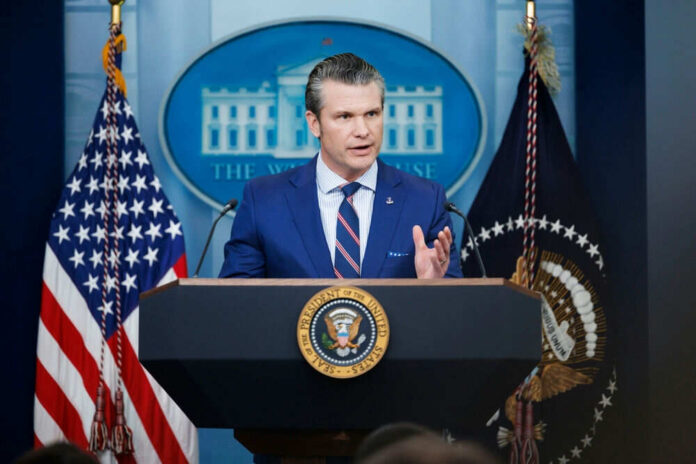
Pete Hegseth, Secretary of Defense, issued a direct challenge not just to rivals abroad, but to decades of American complacency at home: the U.S. military will no longer depend on foreign suppliers for its most vital systems. This landmark announcement, made on Fox News and reinforced in Congressional testimony, comes as China’s grip on essential minerals and batteries tightens, threatening to turn a global resource advantage into an American Achilles’ heel. The Foundation for Defense of Democracies revealed that China now dominates more than 80% of the world’s lithium-ion battery chain, an unignorable vulnerability when modern warfare increasingly runs on high-capacity batteries and rare metals. Hegseth’s solution is neither incremental nor rhetorical: a sweeping $150 billion defense spending bill, immediate directives to the Department of Defense, and a promise that “every component” of future U.S. weapons, vehicles, and communications will be sourced at home.
Military contractors, policymakers, and industry CEOs are scrambling to adjust. The Defense Department’s chief information officer has already purged China-based engineering teams from sensitive cloud projects. Congressional Armed Services Committees are holding hearings on the pace of supply chain reforms, and American mining firms are dusting off plans for new rare earth mines and battery factories. The Trump administration’s tariffs are biting, but the bigger bet is on unleashing a new wave of domestic industry capable of supplying everything from smart munitions to the raw minerals that power them.
Why China’s Grip Became America’s Nightmare
China’s dominance is no accident. Since the 1990s, the U.S. offshored mining, electronics, and even some arms manufacturing to chase lower costs, ignoring the creeping risk that foreign suppliers might one day wield economic leverage as a weapon. As relations with Beijing soured and the Ukraine conflict exposed Western defense vulnerabilities, the Pentagon’s quiet dependence became a crisis. Congressional investigations uncovered Chinese engineers working on Department of Defense cloud systems. Past trade disputes resulted in rare earth shortages and cybersecurity breaches. The current push for independence is not just a reaction to headlines, it’s a response to a generation’s worth of warnings finally coming due.
Legislators, armed with grim FDD reports and pressure from constituents, have reauthorized the Defense Production Act and boosted the Pentagon’s budget. The message from Washington is clear: no more half-measures. The stakes, as laid out by Hegseth and echoed by defense experts, are existential. If China chose to withhold critical minerals, it could cripple the U.S. military’s ability to field advanced weapons, turning a supply chain hiccup into a battlefield defeat.
The Domestic Comeback: Challenges and Consequences
The transition to American-sourced defense supplies is already unleashing a tidal wave of consequences. U.S. contractors see new opportunities for growth and job creation, but also face disruptions as old contracts with Chinese suppliers are shredded. Expect short-term delays as new mines, factories, and logistics networks come online. Higher costs are likely, at least initially, as U.S. firms scale up production and navigate stricter environmental and labor standards. Yet, the promise is a military supply chain immune to foreign sabotage, one that puts American workers and innovation back at the center of national defense.
Long-term, the move could spark a renaissance in U.S. manufacturing and mining, reversing decades of decline in the industrial heartland. Foreign suppliers, especially those in China, will lose lucrative contracts. Allies may be forced to rethink their own sourcing strategies, potentially leading to a new era of “friend-shoring” among trusted partners. The ripple effects will be felt in global markets for minerals and advanced technologies, driving up prices and intensifying competition worldwide.
Expert Views: Common Sense Meets Cold Reality
Security analysts argue that the new policy is overdue, America cannot afford to let adversaries hold its military capabilities hostage. Defense industry leaders back multi-year procurements to ensure supply chain stability, while technology experts warn that even a single foreign engineer in a sensitive project could introduce catastrophic risk. Academics acknowledge higher costs and transition pains, but point out that true security is never cheap. Some voices argue for a balanced approach, suggesting the U.S. keep some supply links with trusted allies rather than attempt pure self-sufficiency. Yet, with national survival on the line, most agree: the time for half-measures is over.
Policymakers are betting that Americans, and their allies, will accept higher prices in exchange for a military that cannot be blackmailed or stalled by foreign powers. The era of “just-in-time” global supply chains is giving way to a new doctrine: “just-in-America.” Whether this bold experiment succeeds will depend on the speed, ingenuity, and grit of the American people and the industries that serve them. The world is watching, and so are America’s adversaries.
Copyright 2025, PatriotNews.net