As Washington talks peace while quietly moving troops and warships, Iran is openly daring the United States to try a ground invasion it says it has spent decades preparing to fight.
Story Snapshot
- Iran’s leaders accuse the U.S. of plotting a secret ground invasion while publicly pushing diplomacy.
- Thousands of American troops and Marines are now deployed near Iran, giving the president real options.
- Senior Iranian voices boast they “want” a land invasion and claim U.S. forces would face disaster.
- Mixed signals from Washington deepen public distrust that elites are honest about war and its costs.
Iran Claims the US Is Plotting a Ground Attack
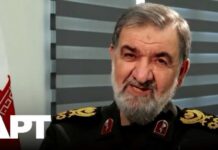
Iranian Parliament Speaker Mohammad Bagher Ghalibaf has become the loudest official voice warning that the United States is secretly planning a ground attack on Iran while talking about negotiations in public. He told Iranians the “enemy openly sends messages of negotiation and dialogue, but secretly plans a ground attack,” and said Iranian forces are ready to “set [U.S. troops] on fire” if they step onto Iranian soil. State media amplified his remarks as proof that Washington’s diplomacy is only a cover for war.
Other Iranian officials have echoed that message, turning it into a broader narrative of defiance and readiness. Iran’s foreign minister Abbas Araghchi said his country is “anticipating” a U.S. ground invasion and is “confident” it could confront American forces, warning it would be a disaster for them. Iranian outlets have described soldiers as “waiting for the arrival of American soldiers on the ground,” framing a land battle as a chance to strike at U.S. troops and regional bases and to rally support at home.
US Troop Buildup Fuels Fears of a Land War
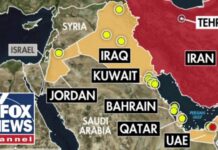
While officials in Washington insist they are focused on air and naval operations, the Pentagon has moved thousands of American troops into the region, which makes talk of a ground invasion harder for citizens to dismiss. U.S. Central Command confirmed that about 3,500 Marines and sailors arrived on the USS Tripoli, and more forces from the 82nd Airborne Division are expected to follow. Media reports, citing Pentagon sources, say planners are preparing “weeks of limited ground operations,” including possible raids on Kharg Island and areas near the Strait of Hormuz.
The Washington Post and other outlets report that these plans are designed to give President Trump “maximum optionality” rather than a firm commitment to a full-scale occupation. Initial scenarios focus on seizing key oil export hubs and securing shipping lanes instead of marching on Tehran or trying to topple the regime. Even so, the quiet buildup of elite units, sea drones, and airlift capacity looks to many observers like the opening stages of a larger campaign, especially after weeks of bombing have failed to end Iran’s ability to strike back.
Trump Sends Mixed Signals on Boots on the Ground
President Donald Trump has kept both allies and voters guessing about how far he is willing to go. In public comments, he has refused to rule out sending U.S. troops into Iran, saying he does not make the usual promise of “no boots on the ground” that past presidents offered. At the same time, officials briefed allies that there are “no immediate plans” for a ground invasion, even as thousands of additional troops are sent to the Middle East. This gap between words and actions is widening confusion and distrust.
Trump has spoken openly about “taking the oil” from Iran’s Kharg Island export terminal and about controlling the Strait of Hormuz, which are classic strategic goals that usually require forces on the ground. Supporters in Congress insist the aim is only to “alter the threat, not change the regime,” and argue that this war is not another Iraq. Yet independent analysts note that every new deployment and every expanded mission makes it easier, politically and militarily, to slide from “limited raids” into a deeper, longer conflict that neither side can easily escape.
Iran’s “We Want Land Invasion” Rhetoric and What It Signals
Iran’s hardline rhetoric goes beyond simple warnings. One prominent regime-aligned commentator recently said Tehran “wants” a land invasion, boasting that the country has spent decades preparing for such a fight. He pointed to new missile systems and dispersed militias as tools that could turn any U.S. ground advance into a grinding war of attrition. By talking this way, Iran’s leaders seek to scare U.S. planners and to rally ordinary Iranians around the idea that they can bleed a superpower and survive.
🚨 US-IRAN — 24H UPDATE
US completed its 7th consecutive night of strikes on Iran, hitting desalination and power infrastructure in southern Iran. Kuwait also reported an Iranian strike damaged one of its own desalination/power plants, sparking a fire across multiple generating… pic.twitter.com/IZpggyL3ki
— Burdania News (@burdz2013) July 18, 2026
This messaging also plays into a familiar pattern. In past crises, Iranian officials claimed the United States was hiding invasion plans behind talk of diplomacy, while U.S. leaders framed their moves as limited operations and “options on the table” rather than a march to war. That same script is now repeating: Iran paints Washington as a dishonest aggressor; Washington says it is preparing contingencies, not conquest. For many Americans on both the right and left, this looks less like honest leadership and more like another example of elites keeping citizens in the dark about the true costs and risks.
Why This Matters to Americans Across the Political Spectrum
For conservatives who already distrust the “deep state” and global wars, the idea of planners quietly mapping weeks of ground operations while politicians talk about restraint confirms fears that unelected officials are dragging the country into another quagmire. For liberals worried about human rights, social spending, and the growing gap between rich and poor, another Middle East war threatens to divert money and attention away from pressing needs at home and to inflame regional instability. Both sides can see how past promises about “limited missions” have ended in years of occupation and trillions in costs.
Today’s mixed signals on Iran—troops deploying but no clear vote in Congress, public talk of peace while private plans for land raids advance—fit a broader story many Americans recognize. The federal government looks more focused on managing optics and keeping options open than on giving the people a straight answer about where this is headed. Whether or not a full ground invasion ever comes, the current moment again shows how decisions about war and peace are shaped behind closed doors, while citizens are left to piece together the truth from scattered leaks, foreign media, and rising body counts.
Sources:
feedpress.me, youtube.com, theguardian.com, theindianawaaz.com, taylortailored.co.uk, forbes.com, nbcnews.com, facebook.com, aljazeera.com, reuters.com, english.ahram.org.eg
© patriotnews.net 2026. All rights reserved.