
New York’s mayor is openly talking with city lawyers about arresting a foreign prime minister during the UN meeting in Manhattan, shining a harsh light on how far local leaders will go when they believe the global “rules” are broken.
Story Snapshot
- NYC Mayor Zohran Mamdani says his team is actively studying if the city can arrest Israeli Prime Minister Benjamin Netanyahu during the UN General Assembly this September.
- Mamdani argues New York should follow International Criminal Court warrants and calls Netanyahu a “war criminal,” even though the United States rejects ICC authority.
- Legal experts and media across the spectrum say the plan is almost certainly impossible under U.S. law and would clash with federal control of foreign policy.
- New bills in Congress aim to punish or block any city that tries to enforce ICC warrants on U.S. soil, showing how fast Washington moves to protect its own power.
Mamdani’s Promise Moves From Campaign Talk to City Hall Agenda
Zohran Mamdani first made headlines in 2025, when he was still running for mayor, by promising to order the New York Police Department to arrest Benjamin Netanyahu if the Israeli leader ever came to the city. He said New York is a “city of international law” that should honor warrants from the International Criminal Court, including those for Netanyahu over alleged war crimes in Gaza and for Russian President Vladimir Putin over Ukraine. At the time, experts called it an “unenforceable campaign promise,” but the pledge helped define him as a strong critic of Israel’s actions in Gaza and of U.S. policy that backs them.
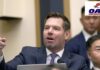
By 2026, Mamdani is no longer just a candidate; he is the sitting mayor, and he is still pushing the idea. In a new interview, he said his administration is in “active conversation” with the city’s Law Department about what, if anything, New York can legally do if Netanyahu comes for the United Nations General Assembly in September. Mamdani told The New York Times, “Whatever the law allows me to do in New York, we will do,” saying his stance reflects both his legal duties and public anger over Gaza and wider U.S. foreign policy.
The Hard Legal Wall: Federal Power, ICC Limits, and Diplomatic Immunity
Behind the loud rhetoric sits a simple legal problem: the United States never joined the treaty that created the International Criminal Court, known as the Rome Statute, so ICC warrants carry no automatic force on American soil. A federal law called the American Service-Members’ Protection Act goes even further, banning any state or local agency, including city police and courts, from cooperating with the ICC. Constitutional scholars say foreign affairs are firmly a federal job, and Supreme Court rulings have backed Washington’s primacy when local actions clash with national diplomatic policy.
On top of that, visiting leaders who come for the United Nations enjoy broad diplomatic protection while in New York, under treaties and practice that the federal government controls, not mayors or governors. Legal experts note that no sitting foreign head of government has ever been arrested on an official visit to the U.S. based on an international warrant. One professor, C. Cora True-Frost, said Mamdani’s statement should be understood as political, not legal, because domestic law offers “no strong support” for a mayor trying to arrest a visiting head of state against the federal government’s diplomatic choices.
Washington Pushes Back and the “Deep State” Debate Grows
Members of Congress moved quickly to make sure no city even tries what Mamdani is talking about. Representative Elise Stefanik introduced the Sovereign Enforcement Integrity Act to bar state and local governments from enforcing ICC warrants unless the federal government gives clear approval, a direct response to Mamdani’s plan. Senator Ted Budd’s American Allies Protection Act would cut off important Department of Justice grant money for four years to any local government that attempts to enforce ICC warrants against allies such as Israel, making the cost of defiance very high.
New York City Mayor Zohran Mamdani said in an interview published Saturday that he believes Prime Minister Benjamin Netanyahu should be arrested for war crimes if he visits the city in September for the United Nations General Assembly, but indicated that he would not try to amend… pic.twitter.com/lD5znna5tb
— The Times of Israel (@TimesofIsrael) July 19, 2026
For many Americans on both the right and the left, this fight reinforces a deeper fear: that global justice and ordinary citizens’ concerns always come second to the interests of powerful governments and elites. Critics of Mamdani see his talk as grandstanding that distracts from crime, housing, and the cost of living in New York, while supporters feel he is one of the few leaders willing to challenge a system they view as protecting the strong and ignoring the weak. Both sides, however, end up staring at the same reality—federal law, diplomatic immunity, and the entrenched foreign policy “machine” leave little room for a city, even one as large as New York, to change how global power really works.
Sources:
feedpress.me, middleeastmonitor.com, international-and-comparative-law-review.law.miami.edu, yahoo.com, youtube.com, usatoday.com, jpost.com, foxnews.com, timesofisrael.com, aa.com.tr, facebook.com
© patriotnews.net 2026. All rights reserved.