
When a 9–0 Supreme Court just told the government it cannot disarm a peaceful pot smoker, many Americans cheered—but something about the Hemani ruling and how Washington may respond should still put gun owners on high alert.
Story Snapshot
- The Supreme Court unanimously struck down using the “drug user” gun ban against an occasional marijuana user.
- The ruling is narrow and leaves most of the federal drug-user gun ban still on the books.
- Federal agencies can still target people they label “addicted” or “dangerous,” with lots of room to stretch those words.
- Anti-gun groups and media are already spinning the case as a threat to public safety to push new limits.
Supreme Court Delivers a Win for Gun Owners Who Use Marijuana
The case, United States v. Hemani, started when federal agents found a Glock pistol and marijuana in Ali Hemani’s Texas home and charged him under the law that bans gun ownership by anyone who is an “unlawful user” of a controlled substance.[1] Hemani admitted he used marijuana a few times a week, but there was no claim he was high or acting dangerously when he possessed the gun.[2] Lower federal courts threw out the charge, and the Supreme Court has now agreed with them.[1]
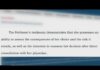
On June 18, 2026, Justice Neil Gorsuch wrote for a unanimous Court that the government’s prosecution of Hemani under this “unlawful user” provision violates the Second Amendment.[2] The Court said the government failed to show that simply using marijuana on a regular basis, with no proof of intoxication at the time or evidence of danger, fit within any historical tradition of disarming citizens.[2] In plain terms, gun rights cannot disappear just because a person sometimes uses marijuana at home.
Why the “Habitual Drunkard” History Argument Fell Apart
To defend the law, the government pointed to old “habitual drunkard” laws and claimed they showed a long tradition of disarming people who use intoxicants.[4] But the justices rejected that analogy. The Court explained that those older laws typically involved a judge or legal process before someone could lose liberty, while Hemani could be disarmed and imprisoned for up to 15 years without any such finding.[2] That lack of due process made the modern ban a poor match for the history test.
The Court also noted that the government never proved Hemani was incapacitated, violent, or likely to misuse a firearm, which undercut its claim that the statute targets people who are always dangerous.[2] The justices stressed that under the Second Amendment, the government must point to real historical examples, not just vague fears or modern policy wishes, to strip a person of gun rights.[1] That echoes earlier cases saying gun bans must fit our nation’s actual tradition, not just current talking points.[5]
A Narrow Ruling That Still Leaves Federal Power on the Table
For gun owners, a key detail is how narrow this victory is. The Court made clear this is an “as applied” ruling about Hemani’s situation, not a full strike-down of the entire drug-user ban.[2] The opinion explicitly left in place federal bans on felons and people formally judged mentally ill, which involve some kind of legal process.[2] It also signaled that people who are actively intoxicated with a gun, or whose drug use clearly makes them dangerous, can still be disarmed without violating the Constitution.[5]
That narrow scope leaves room for trouble. Federal prosecutors can now try to rescue their power by relabeling targets as “addicted” or “dangerous” instead of “occasional users.” Media reports already describe the law as aimed at “habitual users of unlawful drugs” who supposedly pose a “clear danger of misusing firearms.”[16] That rhetoric invites officials to stretch the dangerousness label to cover many Americans whose only “crime” is using marijuana in a state where voters already legalized it.
What Comes Next: Bureaucrats, Forms, and Narratives
One big open question is how the Department of Justice and the Bureau of Alcohol, Tobacco, Firearms and Explosives will react to the ruling. The Court did not decide what happens when a buyer answers the marijuana question on the federal gun purchase form, or whether a false answer is still a serious felony.[2] Until the form is updated and clear guidance is issued, honest buyers could be left in limbo about how to answer, while dishonest buyers risk major charges.
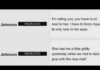
on June 18, 2026, the U.S. Supreme Court ruled unanimously in United States v. Hemani that a federal law banning gun possession by "unlawful users" of controlled substances (including marijuana is not "only" marijuana) is unconstitutional.
— Left Side Tremors (@LeftSideTremors) June 25, 2026
Anti-gun groups and much of the media are already framing Hemani as a reckless step that arms “drug users” and endangers police, rather than as a check on government overreach against peaceful citizens.[20] That spin gives political cover for new attempts to narrow this win, either through fresh legislation or aggressive charging decisions. For conservatives who care about both gun rights and limited government, Hemani is a reminder to celebrate real progress—but also to keep watching the fine print, the forms, and the bureaucrats who still hold the levers.
Sources:
[1] Web – Supreme Court Ruling Offers Hope to an Iowa Marijuana User Who Got 4 …
[2] Web – UNITED STATES v. HEMANI | Supreme Court – Law.Cornell.Edu
[4] Web – [PDF] 24-1234 United States v. Hemani (06/18/2026) – Supreme Court
[5] Web – Guns, Cannabis, and the Constitution: SCOTUS to Hear United …
[16] Web – Supreme Court ponders law making it a crime for marijuana … – NPR
[20] Web – Marijuana Gun Rights Case | U.S. Supreme Court & NC Law
© patriotnews.net 2026. All rights reserved.