(PatriotNews.net) – President Trump’s blunt message on Iran—he’s “not worried” about war-crimes allegations tied to bombing power plants—has reignited a hard question: how far can an America First strategy go before it risks a wider war and a legitimacy fight at home and abroad?
Quick Take
- President Trump dismissed concerns that striking Iran’s civilian power infrastructure could be a war crime, arguing Iran’s nuclear ambitions are the real moral outrage.
- The White House posture frames military threats as leverage for a “deal,” even as public appetite for another Middle East war appears limited.
- Iranian leadership signaled that attacks on power plants could trigger retaliation affecting Gulf states, raising escalation risks.
- International-law debates are becoming part of the strategic battlefield, with critics pointing to civilian protections and the administration emphasizing deterrence.
Trump’s Warning Shifts the Focus From Law to Leverage
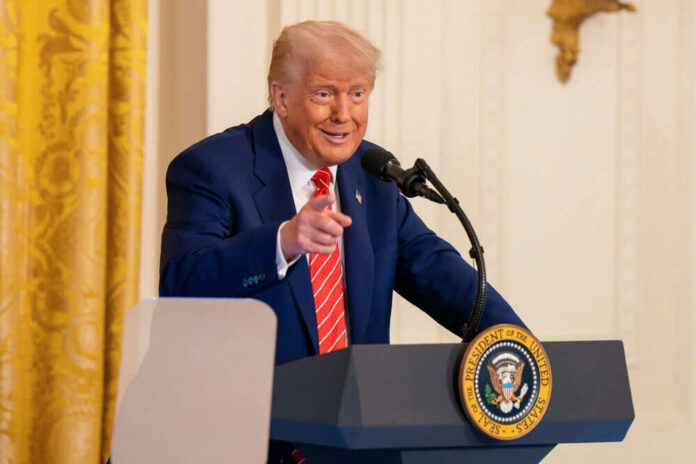
President Donald Trump made the comments April 6 while discussing potential military action against Iran, specifically referencing bridges and power plants as possible targets. Trump brushed aside concerns that striking such sites could violate international humanitarian law, and he suggested there are “other things” he views as even more severe options. The tone matters because it signals that the administration is using open-ended threats as bargaining power in ongoing pressure for Iran to “make a deal.”
Trump also reframed the war-crimes question by labeling Iran’s pursuit of a nuclear weapon as the true “war crime,” emphasizing a national-security case over legal criticism. That argument will resonate with many conservatives who see deterrence and non-proliferation as vital, especially after years of wavering red lines. But it also puts the administration on a collision course with international institutions and media narratives that treat civilian infrastructure as presumptively protected.
What the Reporting Says About Public Pressure and War Weariness
One notable detail in the reporting is Trump’s acknowledgement that “the American public wants an end to war,” even as he floated hard-edged options and talked about “taking the oil.” That tension reflects a broader political reality: voters are skeptical of open-ended deployments and nation-building, but they also expect presidents to prevent hostile regimes from gaining nuclear leverage. With Republicans controlling Congress, the main friction may come less from legislation and more from public tolerance if a crisis spirals.
Democrats, meanwhile, are likely to focus on process, oversight, and humanitarian risk—especially if targets are described as civilian. That sets up a familiar Washington dynamic where legal arguments become political weapons. For many Americans across the spectrum who already believe the system serves “elites” first, the debate can look like another round of insider maneuvering: officials arguing over rules and reputations while ordinary people worry about energy prices, new security threats, and the possibility of another long conflict.
Iran Signals Retaliation Risks for Gulf Allies and Energy Markets
Iran’s side also escalated the stakes. Reporting cited an adviser to Iran’s supreme leader warning that strikes on power plants would be met with reciprocal attacks affecting Gulf states. That matters because Gulf partners sit near critical energy infrastructure and shipping routes, and even limited retaliation could ripple into oil price spikes and broader regional insecurity. The administration’s leverage strategy therefore carries a built-in risk: once infrastructure is threatened, the off-ramp gets narrower for everyone involved.
The Civilian-Infrastructure Question Isn’t Just Academic
International-law concerns hinge on whether infrastructure like power plants is considered civilian and, if used for military advantage, whether an attack is necessary and proportionate. Reporting summarized the standard view that the Geneva Conventions and related frameworks generally prohibit attacks on civilian objects absent a definite military advantage. Trump’s dismissal of the war-crimes framing is significant because it treats that legal debate as secondary to deterrence. Supporters will call that realism; critics will call it dangerous precedent.
What remains unclear from the available reporting is the precise status of negotiations, the exact conditions being demanded of Iran, and the timeline for any decision. That uncertainty is exactly where miscalculation can creep in—on both sides. For Americans who want strong borders, lower inflation, and affordable energy, a new Middle East shock could quickly become a kitchen-table issue. The administration’s challenge is to pair credible deterrence with clear limits and a defined end state.
Sources:
Trump says he would “take the oil” in Iran but the American public wants an end to war
Trump shrugs off war crimes concerns over bombing Iran civilian sites
Iran war live updates: Trump deadline, power plants, bridges, ceasefire push, Air Force rescue
Copyright 2026, PatriotNews.net