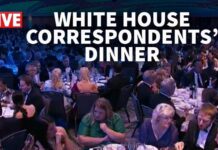

(PatriotNews.net) – Shots outside the White House Correspondents’ Dinner didn’t just rattle Washington—it instantly became a test of whether “security” will be used to bulldoze normal checks and balances.
Quick Take
- Gunfire erupted near the main security screening area at the Washington Hilton during the April 25 White House Correspondents’ Dinner, prompting Secret Service to evacuate President Trump and other protectees.
- Police arrested a 31-year-old suspect, Cole Tomas Allen of Torrance, California, who allegedly brought multiple weapons and injured one officer wearing a bullet-resistant vest.
- Federal officials said early findings indicate Trump was the intended target, and prosecutors announced preliminary charges tied to assaulting a federal officer and firearm offenses.
- The Justice Department quickly cited the attack and the Hilton’s Reagan-era history to pressure a preservationist group to drop a lawsuit blocking Trump’s proposed $400 million White House ballroom.
What happened at the Hilton, and why it instantly mattered
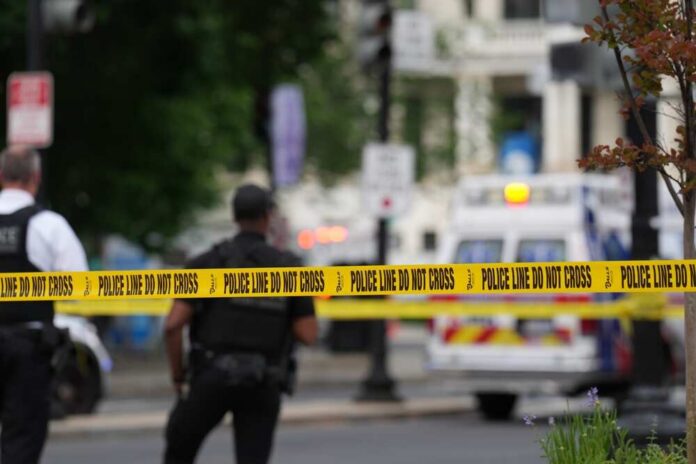
Law enforcement responded after shots were fired near the main magnetometer screening area outside the banquet hall at the Washington Hilton on April 25, during the White House Correspondents’ Dinner. Secret Service evacuated President Donald Trump, First Lady Melania Trump, Vice President JD Vance, and other senior officials. Authorities said one officer was struck in a bullet-resistant vest and is expected to recover, and no other injuries were reported.
Investigators identified the suspect as Cole Tomas Allen, 31, of Torrance, California, who was taken into custody at the scene. Reports say Allen carried a shotgun, a handgun, and knives, and that his writings criticized Trump’s policies while styling himself the “Friendly Federal Assassin.” Officials have described the case as politically motivated, but key details—like how long planning occurred and whether anyone assisted—remain under investigation as arraignment proceedings move forward.
The DOJ briefing and the early legal posture
Justice Department leaders used a briefing to stress the speed of the response and to outline a prosecutorial path that treats the incident as an attack on federal personnel and protected officials. U.S. Attorney Jeanine Pirro publicly described preliminary charges that include assault on a federal officer and firearm-related offenses connected to a crime of violence. Federal officials also indicated their preliminary assessment is that Trump was the intended target, elevating the case’s national-security profile.
President Trump, for his part, praised law enforcement and signaled that the Correspondents’ Dinner should be rescheduled. That public framing matters because the WHCD is both a political ritual and a press-centered spectacle, and disruptions quickly become political narratives. In this case, the administration’s messaging emphasized unity during the response while also underscoring that high-profile, off-site gatherings create vulnerabilities—especially at venues with long security histories like the Hilton.
How the shooting became leverage in a separate ballroom fight
Within about 24 to 48 hours, DOJ tied the attack to a different dispute: a lawsuit involving Trump’s proposal for a $400 million White House ballroom on the former East Wing site. The National Trust for Historic Preservation is identified as the plaintiff challenging the project. DOJ officials argued that moving major events onto White House grounds would reduce exposure created by traveling to outside venues, and they pressed for the lawsuit to be dismissed on an expedited timetable.
The letter’s core message—“Enough is enough,” according to reporting—leans heavily on security logic and historical precedent. The Washington Hilton is also known as the site of the 1981 attempted assassination of President Ronald Reagan, and DOJ cited that history to argue that off-site events come with enduring risk. That argument will resonate with many Americans who want leaders protected, but it also raises a hard question: should a shocking event be used to accelerate unrelated legal outcomes?
What this episode says about power, trust, and “the system”
The facts available so far support two realities at once. First, the security threat was real enough to injure an officer and trigger immediate protectee evacuations, and the suspect allegedly arrived armed in a way that suggests intent rather than impulse. Second, the administration’s rapid pivot to a pending construction and preservation lawsuit illustrates how crises can become catalysts for policy and legal pressure—sometimes before the public has full information.
For conservatives already wary of elite institutions, the irony is thick: a dinner built around media and power-brokers ended in chaos, then fed a fast-moving argument about government security infrastructure and court disputes. For liberals worried about executive overreach, the quick push to dissolve legal roadblocks will look like muscle-flexing. For everyone else, it’s another reminder that Washington often uses emergencies to redraw lines—while ordinary Americans wonder who, exactly, the system serves.
Sources:
https://www.foxnews.com/live-news/white-house-correspondents-dinner-shooting-04-27-26
https://en.wikipedia.org/wiki/2026_White_House_Correspondents’_dinner_shooting
Copyright 2026, PatriotNews.net