
(DailyChive.com) – Democrats’ silent protest during President Trump’s address didn’t just snub him—it reportedly snubbed crime victims’ families, a teen cancer patient, and women’s sports, while saving their applause for Ukraine.
Quick Take
- White House Press Secretary Karoline Leavitt said Democrats behaved “shamefully” during Trump’s address to Congress, citing boos, walkouts, and protest paddles.
- Leavitt listed multiple moments Democrats allegedly refused to applaud: victims of crimes tied to illegal immigration, a teen with brain cancer, and a female athlete injured in a transgender sports dispute.
- Leavitt contrasted that silence with Democrats applauding Ukraine-related lines, arguing it showed “America last” priorities.
- Leavitt cited polling she said showed broad public approval of Trump’s speech, framing Democrats as “out of touch.”
Leavitt’s briefing turns a chaotic chamber into a campaign contrast
White House Press Secretary Karoline Leavitt used her Wednesday briefing to put Democrats’ conduct under a microscope after President Donald Trump’s address to Congress the night before. Reports described Democrats booing, holding up “False” and “Musk Steals” paddles, wearing colors signaling support in the Russia-Ukraine war, and in some cases walking out. Leavitt said she delayed the briefing after speaking with Trump, then delivered a point-by-point rebuttal.
Leavitt’s central claim was simple: Democrats did not merely oppose Trump; they refused to show basic respect during moments meant to honor ordinary Americans. According to coverage of her remarks, she argued the most telling part of the night was not the protests themselves, but what drew no applause. That framing matters politically because it shifts the debate away from “Trump vs. Democrats” and toward “Americans honored in the chamber vs. the politicians protesting them.”
What Leavitt says Democrats would not applaud
Leavitt rattled off examples she said Democrats declined to applaud, including victims and families impacted by crimes committed by illegal immigrants, a female volleyball player described as injured by a transgender athlete, and a 13-year-old boy with brain cancer. She also included policy points Trump highlighted, such as tax relief proposals involving tips and Social Security, and efforts aimed at keeping men out of women’s sports. The White House message was that these are broadly relatable, non-elite concerns.
For a conservative audience still angry over the last decade’s “woke first” priorities, the list lands hard because it centers on public safety, fairness, and family concerns—areas where voters often expect at least minimal unity. The available research reflects Leavitt’s criticism and supportive commentary, but it does not include a detailed Democratic rebuttal to each example. That limitation means readers should treat the White House narrative as one side of a larger political fight, even if the images from the chamber were widely reported.
Ukraine applause becomes the flashpoint in the “America First” argument
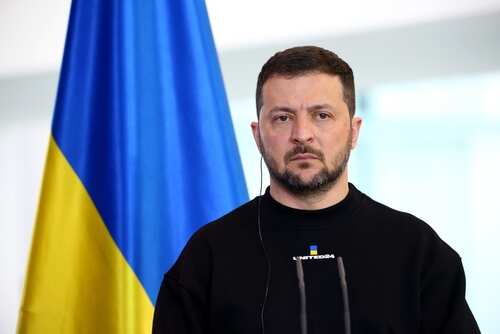
Leavitt drew her sharpest contrast around Ukraine, saying Democrats applauded when Trump mentioned Ukraine-related items while withholding applause for the domestic honorees and priorities she highlighted. She described that contrast as a low point for presidential-address decorum. In the context of post-Biden-era politics, the dispute also touches a long-running conservative frustration: the sense that Washington’s ruling class can mobilize emotion and money faster for overseas causes than for border enforcement, victims’ families, or cultural concerns at home.
Polling claims, credibility, and what can be verified from the research
Leavitt also pointed to polls she said showed strong approval for Trump’s speech, including a figure she attributed to a CBS/YouGov survey and separate “historic highs” she associated with the Daily Mail. Those polling details, as presented in the research, are framed through Leavitt’s retelling rather than a full methodological breakdown. Still, the political strategy is clear: if the public reaction is positive, Democrats’ chamber theatrics risk looking less like principled dissent and more like reflexive resistance.
Why the moment matters beyond one night of Washington theatrics
An eyewitness account cited in the research described Speaker Mike Johnson attempting to restore order as disruptions continued, reinforcing that the scene was not just a typical seated protest. For voters worried about constitutional seriousness and basic respect for institutions, the optics can cut against the very message Democrats try to send about defending democracy. If Congress cannot maintain composure during a formal address that honors victims and families, it raises a practical question: what happens when the next high-stakes legislative fight arrives?
Karoline Leavitt Rattles Off a List of Everything Dems Did NOT Deem Worthy of SOTU Applause https://t.co/6h9HiAAuT1
— Twitchy Updates (@Twitchy_Updates) February 25, 2026
The bigger takeaway from Leavitt’s briefing is that the White House is deliberately turning cultural flashpoints—border crime, women’s sports, and respect for everyday Americans—into a single narrative test. Democrats are free to oppose Trump’s agenda, but the White House wants the public to remember exactly when that opposition showed up as silence, boos, or walkouts. With Trump back in office and “America First” policy fights underway, both parties are betting that voters will decide which side looked like it stood with the people in the gallery.
Sources:
“Shameful”: White House Press Secretary Disgusted with Democrats’ Behavior During Trump’s Speech
State of the Union 2026 (live updates)
WH press secretary says Democrats should applaud Trump’s speech to Congress
Copyright 2026, DailyChive.com