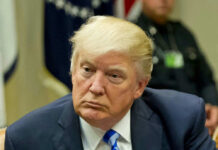
(PatriotNews.net) – In a surprising turn, President Trump suggests possible talks with Venezuelan President Nicolás Maduro amid heightened U.S. military activity.
Story Snapshot
- Trump signals openness to discussions with Maduro.
- U.S. military buildup in the Caribbean raises questions.
- Shift from years of U.S. policy labeling Maduro illegitimate.
- Potential diplomatic pivot amid military operations.
Sudden Diplomatic Shift
President Donald Trump’s willingness to initiate talks with Venezuelan President Nicolás Maduro marks a significant departure from the U.S.’s longstanding policy of isolation and sanctions against the Maduro regime. This comes amid a pronounced increase in U.S. military operations in the Caribbean, which some interpret as a strategic move to pressure Maduro. The potential for dialogue represents a stark contrast to previous American efforts to bolster opposition leader Juan Guaidó and delegitimize Maduro’s government.
The implications of this shift are profound, as it raises questions about the future of U.S.-Venezuela relations. For years, Washington has portrayed Maduro as a criminal and human rights abuser, backing sanctions and supporting efforts to unseat him. However, with the recent military buildup, including the deployment of the Gerald R. Ford carrier group, the possibility of diplomacy has emerged as an unexpected narrative twist.
Background and Context
U.S.-Venezuela relations have been fraught since Hugo Chávez’s presidency, with tensions escalating under Maduro. The U.S. has consistently accused Maduro of authoritarianism and drug trafficking, recognizing Guaidó as the legitimate leader since 2019. Despite this, Trump’s recent statements indicate a potential pivot towards negotiation, juxtaposed against ongoing military maneuvers such as Operation Southern Spear, ostensibly targeting drug trafficking but widely seen as a pressure tactic.
The Venezuelan crisis remains dire, with economic collapse and humanitarian struggles prompting mass emigration. The U.S. military’s presence, officially anti-narcotics, is perceived by Venezuela as a sovereignty threat. Previous incidents, like the 2019 failed opposition uprising and subsequent U.S. threats, underscore the high-stakes environment surrounding these developments.
Stakeholders and Motivations
Key figures in this unfolding drama include Trump, Maduro, the U.S. military, and Congress, each with distinct motivations. Trump appears to be seeking leverage or a diplomatic coup, possibly for domestic political gain. Maduro, meanwhile, aims to deter U.S. intervention and rally domestic support. The U.S. military implements policy, projecting power in the region, while Congress remains divided on the best approach to Venezuela.
Power dynamics are complex, with the U.S. holding significant military and economic leverage. Maduro’s grip on power remains tenuous, challenged by internal dissent and international pressure. Allegations of drug trafficking further complicate potential diplomatic engagement, casting a shadow over any negotiations.
Current Developments and Impacts
Trump’s announcement of possible talks has introduced uncertainty into U.S.-Venezuela relations. While no formal discussions have been initiated, the military posture remains aggressive, with ongoing exercises in the Caribbean. Maduro has condemned these actions as provocations, warning of potential escalation into conflict.
The short-term implications of these developments include increased tensions and the potential for either de-escalation or further confrontation. In the long-term, this could signal a shift in U.S. policy towards engagement, though failure to achieve meaningful talks could result in a return to hardline tactics. The Venezuelan population continues to suffer under economic sanctions and political instability, with regional neighbors wary of the broader security implications.
Copyright 2025, PatriotNews.net