
(PatriotNews.net) – When federal agents staged a dramatic raid outside Governor Gavin Newsom’s high-stakes redistricting rally in Los Angeles, the collision of immigration enforcement and raw political ambition left California’s power struggle fully exposed, and the nation is still waiting for the truth behind the spectacle.
Story Snapshot
- Border Patrol agents conducted a visible immigration operation outside Newsom’s redistricting event in downtown Los Angeles.
- Governor Newsom condemned the raid as political intimidation and responded by filing a Freedom of Information Act (FOIA) request.
- Federal officials deny any political motives, but local leaders remain unconvinced as tensions escalate between state and federal authorities.
- The operation’s timing and location fueled national debate over immigration, redistricting, and the boundaries of federal power.
The Raid That Hijacked the Redistricting Rally
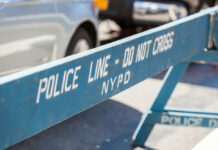
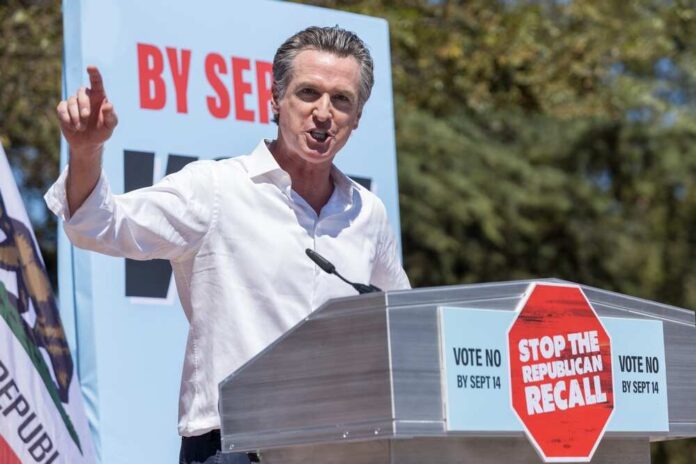
On August 14, 2025, the Japanese American National Museum in Los Angeles became the unlikely stage for a confrontation between state leadership and federal power. Governor Gavin Newsom, flanked by Los Angeles Mayor Karen Bass and an army of press, had chosen this symbolic venue to unveil a new ballot initiative: a redistricting plan openly designed to counter Republican efforts in Texas. The event’s political charge was palpable, but few could have anticipated the spectacle that unfolded as armed, masked Border Patrol agents fanned out just outside the perimeter. At least one individual was detained, and the sight of federal officers in tactical gear sent a jolt through the crowd, leaving Newsom’s announcement momentarily overshadowed by the spectacle of federal presence.
Newsom and Bass erupted publicly, branding the operation a “provocation” and “disrespectful.” Their outrage echoed through media channels, amplifying the sense of crisis and feeding speculation about federal motives. Was this a routine operation, or a calculated show of force designed to intimidate state leaders and their political base? In the hours that followed, Newsom’s team drafted and filed a FOIA request, demanding answers, documentation, and accountability for what they described as an egregious act of political intimidation.
California’s History of Defiance Meets Federal Muscle
California’s fraught relationship with federal immigration authorities is nothing new, but the timing of this operation brought simmering tensions to a boil. Years of legal and political battles over sanctuary policies, National Guard deployments, and the limits of federal jurisdiction set the backdrop for this latest clash. Newsom, already engaged in a public feud with Washington over redistricting and immigration, seized the moment to rally his base and frame the raid as an assault not just on immigrants, but on California’s sovereignty. Meanwhile, federal agencies insisted their purpose was “law enforcement, not politics”, a claim met with deep skepticism in Sacramento and City Hall.
Previous standoffs had surfaced in Los Angeles, but never with such theater. By choosing a site rooted in the history of government overreach, the Japanese American National Museum, Newsom’s team may have unwittingly staged the perfect tableau for a new chapter in the state’s ongoing resistance to federal pressure. For immigrant communities and advocacy groups, the incident triggered renewed fears and a fresh wave of activism, even as officials scrambled to parse the facts from the optics.
Political Stakes and the Optics of Power
The fallout from the raid rippled instantly through California’s political ecosystem. Newsom’s camp accused federal agents of “political sabotage,” while DHS leadership flatly denied targeting the governor’s rally. Media outlets quickly corroborated key facts: the presence of agents, the detention, the statements from both sides. Yet, the central question, was this a coincidence or a message?, remained unanswered, fueling a cycle of speculation that played perfectly into the charged atmosphere of redistricting season.
The episode also revived long-standing debates over federalism, law enforcement neutrality, and civil rights. Legal scholars weighed in, warning that visible enforcement actions during political events threaten to erode public trust. Political analysts called the raid a microcosm of the national struggle for control over immigration and electoral boundaries. For Newsom, the incident offered a platform to cast himself as a champion of California values, fighting off external threats. For federal authorities, it underscored the delicate line between enforcing the law and appearing to serve a partisan agenda.
What Happens Next: Legal Battles, Community Fallout, and a Nation Watching
Governor Newsom’s FOIA request now hangs in the balance, with DHS yet to provide a response. Local officials remain vocal, immigrant communities remain anxious, and the media continues to probe the event’s underlying motives. If the federal government stonewalls, expect legal challenges and public hearings. If documentation emerges showing political coordination, the fallout could be seismic, reshaping not just California’s approach to federal enforcement, but the entire national discourse on states’ rights and partisan interference. With elections and further redistricting battles looming, the lessons of this confrontation will likely echo well beyond Los Angeles, influencing strategies on both sides of the political divide.
For now, one thing is clear: the thin line between law enforcement and political theater has rarely been so starkly drawn. As federal and state leaders dig in, the real losers may be the communities caught in the crossfire, left to wonder whose interests are truly being served when power, policy, and spectacle collide.
Copyright 2025, PatriotNews.net