
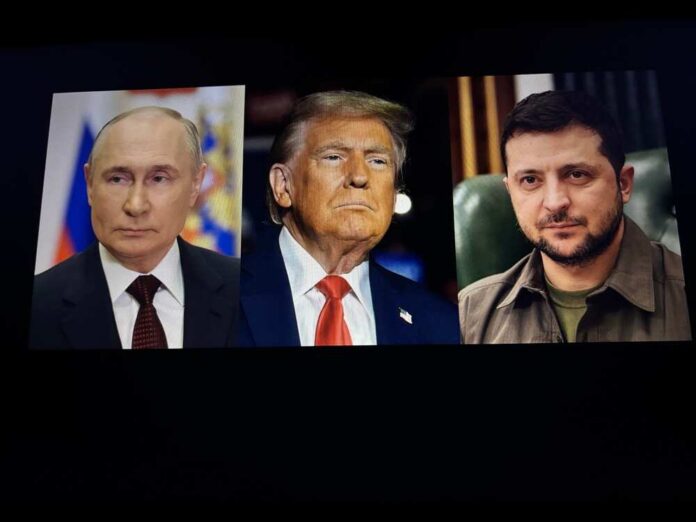
(PatriotNews.net) – Trump’s “peace deadline” for Putin and a record-breaking U.S.-Ukraine drone deal have redrawn the lines of the Russia conflict, with world leaders gambling on sanctions, energy, and airpower to force history’s hand.
Story Highlights
- Trump issued a peace ultimatum to Putin and tied harsher sanctions to a looming deadline.
- Zelenskyy and Trump finalized the largest U.S.-Ukraine drone manufacturing deal to date.
- Western allies ramped up financial and military support as Russian attacks on Ukraine intensified.
- This diplomatic gambit could reshape global energy markets, defense industries, and the future of Europe.
Presidential Deadlines and the High Stakes of War
On August 5, 2025, President Volodymyr Zelenskyy and President Donald Trump spoke for over an hour, their words carrying the weight of war and peace across continents. With Russian attacks battering Ukrainian cities, Trump delivered a message aimed straight at Moscow: Vladimir Putin had until August 8 to reach a peace settlement, or Russia would face a new barrage of U.S. sanctions. This explicit deadline, rare in modern diplomacy, signaled a shift from open-ended pressure to a high-stakes ultimatum, putting Putin and his generals on notice while the world watched for the next move.
Trump’s strategy revolved around economic leverage. He publicly linked Russia’s military campaign to the fate of its energy revenues, warning that falling global oil prices, engineered through U.S. policy and pressure, could cripple the Kremlin’s war machine. He also floated the possibility of tariffs on countries like India, aiming to squeeze Russia’s oil lifelines. For American conservatives and realists, this approach played to strengths: using America’s economic might to avoid direct military entanglement, while still forcing adversaries to the negotiating table.
The Drone Deal: A New Era for Ukraine’s Defense
While most of the world focused on sanctions, Zelenskyy and Trump hammered out the details of the largest drone manufacturing agreement yet between the U.S. and Ukraine. Ukrainian officials hailed the deal as transformative, an infusion of American technology and investment that would allow Ukraine not just to field more drones, but to build them at home. In the short term, this means more eyes in the sky and sharper teeth on the battlefield. In the long term, it signals Ukraine’s emergence as a self-reliant defense power, less dependent on slow-moving Western aid convoys and more able to shape its own destiny.
The economics of the deal ripple far beyond Kyiv. U.S. defense contractors stand to gain, but so do local Ukrainian industries, which will absorb new jobs and expertise. For European allies, who have already pledged over a billion dollars for American-made weapons, the deal represents both reassurance and a challenge: NATO’s eastern flank is hardening, but the balance of power in the alliance is shifting toward those who can deliver meaningful tech and manufacturing muscle.
Allies, Adversaries, and the Global Energy Chessboard
Europe’s role in this drama is pivotal. As Russian missiles rained down on Ukrainian cities, the Netherlands, Sweden, Norway, and Denmark quietly committed massive funds for new U.S. arms shipments to Ukraine. Their motivations blend fear and resolve: a desire to deter further Russian aggression, preserve regional security, and avoid the specter of a frozen conflict at their doorstep. Yet, their support also exposes deepening rifts within Europe over how far to go, and how much risk to absorb, in confronting Moscow.
For Russia, the convergence of sanctions, energy price manipulation, and military setbacks presents a mounting crisis. The Russian economy, already battered by years of Western embargoes, faces the prospect of further isolation and contraction. For ordinary Russians, this means rising prices, shrinking opportunities, and the specter of unrest. Meanwhile, in Ukraine, every new drone and dollar of support offers a lifeline, not just to the military, but to a society still reeling from the war’s toll.
Expert Analysis: Will Deadlines and Drones Change the Game?
Analysts are divided on whether Trump’s peace deadline will prompt negotiation or deepen the stalemate. Some argue that clear, enforceable threats, backed by real economic pain, could force Putin to reconsider his calculus. Others warn that ultimatums risk hardening positions and closing off avenues for compromise, especially if not paired with diplomatic incentives. On the military front, experts agree that the drone deal is a game-changer for Ukraine’s battlefield capabilities, but caution that technology alone cannot guarantee victory or security.
As the August 8 deadline approaches, the world waits. If Putin calls Trump’s bluff, the next round of sanctions could reshape global oil markets, redraw alliances, and test the resilience of both Russian and Western economies. If he blinks, a window for peace, however narrow, might finally open. The stakes are nothing less than the future of Europe’s security architecture and the credibility of American power on the world stage.
Copyright 2025, PatriotNews.net