

(PatriotNews.net) – What if the very foundation of American freedom, the belief that rights come from God, not government, was openly challenged by a U.S. senator, sparking a collision of faith, politics, and national identity that reverberates far beyond the halls of Congress?
Story Snapshot
- Virginia Senator Tim Kaine publicly rejected the “God-given rights” principle, likening it to theocratic regimes and igniting cultural uproar.
- President Trump seized the controversy to reaffirm America’s founding ideals, delivering a pointed speech defending religious liberty.
- The debate has drawn sharp lines between secular and religious visions for America’s future, each side wielding history and the Declaration of Independence as their sword.
- Conservatives, religious leaders, and political strategists see this as a battleground for the soul and future trajectory of the nation.
Senator Kaine’s Challenge to a Core American Principle
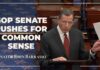
Senator Tim Kaine’s remarks during a high-profile Senate Foreign Relations Committee hearing did more than ruffle feathers, they cut to the heart of America’s identity. By stating that rights are granted by government, not God, and comparing the “God-given rights” doctrine to theocratic regimes like Iran, Kaine jolted both sides of the political spectrum. His assertion was not offhand; it emerged amid the confirmation hearing for Riley Barnes, a nominee who explicitly cited the Declaration of Independence’s language about rights “endowed by their Creator.” Kaine’s critique, rooted in a secular and legalistic worldview, was intended to warn of the dangers of religious doctrine shaping state power. But the backlash was swift, and the echo chamber of cable news and opinion pages amplified every syllable.
Conservative commentators and religious leaders immediately seized on Kaine’s words, framing them as a rejection of the very principle that sets America apart from authoritarian regimes. Bishop Robert Barron, a nationally recognized Catholic leader, publicly rebuked Kaine, arguing that grounding rights in government makes them vulnerable to the whims of those in power. The social and political fault lines were laid bare, with faith-based organizations rallying their bases and secular advocates applauding Kaine’s candor in upholding the separation of church and state. The debate soon moved from the Senate floor to the broader national stage, transforming a committee hearing into a flashpoint in the ongoing battle over the country’s soul.
Trump’s Rebuttal: Rhetoric, Religion, and the Remaking of American Identity
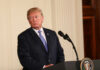
President Donald Trump, never one to let a cultural controversy slip by, responded within days. At a widely broadcast speech at the Museum of the Bible, Trump didn’t just defend the “God-given rights” doctrine, he weaponized it, invoking the Declaration of Independence and the country’s Judeo-Christian roots as unassailable foundations. Trump accused Kaine and his ideological allies of undermining a core American truth, using the controversy as a rallying point for religious liberty and to galvanize his political base. Trump’s speech also marked the launch of a new Religious Liberty Commission, signaling a renewed push for faith-based advocacy at the highest levels of government. His message was clear: rights anchored in divine authority are immune to the shifting sands of political power.
The rhetorical stakes were raised further as Trump’s allies in Congress, along with prominent conservative media outlets, framed the debate as a struggle for the nation’s future. The story became a prism through which Americans viewed the broader clash between secularism and faith, government authority and individual liberty. The narrative was no longer about a senator’s controversial comment, it was about who gets to define what it means to be American.
Philosophy, Precedent, and the Battle for the Soul of America
The roots of this debate stretch back centuries. The idea that rights are “endowed by their Creator” is woven into America’s founding documents, echoing Enlightenment philosophy and Christian theology. Critics of Kaine’s position argue that removing God from the equation leaves rights at the mercy of government, a slippery slope toward authoritarianism. They point to historical examples where regimes that denied higher moral authority trampled individual freedoms. Religious leaders warn that Kaine’s view signals a growing hostility toward faith in public life, a trend they see as both dangerous and un-American.
Supporters of Kaine’s argument counter that grounding rights in secular law ensures equal protection for all, regardless of faith or lack thereof. They argue that America’s strength lies in its ability to guarantee rights through democratic institutions, rather than religious doctrine. Legal scholars highlight that the U.S. system is built on a blend of natural rights philosophy and constitutional law, a delicate balance that has always been open to debate and reinterpretation. For these advocates, Kaine’s comments are a necessary corrective to creeping theocracy and a reaffirmation of the principle that government serves all citizens equally.
Political Fallout, Cultural Reverberations, and What Comes Next
In the immediate aftermath, Kaine doubled down on his remarks in op-eds and interviews, warning of the dangers of blurring the lines between church and state. Trump’s camp, meanwhile, used the controversy to mobilize religious voters and reinforce a platform centered on traditional values and religious liberty. The media frenzy shows no sign of abating; both camps have invested too much in the narrative to let it go quietly.
The implications extend far beyond this news cycle. Short-term, the episode has intensified polarization and energized advocacy groups on both sides. Long-term, it could influence judicial and legislative battles over religious liberty, the role of faith in government, and the very definition of American rights. As the next election looms, expect both parties to invoke this debate as a litmus test for the nation’s future. The question isn’t just who is right, but who gets to say what “right” means in America.
Copyright 2025, PatriotNews.net