
(PatriotNews.net) – Iran’s squeeze on global oil lanes is now threatening to import a fresh inflation shock into Canada—just as ordinary families thought prices were finally cooling.
Story Snapshot
- Iran’s attacks on commercial shipping and its blockade of the Strait of Hormuz have pushed oil prices higher, complicating Canada’s inflation outlook.
- Canada’s economy entered 2026 on weak footing: a Q4 2025 contraction, rising unemployment, and still-elevated food inflation.
- Bank of Canada officials and major bank economists are signaling a “wait-and-see” approach, with rates likely on hold unless the shock persists.
- Analysts warn a prolonged supply shock could force the central bank toward tighter policy even as growth softens.
Oil Shock Meets a Fragile Canadian Economy
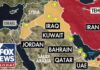
Iran’s escalation—strikes, retaliatory attacks on commercial shipping, and a blockade of the Strait of Hormuz—has raised the risk premium on global oil. Because roughly one-fifth of the world’s oil moves through that chokepoint, markets tend to reprice energy fast when shipping is threatened. For Canada, that matters immediately at the pump, but also indirectly through trucking, packaging, and food distribution costs that can lift consumer prices broadly.
Canada is not entering this energy turbulence from a position of strength. Statistics Canada reported the economy contracted at a 0.5% annualized pace in Q4 2025, undercutting expectations for flat growth. February 2026 brought a sharp labor-market warning: unemployment rose to 6.7% after 84,000 jobs were lost. Meanwhile, January food inflation was still running at 7.3% year over year, highlighting how daily necessities remain a pressure point.
Why the Bank of Canada Can’t Easily “Fix” Supply-Side Inflation
The Bank of Canada’s core problem is that war-driven energy spikes behave like a supply shock: prices rise even if demand is not overheating. Deputy Governor Sharon Kozicki has outlined that central banks are more inclined to raise rates when supply shocks lift prices without sharply slowing the economy. That framework matters because it signals the Bank won’t automatically look past higher oil if officials believe inflation could become embedded or if growth holds up.
At the same time, the Bank’s main tool—interest rates—does not produce more oil or reopen a threatened shipping route. Rate hikes can suppress domestic demand, but they also raise borrowing costs for families already strained by years of inflation and elevated living expenses. That reality is why several economists expect policymakers to “look through” volatile energy moves if the conflict proves short-lived, even as they prepare the public for uglier inflation prints ahead.
Rate Outlook: Hold, Unless the War Drags On
Before the Iran conflict intensified, Canada was already in a rate-cutting cycle, with the policy rate at 2.25% after a hold in January 2026. Early-2026 forecasts suggested the central bank might stay on the sidelines for the rest of the year. Now, economists largely still expect a hold—because Canada’s weakening growth and softer jobs data leave little appetite for tightening unless inflation re-accelerates in a sustained way.
BMO Chief Economist Doug Porter has argued the Bank should remain biased toward lower rates due to headwinds such as tariff and trade uncertainty, even while acknowledging the oil spike slightly increases the chance of later hikes. Desjardins’ Randall Bartlett expects a hold at the near-term decision and sees market pricing for a quarter-point hike before year-end as premature. The key dividing line is duration: a temporary spike can be tolerated; a drawn-out shock is harder to ignore.
Regional Winners and Losers Inside Canada
Higher oil prices can lift activity in oil-producing provinces such as Alberta, Saskatchewan, and Newfoundland and Labrador, potentially boosting provincial revenues and energy-sector employment. But the same price move acts like a tax on households and businesses in non-energy provinces, where transportation and heating costs ripple across supply chains. This internal imbalance is one reason national GDP effects are disputed, with some analysts seeing a net lift and others a net negative.
For voters who are tired of government failure on affordability, the frustrating part is how quickly external crises can undo modest progress on inflation. The research also points to second-round risks: higher energy costs feeding into packaging, transportation, and food—exactly where families feel it first. Add fertilizer inputs tied to the Gulf region, and farmers can face higher costs that ultimately show up in grocery aisles, even if headline inflation briefly dips on base effects.
What to Watch Next: Inflation Prints, Base Effects, and Policy Messaging
Fresh inflation data scheduled for mid-March 2026 was expected to show a lower February reading—possibly as low as 1.8%—partly due to year-over-year comparisons with the previous year’s federal tax holiday. But economists also flagged that April’s inflation reading could “spike” on base effects tied to prior policy changes that had temporarily lowered gasoline prices by about 18 cents per liter. Those mechanics can make inflation look like it is swinging wildly even when underlying pressures are steadier.
BREAKING – Inflation to rise due to Iran war: Canada central bank chiefhttps://t.co/czMrvt4VXP
— Insider Paper (@TheInsiderPaper) March 18, 2026
The Bank of Canada’s messaging will matter as much as the data. If officials emphasize that the oil shock is beyond their control and likely temporary, they can justify holding steady while monitoring inflation expectations. If the conflict persists and energy-driven inflation bleeds into broader prices, economists warn the Bank could face the classic “one-two punch”: higher energy costs and higher interest rates at the same time—an outcome that would squeeze working households and slow growth.
Sources:
Iran War Adds New Uncertainty to the Bank of Canada’s Already Clouded Lens
Will Iran War Oil Shock Alter Bank Canada’s Rate Outlook
Irish Examiner business column (arid-41811140)
Canada’s 2026 outlook: inflation, Bank of Canada policy and housing
Bank of Canada inflation target won’t change in 2026 mandate review: Macklem
Copyright 2026, PatriotNews.net