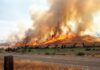
Rescue crews in Nepal are still pulling bodies from mud and debris five days after a glacier broke apart and sent a wall of water crashing into villages along the Nepal-Tibet border, with more than 3,000 people still missing.
Story Snapshot
- At least 682 bodies have been recovered across Nepal and Tibet, with more than 3,000 people still missing as of Saturday.
- Scientists say a glacier collapse, not an earthquake or heavy rain, triggered the disaster.
- Hundreds of foreign tourists, including 517 from other countries, remain unaccounted for.
- Officials warn rising lake water and unstable slopes could cause more flooding.
Death Toll Climbs as Search Enters Fifth Day
Nepal’s disaster management authority says 675 people have died in the country, with 2,478 still missing as rescue teams dig through thick mud in the Bhote Koshi valley. Chinese state media report seven deaths and more than 550 missing in Tibet’s Gyirong region. Combined, at least 682 bodies have been recovered and over 3,000 people remain unaccounted for across both countries.
The flood struck without warning on a Wednesday afternoon, sweeping away entire villages, a hydropower project, and a busy border crossing used by tourists and traders. Some victims were carried by the current as far as India, according to rescue officials. Nepal’s tourism board says roughly 600 of the missing were tourists, including 517 foreign nationals from more than 30 countries.
Glacier Collapse Behind the Disaster
The United States Geological Survey determined the flood began when a massive chunk of glacier ice and rock broke off high in the Himalayas and crashed onto the valley floor below. The collapse was so violent it produced its own seismic signal, registering a magnitude of 5.2. Early reports had blamed an earthquake, but scientists now say the ice collapse triggered an avalanche that blocked a river and unleashed a debris flow.
Experts describe the event as a “hazard cascade,” where one failure triggers the next in rapid succession. A glacier breaks apart, ice and rock slam into a valley, a river gets dammed, and the dam bursts, sending a flood of water, mud, and debris downhill. Researchers at the University of Reading say this chain reaction is common in the Himalayas and makes early damage counts hard to pin down while rescue teams are still working.
Warning System Failed to Catch the Threat
Nepal’s flood alert network relies on river gauges built to detect rising water from rainfall, not a fast-moving wall of debris triggered by a glacier collapse miles upstream. Scientists and disaster researchers say that gap likely left communities with little to no warning before the flood arrived. The speed of the disaster overwhelmed local response systems built for a different kind of threat.
This is not Nepal’s first brush with a glacier-triggered flood. A similar debris flow crossed from Tibet into Nepal in 2016, damaging a hydropower plant and a major highway. Researchers tracking glacial lakes across the region have documented more than two dozen similar outburst floods in recent decades, a pattern tied to melting ice in a warming climate.
Terrifying footage shows a flash flood sweeping through the Nepal–Tibet border, trapping people on rooftops and balconies. At least 469 have been killed, with hundreds still missing. pic.twitter.com/0uZgWjKKq6
— Monical Anderson (@realMonica76) August 30, 2026
Continued Flood Risk Keeps Rescuers on Edge
Nepali officials have warned that rising water in mountain lakes upstream could trigger fresh flooding as rescue crews work in the disaster zone. That threat has forced some search teams to pull back from unstable areas even as families wait for news of missing loved ones. Authorities are monitoring conditions closely while recovery work continues under difficult and dangerous terrain.
The scale of loss, hundreds of families searching for missing relatives, tourists from dozens of nations unaccounted for, and a warning system that could not keep pace with a fast-moving glacier collapse, has drawn global attention to how vulnerable mountain communities remain to disasters that strike without notice. Recovery efforts are expected to continue for days as officials work to confirm the fate of those still missing.
Sources:
facebook.com, theguardian.com, npr.org, reuters.com, forbes.com, nhess.copernicus.org
© patriotnews.net 2026. All rights reserved.