

(PatriotNews.net) – A single Coke bottle stuffed with gasoline transformed a quiet Bronx night into a flashpoint for questions about law enforcement, mental health, and the fragility of public safety infrastructure.
Story Snapshot
- Bronx woman allegedly attacked decommissioned NYPD precinct and two officers with gasoline
- Incident exposes gaps in security at unused public buildings and the unpredictability of mental health crises
- Police and community face renewed scrutiny over handling of criminal acts linked to psychiatric distress
- Event may trigger policy changes in law enforcement and mental health response protocols
Decommissioned Precinct Becomes Scene of Arson and Assault
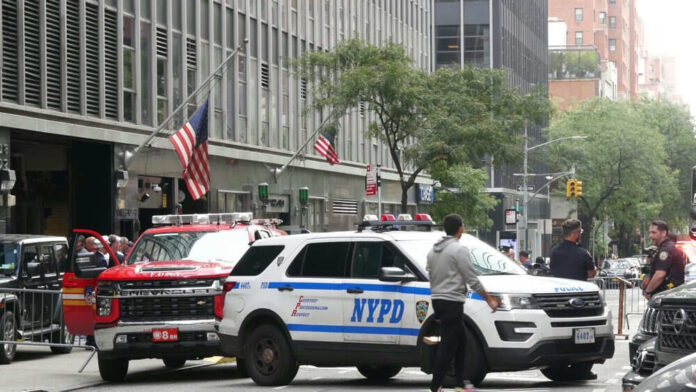
Samantha Calderon, 32, became the focal point of Bronx headlines after allegedly pouring gasoline from a Coca-Cola bottle onto the entryway of a shuttered NYPD stationhouse on Alexander Avenue just after 2:30 a.m. The act, brief in duration but potent in symbolism, ignited a fire that flickered out before causing structural damage. When confronted by two approaching officers, Calderon escalated the situation by hurling gasoline at their faces. Her actions, equal parts dangerous and desperate, led to immediate apprehension and a trip to Lincoln Hospital for psychiatric evaluation, before she was charged with arson, assault, criminal mischief, and resisting arrest.
The officers involved declined medical treatment, a decision that highlights both the unpredictability of street-level law enforcement and the delicate balance between procedural rigor and human judgment. The old precinct, left unoccupied and minimally secured, absorbed only minor damage, but the event reignited concerns about the vulnerability of decommissioned government facilities to acts of protest, vandalism, or violence. The choice of an improvised incendiary device, a soda bottle filled with gasoline, underscores the resourcefulness and volatility that police and communities now face as mental health and criminality intersect in increasingly public and unpredictable ways.
Mental Health, Law Enforcement, and the Bronx’s Tensions
Calderon’s case sits at the crossroads of several ongoing debates. The Bronx has long been a microcosm of America’s larger struggles with policing, public trust, and mental health. Decommissioned precincts, often left with minimal security and oversight, present tempting targets for those seeking to make a statement, whether driven by protest, distress, or desperation. The NYPD’s response, swift, restrained, and procedural, reflects a broader shift toward integrating psychiatric evaluation into the aftermath of violent incidents, especially when motivations are unclear.
Recent years have seen an uptick in attacks on public workers throughout New York City, including high-profile assaults on MTA employees and police officers. These incidents often involve unconventional weapons and tactics, revealing gaps in both security and preparation. Calderon’s actions, while singular in detail, echo a pattern of criminal acts marked by improvisation and unpredictability. Community advocates argue that such incidents reveal systemic failures in both mental health care and law enforcement outreach, while police representatives emphasize the growing dangers officers face on the job.
Implications for Public Safety and Policy Reform
The immediate fallout from Calderon’s alleged arson is a renewed policy conversation about the security of unused police buildings. Law enforcement agencies across the country are now reexamining protocols for monitoring and securing decommissioned facilities. Mental health professionals call for a more integrated approach, one that combines crisis intervention, community outreach, and rapid clinical assessment when criminal acts appear linked to psychiatric distress. The Bronx community, meanwhile, grapples with the social anxiety produced by high-profile disruptions, especially those that blur the lines between protest, illness, and criminality.
Bronx firebug throws gasoline on cops, lights old precinct on fire using soda bottle: NYPD https://t.co/mRY46usvHr pic.twitter.com/mFuoaNLBbb
— New York Post (@nypost) August 23, 2025
Experts in criminal justice and urban policing warn that incidents like Calderon’s can deepen mistrust between marginalized communities and law enforcement, particularly when public infrastructure is involved. The outcome of Calderon’s case, whether it leads to conviction, treatment, or both, may set a precedent for future responses to similar acts. The NYPD has confirmed its investigation, but public statements remain measured as the community awaits updates on Calderon’s psychiatric evaluation and legal proceedings.
Copyright 2025, PatriotNews.net