
(PatriotNews.net) – President Trump’s bold promise to slash prescription drug prices by up to 80% “almost immediately” faces a stark reality check as fact-checkers expose mathematical inconsistencies and a multi-year implementation timeline that contradicts his public claims.
Story Snapshot
- Trump claimed May 11, 2025, that drug prices would drop 30-80% “almost immediately” via executive order
- The executive order’s actual timeline requires months or years, not immediate implementation
- Experts rate Trump’s “almost immediately” claim as “Mostly False” despite acknowledging policy’s potential merit
- Pharmaceutical industry threatens legal challenges similar to those that blocked Trump’s 2020 drug pricing attempt
Trump’s Timeline Claims Contradict Executive Order Requirements
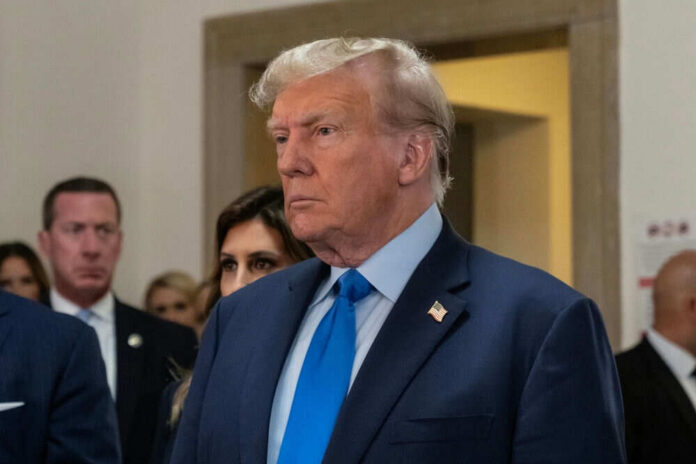
President Trump signed an executive order on May 12, 2025, titled “Delivering Most-Favored Nation Prescription Drug Pricing to American Patients” after announcing on Truth Social the previous day that prescription drug prices would be reduced “almost immediately” by 30% to 80%. The order adopts a most-favored-nation approach, targeting prices that align with what other developed nations pay. However, the executive order’s text reveals procedural requirements that directly contradict Trump’s timeline promise. The order mandates a minimum 30-day period for developing pricing targets, followed by an unspecified assessment period for voluntary compliance, and potentially months or years of formal rulemaking if pharmaceutical companies resist.
American Consumers Bear Disproportionate Drug Cost Burden
The United States represents less than 5% of the world’s population yet funds approximately 75% of global pharmaceutical profits. American consumers routinely pay substantially higher prices for identical medications available at lower costs in other developed nations. The Government Accountability Office documented in March 2021 that U.S. prices for selected brand drugs exceeded those in Australia, Canada, and France. This pricing disparity has persisted for decades, creating financial hardship for American families while pharmaceutical companies justify higher U.S. prices as necessary for research funding. Research published in The BMJ in February 2023 challenged this justification, suggesting high drug prices are not warranted by industry research spending.
Industry Opposition and Legal Challenges Threaten Implementation
PhRMA president Stephen J. Ubl warned that Trump’s executive order “would mean less treatments and cures and would jeopardize the hundreds of billions our member companies are planning to invest in America.” This opposition contradicts Trump’s claim to Fox News that drug company officials agreed “it’s time” to lower U.S. prices. The pharmaceutical industry’s expected legal challenges mirror those that successfully blocked Trump’s 2020 most-favored-nation order on procedural grounds. Trump’s first-term attempt to lower Medicare drug prices also failed when courts blocked the move. Representative Ro Khanna introduced legislation on May 20, 2025, to codify the executive order, potentially providing firmer legal footing if Congress enacts it, though Republican opposition to similar measures raises questions about passage prospects.
Expert Analysis Reveals Plausible Savings Despite Timeline Concerns
Andrew Mulcahy, a RAND Corporation senior health economist, stated Trump’s 30% to 80% price reduction range is “plausible,” noting that “a savings of roughly two-thirds on what we spend now for drugs seems in line” with RAND’s research. Jonathan Cohn, a health care policy expert, called the executive order “a serious policy initiative, one that credible people think could bring some relief on drug prices.” However, experts universally cautioned that procedural requirements make immediate implementation impossible. KFF Health News rated Trump’s “almost immediately” claim as “Mostly False,” stating the claim “contains an element of truth but ignores evidence that would give a different impression.” Health and Human Services announced on May 20, 2025, that MFN target pricing would be “the lowest price in an OECD country with a GDP per capita of at least 60 percent of the U.S. GDP per capita.”
Medicare Negotiations Already Delivering Results Under Previous Legislation
While Trump’s executive order faces implementation hurdles, the Trump administration is already implementing Medicare drug price negotiation provisions from the Inflation Reduction Act, achieving 44% savings on net spending for 15 negotiated drugs in 2024. This demonstrates that legislative approaches can deliver tangible results where executive orders face legal obstacles. The contrast highlights the importance of constitutional separation of powers and proper legislative procedures. If Trump’s most-favored-nation approach ultimately succeeds, it could reshape the global pharmaceutical pricing landscape, potentially forcing manufacturers to either lower U.S. prices or raise international prices to maintain profit margins. Critics argue the latter scenario could undermine the policy’s intended benefits, creating unintended consequences for consumers worldwide while pharmaceutical companies protect revenue streams.
Sources:
KFF Health News – Drug Price Executive Order Fact Check
Triage Health Law Blog – Trump Signs Executive Order to Reduce U.S. Drug Prices
KFF – Understanding the Trump Administration’s Negotiated Drug Prices for Medicare
CAHSPER Washington University – Fact Check: Trump’s Mathematically Impossible Promise
Copyright 2026, PatriotNews.net