A private jet carrying nine people dropped more than 32,000 feet per minute over a Florida neighborhood seconds after the crew radioed a mayday call, and federal investigators still cannot say why.
Story Snapshot
- All nine people aboard a Learjet 60 charter flight died when the plane crashed near Palm Beach County on November 1, 2026.
- The crew reported light icing and moderate turbulence, then asked to climb to 37,000 feet before the mayday call came less than 30 seconds later.
- The National Transportation Safety Board (NTSB) found evidence the plane shed parts before hitting the ground, raising questions about a possible in-flight breakup.
- Investigators say it is too early to blame weather, a mechanical failure, or pilot error, despite competing theories already circulating.
Crew Reported Icing Minutes Before the Mayday
The Learjet 60 was flying under Part 135 charter rules for Aurora Aviation, doing business as Upper Jets, when the crew told air traffic control they were hitting light ice and moderate turbulence. The outside temperature read minus 53 degrees. Investigators say the crew described the icing as manageable, a detail that complicates any simple claim that ice alone brought the plane down.
Shortly after that report, the crew said they were “picking up precipitation” and asked to climb to 37,000 feet, likely to get above the weather. National Transportation Safety Board investigator Tom Chapman said the mayday call, which reported a sudden descent, came less than 30 seconds after that climb request. That tight timeline is the strongest link investigators have so far between the weather and the loss of control.
Plane Shed Parts Before Hitting the Ground
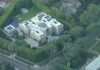
The aircraft entered a steep right turn and plunged at a rate over 32,000 feet per minute, a descent rate far beyond anything pilots train for in normal flight. Investigators also found evidence that components separated from the plane before it crashed into the residential area, a finding that points toward a possible in-flight breakup rather than a controlled, if failed, recovery attempt.
Bloomberg and aviation outlet AVweb both reported that severe weather, including possible thunderstorms, remains a major focus of the investigation. But the Federal Aviation Administration (FAA) has only confirmed that it and the National Transportation Safety Board are investigating. No agency has said what actually caused the aircraft to lose control.
Experts Push Back Against an Easy Weather Story
Not everyone agrees the weather explanation is settled. Joseph Post, a research scholar at the University of South Florida, said the exact cause of the loss of control remains unknown and that investigators have not ruled out other factors beyond icing or turbulence. His comment is a reminder that early theories are not the same as findings.
Aviation expert Rojas raised a different possibility: a failure in the plane’s de-icing system or a faulty autopilot sensor that could push the nose down without the pilots realizing what was happening. A pilot quoted by VIN News went further, suggesting crew inexperience or complacency may have combined with the weather to cause the crash. None of these claims are confirmed.
The New York Times reported that aviation specialists see ice, turbulence, and human error as possible contributors working together, not as competing single causes. Federal officials have repeatedly said it is too soon to draw conclusions. That caution matters, because an arrest-like rush to judgment before the facts are in can mislead the public long before investigators finish their work.
A Pattern Familiar to Crash Investigators
Federal Aviation Administration data on thousands of past accidents shows weather is often cited as a factor but rarely stands alone as the full explanation. Investigators typically find that weather creates a hazard, while decisions by pilots, airlines, or air traffic controllers determine whether that hazard turns deadly. That history suggests the Florida crash may ultimately involve more than one cause.
For families of the nine victims and for a flying public already uneasy about charter jet safety, the unanswered questions are not just academic. Until the National Transportation Safety Board releases cockpit recordings, wreckage analysis, and a formal probable-cause finding, Americans are left weighing competing theories from experts, officials, and commentators, a familiar frustration when institutions move slowly and the public wants answers now.
Weather conditions at altitude, icing, turbulence and possible structural failure are among factors the U.S. NTSB plans to focus on as it investigates the Nov. 1 Learjet 60 crash in near Greenacres, Florida, which killed all nine on board.https://t.co/OpPb95jEe9
— Aviation Week (@AviationWeek) November 3, 2026
The investigation remains open, and officials caution that any theory about weather, mechanical failure, or crew error is preliminary until the full technical record is published.
Sources:
youtube.com, faa.gov, myrtlebeachonline.com, bloomberg.com, tpr.org, palmbeachdailynews.com, usatoday.com, wach.com, nytimes.com
© patriotnews.net 2026. All rights reserved.