
British counterterrorism police arrested a seventh man as the Pentagon confirmed every U.S. bomber left RAF Fairford and returned to the United States.
Story Highlights
- Pentagon said all U.S. bombers redeployed from RAF Fairford to U.S. bases.
- U.K. counterterrorism police confirmed multiple arrests and ongoing searches.
- Officials described the U.S. move as precautionary to protect personnel.
- The timeline links arrests near the base with the rapid bomber withdrawal.
Pentagon Confirms Full Redeployment From RAF Fairford
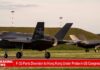
The Pentagon stated that all U.S. bombers previously deployed to RAF Fairford were sent back to their home stations in the United States. Officials said they could not confirm movements in real time due to operational security, but acknowledged the completed redeployment after the fact. Reporting described the aircraft involved as including B-1s, with some outlets also mentioning other bomber types. The Defense Department said U.S. bombers continue to operate worldwide and remain ready for global strike missions.
Vice President JD Vance framed the decision as a step taken out of an abundance of caution to protect U.S. forces, aligning with Pentagon language about routine global operations and readiness. That message tracked with past practice in comparable security situations, where commanders prioritize force protection when threat information is developing. While aircraft types and exact numbers varied across reports, the core fact is clear: no U.S. bombers remained at RAF Fairford once the move was complete.
Counterterrorism Investigation and Arrest Sequence in the U.K.
Counter Terrorism Policing in the United Kingdom said the inquiry linked to RAF Fairford was in its early stages. Officers examined three vehicles with support from military and forensic teams, signaling a serious security posture. Initial reporting said five men were arrested and later bailed, with further police actions following in the same area. Police asked the public for information that could help the case, and confirmed that lines of inquiry remained open as searches and analysis continued.
British media placed the first arrests on 27 September, after a security incident near the Gloucestershire base. The bomber withdrawal became public the following week, with confirmation on 4 October. That sequence tied the redeployment to the period when police activity around the base escalated. Officials did not release a charging document during this stage, which is common for early counterterrorism cases while evidence is still being processed.
Timeline Connects Arrests and Withdrawal Without Proving Causation
BBC and other major outlets reported the bombers’ departure after arrests near RAF Fairford, creating a clear temporal link between the UK police activity and the U.S. redeployment. Sky News reported that U.S. officials acted on a reported threat and emphasized caution, while also noting that the United States kept strike options available from other locations. The timeline shows officials moved fast to reduce risk while investigators gathered facts on the ground.
U.S. and U.K. statements did not name a single, specific trigger in public releases. Sources varied on whether the move covered only B-1 bombers or included other types, and on whether it was framed as routine rotation or a response to a possible threat. That mix is consistent with how governments manage sensitive security information during ongoing investigations. The established facts remain: bombers left the base, police made arrests, and authorities described the U.S. action as precautionary.
Why This Matters for Security, Allies, and the Public
Allies rely on quick, quiet coordination when a base faces a possible threat. This case shows that playbook at work. U.S. and U.K. officials acted to protect service members, nearby families, and critical assets. The sequence fits a pattern in which security teams move first, then speak narrowly while evidence is reviewed. That approach can frustrate the public, but it aims to keep people safe while protecting active operations.
The withdrawal is real and it was fast. 10 of the 12 B-1B Lancers left RAF Fairford in one go, including bombers that had only arrived six days earlier, and the Pentagon confirmed all of them are back at home stations. US officials are citing 'new threats' after the…
— Fuelmeup (@fuelmeupcc) October 6, 2026
Americans across the spectrum worry when vital missions get disrupted, and when leaders share little about why. Conservatives see risk to deterrence and to the troops. Liberals see the costs of constant emergency footing and opaque decisions. Both sides see a government culture that defaults to secrecy. The documented record here shows decisive protective action and a live investigation. The larger test ahead is clear communication to restore trust once it is safe to talk more.
Sources:
twz.com, politico.com, bbc.com, france24.com
© patriotnews.net 2026. All rights reserved.