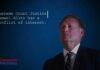
Dartmouth’s provost warned students not to outsource thinking to artificial intelligence, then admitted he used it in his own public writing without telling readers.
Story Snapshot
- Provost Santiago Schnell acknowledged using artificial intelligence for editing and clarity in his writing and later said he should have disclosed it.
- A student investigation reported several 2026 pieces were flagged as heavily artificial intelligence–written by the Pangram detector.
- President Sian Leah Beilock launched a formal review led by an independent advisory committee.
- Students and faculty called the situation hypocritical, citing tougher classroom rules for students.
What Triggered The Backlash
Student journalists at The Dartmouth examined Provost Santiago Schnell’s 2026 writing. They reported very high artificial intelligence scores on several pieces using the Pangram detector, including an op-ed warning that students could dodge real work by using artificial intelligence tools. Schnell had publicly argued that students should not outsource thought. That clash between message and method set off a campus storm and drew national media attention to Dartmouth’s leadership and rules.
After the coverage, Schnell confirmed he uses artificial intelligence for language refinement, copyediting, and structure, while saying he reviews and owns the final text. He later wrote that he should have clearly disclosed that help in his public writing and apologized for not making that his standard practice. Those statements shifted the focus from denial to transparency. The question now is not only how much help he used, but what readers and editors were told.
How Dartmouth Responded
Dartmouth President Sian Leah Beilock announced a “rigorous, objective review” of Schnell’s academic and public writing, measured against the rules of the outlets that published his work. She said an independent advisory committee would lead the review and that campus talks on authorship and transparency would follow. That move signaled the school sees the issue as serious. It also shows the rulebook for leaders has not kept pace with fast artificial intelligence adoption.
Students and some faculty pressed harder. They called the situation hypocritical and embarrassing, pointing to stricter classroom standards that limit artificial intelligence unless a professor allows it. They argued leaders should meet or exceed the rules set for students, not fall short of them. Their demands raise a core fairness problem: when powerful officials set the tone on integrity, silence about their own artificial intelligence use erodes trust.
What Is Known And What Is Not
The record clearly shows three facts: detectors flagged Schnell’s pieces at high levels, Schnell admits using artificial intelligence for editing and clarity, and he later said he should have disclosed that use in public writing. What remains unclear is the exact split between human and machine in each draft. The campus reports cite detector scores, but do not include full draft histories or submission correspondence for each work. That limits precise attribution for every line.
Detector limits also matter. Research shows artificial intelligence detectors can flag polished human prose or miss edited machine text. Some tools post notable false positives and struggle with hybrid documents. Other studies find stronger performance for certain detectors on longer passages. Even then, experts say these tools should prompt review, not act as the final judge of authorship. This is why Beilock’s review could help by testing evidence beyond detector scores.
Why This Resonates Beyond Campus
This story hits a nerve shared by many Americans across politics. People see one set of rules for elites and another for everyone else. When a top official warns students about artificial intelligence shortcuts, then fails to disclose his own use, it confirms a suspicion that leaders protect themselves first. That distrust grows when policies are vague for the powerful but strict for those with less leverage. Institutions risk their credibility when they leave gray areas at the top.
I pity the Dartmouth provost a bit (article below). People run his writing through unreliable AI detectors and jump to "fire him." If we often can't tell what's AI, the real question is where the author's own voice or opinions need to be theirs, which totally depends on context.
— Graham Rogers (@_graham05) October 2, 2026
There is a constructive path. The review can release clear standards for disclosure, authorship, and editing across roles. It can publish guidance for op-eds, academic work, and official statements. It can make disclosures routine and visible to readers. Schnell’s apology opened that door. If Dartmouth pairs it with firm, role-appropriate rules and transparent findings, the school can show that integrity still has meaning in the artificial intelligence age—and that rules apply up and down the ladder.
Sources:
theatlantic.com, thedartmouth.com, nytimes.com, president.dartmouth.edu, bostonglobe.com, arxiv.org, nature.com
© patriotnews.net 2026. All rights reserved.