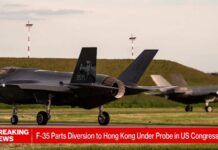
The Navy just handed Boeing a development contract worth more than $20 billion to build America’s next carrier-based fighter, locking one company into a massive, years-long project that will shape U.S. air power and defense spending.
Story Snapshot
- The Navy selected Boeing to develop the F/A-XX sixth-generation fighter.
- The award is valued at about or more than $20 billion for full-scale development.
- The contract funds multiple test aircraft for ground, flight, and weapons testing.
- The F/A-XX will anchor the Navy’s Next Generation Air Dominance effort.
What The Navy Decided
On September 29, 2026, the Navy chose Boeing to design, build, and deliver its sixth-generation F/A-XX fighter under the service’s Next Generation Air Dominance effort. Reports describe the award as worth about or more than $20 billion for the development phase. Boeing beat Northrop Grumman in the final round of the competition. Boeing’s own investor release confirms the selection and scope to “design, build and deliver” the new aircraft.
Published coverage says the contract funds full-scale development and multiple test aircraft for ground checks, airworthiness work, and systems and weapons integration. That signals an engineering push, not a production fleet buy. Aviation Week and other outlets place the value at more than $20 billion and tie the award to test article builds and integration testing, which matches the Pentagon’s summary descriptions.
Why It Matters For The Fleet
Reuters and other reports state the F/A-XX will become the centerpiece of the Navy’s Next Generation Air Dominance “family of systems,” and is intended to replace the F/A-18 Super Hornet over time. Early production is expected in the 2030s, while Super Hornets are likely to keep flying into the 2040s. The timeline shows a long overlap, with development and testing now, and fleet shifts later as the Navy proves capabilities at sea.
The selection follows months of delay and budget tension around this program. Reporting notes Congress added funding in the fiscal year 2026 cycle to keep the schedule moving. On the same day, Aviation Week reported a separate Navy action to prepare for future shutdown of current F/A-18E/F and EA-18G production lines, underscoring the coming transition from today’s jets to the next generation of carrier aviation.
Costs, Secrecy, And The Bigger Picture
The coverage agrees on the large price tag but varies between “$20 billion” and “more than $20 billion,” which reflects how development contracts are structured with phases and options. Many technical details remain classified, so public information focuses on scope, contractors, and the testing plan rather than speed, range, or signature features. That is common for advanced fighters during development and does not change what the Navy formally awarded.
Boeing Wins $20B Navy Fighter Jet Contract
— ✈️ Boeing won a $20B+ contract to develop the US Navy’s next-generation F/A-XX fighter jet.
— 🏆 Boeing beat rival Northrop Grumman for the sixth-generation aircraft program.
— 🇺🇸 Boeing now holds next-generation fighter contracts…
— AFV GLOBAL (@afvglobal) September 30, 2026
This award also fits a wider trend. Boeing now leads the Navy’s F/A-XX and, as other outlets have noted, also holds the Air Force’s separate sixth-generation crewed fighter program. Research from the RAND Corporation warns that fewer competitors in the industrial base can raise strategic and operational risk. That context helps explain why many Americans across the spectrum watch big defense deals for cost control and accountability.
What Comes Next For Taxpayers And Sailors
The near-term milestones are clear. Boeing must build and test multiple aircraft, integrate sensors and weapons, prove the jet can operate from carriers, and show that new systems work with unmanned partners and other platforms. Congress will review progress and funding each year. If testing succeeds, later decisions will set production, costs, and delivery rates. Today’s decision sets the path; the harder work is making a complex, sea-based fighter safe, reliable, and worth the money.
Sources:
insidedefense.com, reuters.com, theaviationist.com, aviationweek.com
© patriotnews.net 2026. All rights reserved.