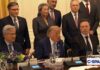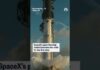

President Trump warned Iran would “suffer greatly” if it brought combat drones into Britain, after the United States pulled B-1 bombers from a U.K. base due to a credible threat.
Story Snapshot
- Trump linked a U.S. bomber withdrawal from RAF Fairford to a specific threat and warned Iran.
- Reports said officials feared a complex drone attack and moved twelve B-1 bombers as a precaution.
- Britain’s leader cited “strong indications” of Iranian involvement; Tehran strongly denied it.
- Drone incidents near U.K. military sites have surged, with few public attributions.
What Triggered Trump’s Warning
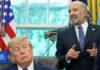
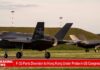
President Trump told reporters on October 5 that the United States moved bombers because of “some threats,” and, when asked about Iranian combat drones in the United Kingdom, said, “I can’t tell you that, but if they did, they’ll suffer greatly”. The Wall Street Journal reported that officials feared a complex drone strike and that twelve B-1 bombers were relocated from RAF Fairford to reduce risk. The comments framed a deterrent message and confirmed a serious security response.
U.S. and European officials cited by major outlets tied the concern to Iran’s Islamic Revolutionary Guard Corps, prompting rapid changes to aircraft posture at the British base. Trump’s remarks did not confirm drones were inside the country, but his conditional warning suggested Washington views the threat as real enough to change operations. The decision fits a pattern in which leaders act on timely intelligence to protect assets while limiting what they share publicly.
What Britain And Iran Are Saying
United Kingdom Prime Minister Andy Burnham said there were “strong indications” that Iran played a role in the Fairford incident but offered no public evidence to back the claim. Iran’s embassy in London “categorically” rejected any link and called the claims unfounded, while officials in Tehran also issued strong denials. Reuters said British police had not formally linked Iran to the arrests when Tehran issued its denial, highlighting the gap between political claims and police statements.
The push and pull shows how contested narratives unfold during fast-moving security scares. Governments often speak in general terms while investigations continue. Iran has also warned that any base used to launch attacks on its territory would be a “legitimate target,” a stance that raises tensions around sites like Fairford that support U.S. operations. These statements, paired with denials, leave the public sorting through sharp words but limited verifiable detail.
Why Drone Threats In The U.K. Are Rising
Official figures show drone incidents near U.K. military sites jumped from 126 in 2024 to 266 in 2025, and officials have said they cannot rule out hostile state actors in some cases. This surge has strained base security and air defenses, with authorities rarely naming who is responsible. That background matters here: spotting drones has become common, attribution is slow, and governments often withhold technical proof to protect sources and methods while they harden defenses.
BREAKING: TRUMP WARNS IRAN
Asked whether Iran may have moved combat drones into the UK, President Trump replied: I can’t tell you that, but if they did, they’ll suffer greatly.#NYI pic.twitter.com/AuxZjuexI1
— NewYork-Insight (@NewYork_Insight) October 5, 2026
Analysts warn that small, cheap drones can threaten expensive assets, force costly moves, and create fear far from battlefields. That is why the United States shifted bombers quickly and why Britain is upgrading counter-drone tools. The public sees the expense and disruption while hearing little proof. That gap feeds a broader frustration: citizens across parties feel leaders talk tough yet fail to deliver lasting safety, clarity, or accountability when risks hit close to home.
Sources:
youtube.com, aa.com.tr, armyrecognition.com, timesofindia.indiatimes.com, wsj.com, investing.com, bbc.com, abcnews.com
© patriotnews.net 2026. All rights reserved.