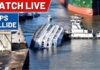
A loaded tanker slammed into a docked New Orleans cruise riverboat at midday, capsizing it at the pier but causing no deaths, officials said.
Story Snapshot
- Port officials identified the vessels and placed the collision near Port of New Orleans headquarters around 12:30 p.m.
- All passengers and crew were accounted for; dozens sustained non-life-threatening injuries, officials said.
- The riverboat rolled onto its side and partially submerged after a broadside strike.
- Federal, state, and local teams mounted a large rescue and triage operation.
What Happened on the Mississippi River
Port of New Orleans officials said the tanker Atlantic Asphalt collided with the docked river cruise vessel American Heritage around 12:30 p.m. near 1350 Port of New Orleans Place. The site sits along the busy Mississippi River waterfront. The impact struck the riverboat broadside at the pier. Video and descriptions from the scene showed the vessel rolling onto its side and becoming partially submerged at the dock after the hit. No fatalities were reported by authorities.
City and port leaders reported a fast multi-agency response. The United States Coast Guard, New Orleans Fire Department, New Orleans Police Department, and Harbor Police assisted evacuations. Medical teams set up triage at the Port Administration Building. Helicopters and boats helped pull people from the vessel and water. Officials said all aboard were accounted for. Reports described more than 30 hospital transports for non-critical injuries. The response drew on standard marine casualty playbooks used in river city ports.
Who Was Aboard and How Rescues Unfolded
Media accounts varied on the number of people aboard. Outlets cited about 129 passengers in some reports, and close to 150 or more in others. That difference is common early in an emergency when manifests and headcounts update in real time. What stayed consistent was the end result: officials said everyone was found after the rescue operation. Some people disembarked at the dock, while others entered the water before responders reached them. Injuries were described as non-life-threatening.
Witness accounts and footage described a sudden, powerful strike followed by the riverboat tipping onto its side. The listing put parts of the vessel under water even while tied up. Responders guided evacuees across the dock, used ladders and boats, and moved the injured to waiting ambulances. Crews worked to secure fuel and power to reduce further risk. City officials credited coordination among agencies for the quick accounting of passengers and crew given the dramatic scene.
What We Know About Cause and Damage
Officials had not confirmed the mechanical or human factors behind the collision. Early reports mentioned possible steering or power issues on the larger ship, but investigators had not issued findings. In these cases, the United States Coast Guard and, at times, the National Transportation Safety Board review logs, radio traffic, and equipment data. They also interview crews and inspect the hulls. That process can take weeks to produce initial statements, and longer for final reports.
The American Heritage showed severe stability loss after the hit, rolling and settling to one side. Salvage experts will study hull damage, watertight integrity, and mooring forces to explain the capsize at the pier. Investigators also will assess the tanker’s track, speed, and bridge team decisions. Formal marine casualty investigations often compare instrument data with video time stamps to map the sequence and root cause. Port operations may adjust traffic or berthing rules pending results.
Why This Incident Matters Beyond New Orleans
Busy rivers demand tight navigation and clear communication. The Mississippi River near New Orleans carries tankers, towboats, and cruise traffic in close quarters. Federal data show passenger vessel incidents recur each year, with equipment failures among frequent triggers. That pattern makes prevention work—training, maintenance, and escort plans—crucial. It also highlights why strong local response plans matter. On Friday, those plans, plus quick action by crews and bystanders, prevented deaths.
A tanker collided with a river cruise boat in New Orleans on Friday.
Eyewitness video shows the larger ship slamming directly into the American Heritage paddle boat. Another angle captures the ship as it starts tilting on its side.
Officials said there were nearly 130 people on… pic.twitter.com/CnahH51Eap
— PBS News (@NewsHour) November 14, 2026
For families, the relief is obvious: loved ones are alive. For the public, the questions are practical. How did a tanker strike a berthed passenger vessel in daylight at the port’s front door? Were safeguards missed, or was this a rare cascade of failures? People across the political spectrum share one expectation here: honest answers, fast lessons, and safer waterways. That is not politics. That is basic competence in a nation that depends on its rivers.
Sources:
youtube.com, afp.com, workboat.com, nola.com, wcjb.com
© patriotnews.net 2026. All rights reserved.