
(PatriotNews.net) – When the world’s most powerful intelligence chiefs stand shoulder to shoulder with a U.S. President on explosive nuclear claims, every global treaty trembles, because the ripple effects could reshape the future of warfare and diplomacy.
Story Highlights
- America’s top intelligence and legislative leaders publicly endorsed Trump’s claims of secret Russian and Chinese nuclear tests.
- The rare alignment signals potential policy shifts for U.S. nuclear posture and global test bans.
- China issued categorical denials, reaffirming its commitment to the Comprehensive Nuclear-Test-Ban Treaty (CTBT).
- No direct public evidence has yet surfaced to confirm the alleged clandestine tests.
America’s Nuclear Test Accusation: A Public Alignment at the Top
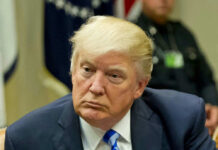
President Trump’s announcement on the eve of a major diplomatic summit sent shockwaves through the global security establishment. With the Asia-Pacific Economic Cooperation summit set as the stage, he alleged, via social media, that Russia and China have been secretly conducting nuclear tests, violating decades of international norms. Within hours, CIA Director John Ratcliffe and Senate Intelligence Chairman Tom Cotton backed Trump’s assertion, stating that classified intelligence supports the President’s concerns. This rare public consensus between the White House, intelligence leadership, and Senate oversight marks a pivot point in U.S. nuclear policy, especially given the gravity of the allegations and the global scrutiny that followed.
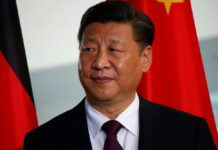
China’s immediate response was to issue a categorical denial. The Foreign Ministry reaffirmed its commitment to the Comprehensive Nuclear-Test-Ban Treaty, stating, “China has always strictly fulfilled its international obligations and commitments.” Russia, while implicated by the claims, did not issue a direct rebuttal at the time. These denials stand in stark contrast to the public alignment of American officials, creating a diplomatic standoff that highlights the deepening fault lines in global nuclear governance.
Historical Context: The Fragile Moratorium and Persistent Suspicions
Since the 1990s, the world’s nuclear powers have observed a de facto moratorium on nuclear testing under the CTBT, though not all have ratified the treaty. The last confirmed nuclear test by the United States was in 1992, by Russia in 1990, and by China in 1996. Despite decades without acknowledged tests, U.S. intelligence agencies have periodically flagged suspicions of low-yield or subcritical activity by Russia and China. These hints have rarely surfaced as direct public allegations, until now. Previous U.S. administrations exercised restraint, raising transparency concerns without leveling explicit accusations. The current public strategy, endorsed at the highest levels, signals a willingness to confront adversaries and possibly reconsider America’s own testing posture.
North Korea remains the only nation with confirmed nuclear tests in the 21st century, a fact that arms control advocates frequently cite to underscore the rarity and gravity of such actions. The renewed U.S. scrutiny of Russia and China comes as arms control treaties falter, with New START under strain and the CTBT increasingly vulnerable to the pressures of strategic competition.
Policy Shifts and Strategic Ramifications
The immediate impact of Trump’s claim and the subsequent endorsements has been the ordering of the Pentagon to prepare for renewed nuclear testing, “on an equal basis” with Russia and China. This directive, paired with public statements from Ratcliffe and Cotton, signals a shift away from decades of restraint and toward a more aggressive nuclear posture. The implications are profound: a single U.S. test could shatter the global taboo, embolden rivals, and trigger a cascade of new testing worldwide.
Arms control experts warn that the lack of publicly presented evidence makes verification extremely difficult, especially given the advanced techniques and secrecy surrounding modern nuclear programs. Intelligence professionals note the technical challenges in detecting low-yield or subcritical tests, particularly in closed societies with sophisticated countermeasures. Despite these hurdles, the alignment of U.S. executive, intelligence, and legislative branches wields enormous influence over policy direction, potentially resetting the global nuclear status quo.
The Stakes: Erosion of the Global Test Ban and a Potential New Arms Race
The short-term ramifications include heightened diplomatic tensions, increased costs for nuclear infrastructure, and significant anxiety among populations near potential test sites. Long-term risks loom larger: the erosion of the global nuclear test ban and the possible onset of a new arms race. Nonproliferation scholars underscore the CTBT’s importance as a bulwark against proliferation and environmental harm, warning that its collapse could undermine decades of progress. Industry analysts foresee renewed activity in the nuclear weapons sector, while diplomatic experts predict strained relations with China and Russia and challenges for treaty enforcement.
The lack of direct public evidence leaves the door open to both skepticism and escalation. While U.S. officials argue intelligence supports their concerns, Chinese officials maintain categorical denials. Independent analysts urge caution, advocating transparent multilateral verification mechanisms. The current standoff underscores the fragile balance at the heart of global security, and the power of high-level consensus to reshape the nuclear landscape.
Copyright 2025, PatriotNews.net