(PatriotNews.net) – One presidential signature, a rarely used legal loophole, and $5 billion in vanishing aid: what happens when executive power tries to sidestep the will of Congress at the fiscal year’s eleventh hour?
Story Overview
- Trump attempts to cancel $5 billion in foreign aid using a pocket rescission for the first time in nearly 50 years.
- The maneuver leverages a legal gray area, challenging Congress’s constitutional authority over federal spending.
- Foreign aid programs run by USAID and the State Department face immediate disruption, with global and domestic consequences.
- The move ignites an executive-legislative clash over America’s priorities and the balance of power.
Pocket Rescission: A Presidential End-Run Around Congress
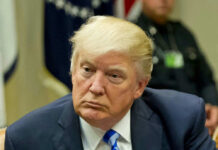
Pocket rescission, a term unknown to most Americans, now headlines the most contentious spending battle in a generation. President Trump, invoking the Impoundment Control Act of 1974, directed the Office of Management and Budget to notify Congress of his intention to claw back nearly $5 billion in foreign aid, money already approved by lawmakers. The gambit’s brilliance, or audacity, lies in its timing: with the fiscal year’s end just weeks away, Congress has little room to counter the executive freeze before the funds expire. Supporters hail this as a long-overdue correction to “woke, wasteful” spending; critics see a brazen violation of the constitutional purse strings.
Trump’s letter to House Speaker Mike Johnson arrived on August 29, immediately sending shockwaves through Washington. By August 30, the White House released a fact sheet casting the rescission as a strike against programs it characterizes as ideologically driven or inefficient. The targeted accounts, largely under the State Department and USAID, support everything from peacekeeping to development projects in fragile regions. The administration frames the move as a restoration of “America First” priorities, while lawmakers across the aisle warn of humanitarian fallout and legal overreach.
Executive Power vs. Congressional Purse: The Looming Constitutional Clash
The Impoundment Control Act was designed to rein in presidential impoundments after Watergate, requiring that any cancellation of appropriated funds receive congressional approval. Pocket rescission, however, exploits a loophole: by proposing the rescission so late in the fiscal year, the president can effectively block spending until the clock runs out. The last such maneuver, by President Carter in 1977, faded quietly with Congressional input and little pushback. Trump’s approach is far bolder, using the tactic as a cudgel in the culture wars and a test of executive muscle.
Congressional leaders, including some Republicans, denounce the move as a circumvention of their constitutional duty. They argue that foreign aid, regardless of its political flavor, serves long-term US interests, stabilizing allies, preventing crises, and projecting American influence. Legal experts warn of a dangerous precedent: if pocket rescission succeeds, future presidents could routinely nullify congressional appropriations with last-minute paperwork.
Global Aid Disrupted, Domestic Debate Intensifies
With the rescission package in play, USAID and State Department contractors are suspended in limbo. Secretary of State Marco Rubio, a vocal supporter, announced that USAID is in “closeout mode,” consolidating critical programs under the State Department’s direct control. This shift disrupts ongoing health, education, and humanitarian projects in dozens of countries, leaving recipient communities, US-based NGOs, and international organizations scrambling for alternatives.
Democracy advocates and foreign policy professionals warn of a double blow: not only do vulnerable populations lose vital support, but America’s credibility as a reliable partner comes into question. Economic consequences ripple outward as contracts are canceled and project pipelines dry up. Yet, for Trump’s base, the rescission is a campaign promise fulfilled, proof of a leader willing to fight entrenched bureaucracy and globalist excess, regardless of the diplomatic cost.
Legal Uncertainty and the Road Ahead
As the fiscal year’s September 30 deadline approaches, the funds remain frozen, neither spent nor definitively canceled. Legal scholars debate the constitutionality of the maneuver, pointing to the letter and spirit of the Impoundment Control Act. Lawsuits and congressional resolutions loom, but time is short. If the money lapses, Trump’s precedent will haunt future appropriations battles, emboldening future executives and further polarizing Washington’s budget wars.
Supporters frame the episode as a triumph of fiscal responsibility and a blow against ideological mission creep. Critics see a dangerous erosion of democratic norms and a threat to America’s global standing. As the dust settles, one question cuts through the noise: who really controls the nation’s priorities, the people’s representatives, or the man in the Oval Office armed with a ticking clock?
Copyright 2025, PatriotNews.net