
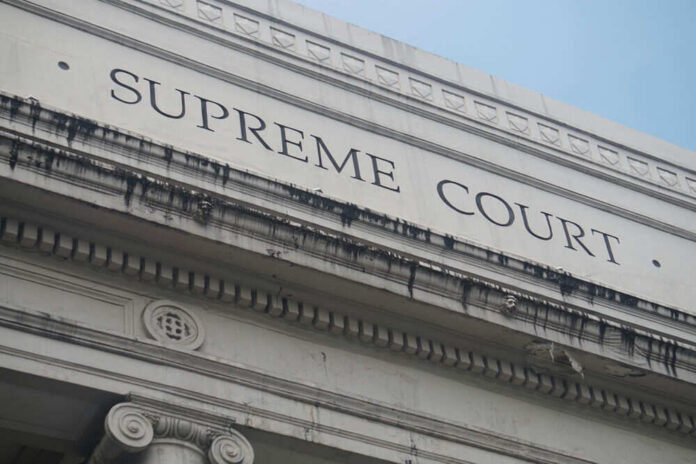
(PatriotNews.net) – A headline claiming the Supreme Court green-lit D.C. police blocking “suspicious” cars from fleeing is ricocheting online—but the underlying record points to a different, more familiar story about security scares near the Court.
Quick Take
- No provided reporting confirms a Supreme Court ruling about D.C. police blocking a suspicious vehicle from fleeing.
- Multiple outlets instead describe U.S. Capitol Police responding to a suspicious vehicle parked near the Supreme Court, leading to detentions and a weapons discovery.
- The incidents reflect post–January 6 security posture around federal buildings, including K-9 sweeps, evacuations, and temporary closures.
- Online posts appear to merge separate ideas: routine police authority under the Fourth Amendment versus a specific SCOTUS “ruling” tied to a D.C. incident.
What the verified reporting actually describes near the Supreme Court
U.S. Capitol Police responses near the Supreme Court in Washington, D.C., have repeatedly followed the same pattern: officers spot a vehicle parked illegally or flagged as suspicious, move quickly to secure the area, and use K-9 units to assess threats. In one widely reported case, officers ordered occupants out, detained individuals, and later found firearms after a dog alerted, before the area partially reopened.
Those details matter because they are concrete, on-the-record facts from incident coverage—not legal doctrine. The vehicle at the center of the reporting was stationary, not fleeing, and the Supreme Court’s role was geographic, not judicial. Several accounts include odd but consistent details—like a pet being removed from the vehicle—alongside more serious ones, such as the discovery of multiple guns and the use of controlled procedures to ensure no explosives were present.
No evidence in the provided sources of a new Supreme Court “blocking fleeing vehicles” ruling
The user’s research summary flags the key problem: the premise of a Supreme Court decision authorizing D.C. police to block a suspicious vehicle from fleeing is not supported by the linked incident coverage. The reporting describes law enforcement actions and security protocols near a sensitive site, but it does not reference a Supreme Court opinion, docket, or holding that changed the law on vehicle stops, pursuits, or barricading tactics.
That gap is important for readers trying to sort signal from noise. Police authority to detain, search, or use force is usually analyzed under the Fourth Amendment and existing precedent, but that is different from a specific, fresh ruling tied to a single D.C. episode. When viral claims use “the Supreme Court says” language without a case name or opinion, Americans across the political spectrum should treat it as a red flag until verified.
Why these “suspicious vehicle” incidents keep happening in D.C.
Capitol Hill remains on heightened alert years after the January 6 riot, and federal police treat vehicles near major government buildings as potential delivery systems for violence. That reality has produced a steady stream of evacuations, street closures, K-9 checks, and rapid-response deployments around the Capitol complex, with the Supreme Court just steps away. In practice, an illegally parked van can trigger an outsized response because the downside risk is so high.
What this means for conservatives—and for civil liberties—going forward
Conservatives often support strong public safety and the protection of national institutions, but they also tend to be wary of expanding government power without clear limits. The incident coverage here shows aggressive security procedures, yet it does not show a new judicial blessing for broader police power. That distinction should matter to anyone who believes limited government requires transparency: if officials claim new authority, citizens deserve a clear citation to the actual law or ruling.
Supreme Court says D.C. police can block a suspicious vehicle from fleeing @washtimes https://t.co/KbAlW6HziD
— Alex Swoyer (@ASwoyer) April 20, 2026
For people frustrated with “elite” narratives and institutional spin, the lesson is practical: separate the location (near the Supreme Court) from the institution’s legal action (a Supreme Court ruling). The most reliable takeaway from the available reporting is narrower but still consequential: security near federal buildings remains tense, and law enforcement will keep responding aggressively to suspicious vehicles—especially when weapons are involved—even absent any new Supreme Court decision.
Sources:
Suspicious vehicle near Supreme Court, man in custody
Copyright 2026, ProsperNews.net