

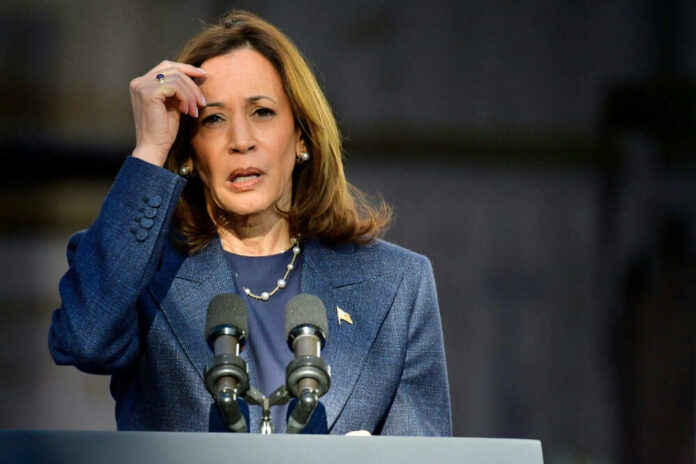
(PatriotNews.net) – Kamala Harris’s profanity-laced tirade over President Trump’s privately funded White House ballroom exposes the ongoing battle between conservative priorities and leftist outrage, while the Biden-era legacy of reckless spending, inflation, and government overreach still looms large in Americans’ minds.
Story Snapshot
- Kamala Harris’s expletive-filled rant targets Trump’s $300 million White House ballroom project during a government shutdown.
- The ballroom, funded by private donors, draws Democratic criticism amid looming SNAP benefit cuts.
- Trump’s dismissal of the Commission of Fine Arts escalates debate over executive authority and federal oversight.
- The episode highlights partisan divides over government spending, constitutional checks, and the future of American traditions.
Harris’s Attack on Trump’s Ballroom: Profanity, Politics, and Priorities
Former Vice President Kamala Harris, still a high-profile figure in the Democratic Party after the Biden administration’s departure, ignited headlines with her explicit criticism of President Trump’s White House ballroom proposal. Speaking on Jon Stewart’s podcast in early November 2025, Harris condemned the $300 million project as a “tone-deaf vanity project,” lambasting Trump’s priorities during a government shutdown and imminent cuts to SNAP benefits. Her language and timing struck a nerve, fueling intense debate over what matters most in times of national challenge.
Trump’s plan, which involves demolishing the historic East Wing to construct a grand ballroom, is funded entirely by private donors. Despite Democratic claims of extravagance, the project does not utilize taxpayer dollars, a key distinction for conservatives concerned about fiscal responsibility. Harris’s remarks, highlighting the contrast between luxury construction and social welfare cuts, follow years of Democratic spending that exacerbated inflation and ballooned the federal deficit, putting pressure on essential programs and everyday Americans alike.
Private Funding, Executive Authority, and Federal Oversight: What’s Really at Stake?
President Trump’s dismissal of the entire White House Commission of Fine Arts in the lead-up to the ballroom announcement intensified scrutiny of executive power and the role of oversight in public projects. By replacing commission members with his own appointees, Trump asserted the right of elected leaders to set the nation’s cultural and architectural direction, a move that conservatives argue restores accountability to the people, not unelected bureaucrats. Critics, including Harris and congressional Democrats, claim this undermines institutional checks and sets a troubling precedent for federal governance.
The controversy comes at a time when Americans, especially those over 40, remain frustrated by the left’s legacy of wasteful spending, rising prices, and government intrusion. Conservative leaders point out that the Trump administration has prioritized securing the border, protecting benefit programs for U.S. citizens, and rolling back radical agendas, delivering on promises to restore order and constitutional values. The ballroom project, while symbolic, is now a litmus test for the country’s direction: individual liberty and private generosity versus bureaucratic control and performative outrage.
Partisan Fallout: SNAP, Symbolism, and the Fight for American Traditions
The timing of the ballroom controversy, coinciding with the expiration of SNAP benefits for millions of Americans, has become a rallying cry for Democrats. Harris’s remarks, widely circulated in the media, frame the project as elite privilege at the expense of the vulnerable. Yet, conservative supporters note that the real erosion of social programs began under the previous administration’s fiscal mismanagement, not Trump’s privately funded initiatives. The debate has also reignited concerns over constitutional checks, government overreach, and the preservation of American heritage in the face of rapid change.
Experts from across the political spectrum acknowledge that the project’s long-term impact will depend on its execution and public use. Supporters argue that a new ballroom could serve state functions and national celebrations for decades, funded without burdening taxpayers. Critics warn of “dangerous optics,” but concede that private investment in federal projects is not without precedent. As the dust settles, the ballroom debate stands as a symbol of broader ideological battles, over spending, tradition, and the role of government in American life.
Political, Economic, and Social Implications Going Forward
In the short term, the ballroom saga has deepened partisan divisions and amplified public scrutiny of White House decision-making. SNAP recipients, White House staff, and the wider public all feel the immediate effects, from benefit cuts to the disruption of longstanding traditions. Over the long haul, the project could reshape the architectural legacy of the White House, set new standards for private funding of public works, and redefine the bounds of executive authority.
For conservatives, the episode is a reminder that American values, individual freedom, limited government, fiscal sanity, and respect for tradition, remain under constant attack from those willing to use any controversy for political gain. The focus now turns to how the Trump administration and its supporters will defend these principles while pushing back against the left’s narrative of outrage and victimhood. The ballroom may be just one project, but its symbolism will echo for years to come.
Copyright 2025, PatriotNews.net