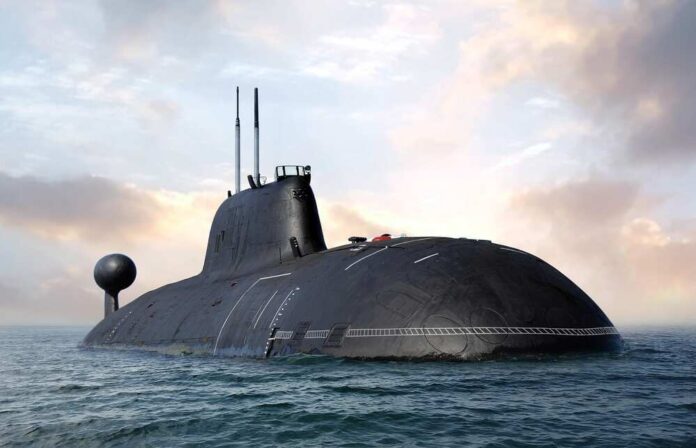
(PatriotNews.net) – When a U.S. president orders nuclear submarines to surface near a rival’s shores and dares him to end a war, or else, history’s old Cold War chills return with a modern, perilous twist.
Story Snapshot
- President Trump confirms deployment of two U.S. nuclear submarines near Russia in response to Russian threats.
- Ceasefire deadline given to Putin for the Ukraine war, backed by threats of new sanctions and tariffs.
- Russia and China intensify joint military drills in the Sea of Japan, raising global tension.
- Experts warn that public nuclear signaling drastically raises the risk of miscalculation and escalation.
Trump’s Nuclear Submarine Gambit: Open Threats, Open Waters
August 2025: President Trump goes on record, not behind closed doors but to the world, confirming the deployment of two U.S. nuclear submarines “in the region” near Russia. The move comes right after former Russian President Dmitry Medvedev publicly threatens that a U.S. ceasefire ultimatum for Ukraine could mean war. The U.S. reply isn’t subtle: nuclear firepower, surfaced and announced, with the message unmistakable, diplomacy, but with a loaded gun on the table.
Just as everyone’s eyes dart to the Pacific, Russia and China are already there, conducting joint naval drills in the Sea of Japan, practicing anti-submarine warfare and missile defense. These drills run parallel to U.S.-led exercises in the Pacific, creating a high-stakes chessboard where every move is a broadcast signal, every maneuver is a message not just to adversaries, but to nervous allies and jittery markets worldwide.
The Timeline: Deadlines, Ultimatums, and Shadow Games
Late July 2025: Medvedev’s warnings echo old Soviet bravado, if the U.S. tries to force a ceasefire, Russia will respond with force. August 1: Trump orders the nuclear submarines forward. August 3-4: He confirms deployment publicly and sets an August 8 deadline for Putin, agree to a Ukraine ceasefire or face fresh sanctions and tariffs. Meanwhile, U.S. envoy Steve Witkoff prepares for tense talks in Moscow, tasked with delivering the ultimatum face-to-face. Russia’s reply, through Kremlin spokesman Dmitry Peskov, is to downplay, dismiss, and urge “restraint,” but the signal is clear: the world is closer to the nuclear edge than it has been in years.
China, for its part, insists its drills with Russia are “not targeted at any third party.” Yet, Chinese officials simultaneously criticize the U.S. for destabilizing Asia-Pacific security, exposing the underlying power competition as less about Ukraine and more about the future balance of power in Eurasia and beyond.
The High Stakes: Risk of Miscalculation in a Three-Player Game
The U.S. and Russia own the world’s largest nuclear arsenals. Trump’s direct, public linking of nuclear deployments to diplomatic ultimatums marks a sharp departure from previous U.S. practice, where such movements stayed secret, a quiet threat, not headline news. Experts at the Nuclear Threat Initiative warn that this kind of nuclear signaling is “destabilizing and increases the risk of miscalculation,” especially with China entering the arena as Russia’s military partner. Security analysts point out that once submarine positions become public, the adversary is forced to respond in kind, escalating the game and narrowing the off-ramps for peaceful resolution.
Former diplomats and scholars of international relations echo the warning: public ultimatums and nuclear brinkmanship make compromise harder, not easier. History offers cautionary tales from the Cold War, but this standoff features not two, but three nuclear-armed powers, each with its own calculus, alliances, and domestic pressures.
Who Wins, Who Loses: Allies, Markets, and the Shadow of the Bomb
The immediate losers are the people of Ukraine, whose fate is the subject of high-stakes bargaining with nuclear weapons in the background. Russia faces increased military and economic pressure, with the threat of new sanctions looming. U.S. allies in Europe and Asia-Pacific, particularly those within missile range, watch closely, calculating their next moves in an increasingly unpredictable environment.
Markets, always sensitive to geopolitical risk, brace for shockwaves: energy prices threaten to spike on news of potential sanctions, and defense stocks surge as governments double down on military readiness. The broader defense industry, meanwhile, stands to benefit from a renewed focus on deterrence and rapid deployment. Yet the true cost, public anxiety, the risk of accidental war, and a potential new arms race, cannot be measured on a balance sheet.
Copyright 2025, PatriotNews.net