
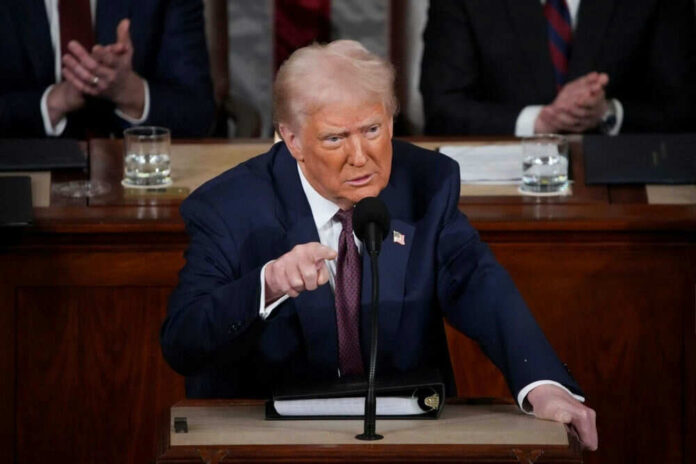
(PatriotNews.net) – When nearly 500 workers were swept up in the largest workplace immigration raid in U.S. history, President Trump’s blunt demand to foreign companies, “Hire and train American workers”, sent shockwaves through the heart of global manufacturing and American politics.
Story Snapshot
- Trump responded to an ICE raid at Hyundai’s Georgia battery plant by insisting foreign firms prioritize American workers.
- 475 workers, mainly South Korean nationals, were detained, sparking diplomatic negotiations between the U.S. and South Korea.
- The raid marks a pivotal moment in U.S. immigration enforcement and labor policy, directly affecting foreign investment strategies.
- Trump’s stance could reshape how global companies approach hiring, training, and compliance in the American marketplace.
Trump’s Ultimatum: A New Era for Foreign Investment
President Trump’s demand landed with the force of a sledgehammer just days after the September 4, 2025, ICE raid at Hyundai’s electric vehicle battery plant construction site in Georgia. ICE detained 475 workers, a majority of whom were South Korean citizens brought in by contractors and subcontractors to accelerate the plant’s rapid buildout. The operation stands as the largest single-site immigration enforcement action ever conducted by the Department of Homeland Security, instantly elevating workplace raids from sporadic headlines to a central policy lever.
Trump’s response was unequivocal: all foreign companies operating on U.S. soil must “respect our Nation’s Immigration Laws” and “hire and train American Workers.” He left a narrow door open for foreign technical expertise, offering expedited legal entry for “very smart people,” but made clear that the era of unchecked reliance on imported labor was over. This approach threads a needle between the need for skilled talent and the populist “America First” promises that have become a defining feature of his presidency.
Diplomatic Shockwaves and Corporate Calculus
The raid set off an immediate diplomatic scramble. By September 7, South Korea’s government began negotiations to secure the release and repatriation of over 300 detained nationals, highlighting how immigration enforcement can reverberate well beyond U.S. borders. Hyundai, a flagship investor in America’s electric vehicle future, faced not only project delays but also a reputational challenge: how to reconcile its global ambitions with the realities of U.S. labor law and presidential politics.
The tension was palpable. Foreign investment in high-tech manufacturing has long been welcomed for the jobs and innovation it brings, but this incident exposed a fault line in the relationship: when does global capital serve American interests, and when does it undermine them? For Hyundai and other foreign firms, the message was clear, compliance is no longer just a matter of paperwork, but a test of corporate citizenship.
Ripple Effects: Local Communities and Industry Trends
The impact of the raid rippled through Georgia’s local economy and immigrant communities. Hundreds of families faced sudden uncertainty, and the plant’s construction timeline was thrown into disarray. Labor advocates seized the moment to call for stronger protections for workers, both native-born and foreign, while business leaders warned that aggressive enforcement might chill further investment in U.S. manufacturing, especially in sectors where skilled labor is scarce.
Academic voices weighed in, noting the delicate balance between enforcing immigration law and maintaining a competitive edge in industries such as electric vehicles. Some argued that raids of this magnitude could undermine trust between corporations and law enforcement, while others insisted that strict oversight is necessary to protect domestic workers from wage suppression and exploitation. In the end, the Hyundai raid has become a case study in the complex interplay between globalization, enforcement, and national priorities.
Looking Forward: Policy, Precedent, and Power Plays
The ICE operation and Trump’s subsequent statement mark a watershed moment in American labor policy. Short-term disruptions, including project delays and diplomatic negotiations, have already begun to reshape the landscape for multinational investors. Long-term, foreign firms may face pressure to invest more heavily in local workforce development, reevaluate their contractor practices, and adapt to a regulatory climate that places American employment at the center of every business decision.
Trump Demands All Foreign Firms 'Hire and Train American' After Hyundai ICE Raid https://t.co/FahES0PfHz
— Mediaite (@Mediaite) September 8, 2025
As the dust settles, the story remains unfinished. Will Trump’s ultimatum lead to a renaissance of American manufacturing and skilled job creation, or will it prompt foreign companies to think twice before setting up shop? The answer will hinge on how future enforcement actions unfold, and whether America can balance its need for innovation with its political and social priorities. One thing is certain: the old rules no longer apply, and every stakeholder, from Hyundai’s boardroom to the floor of Congress, is now recalibrating their approach to the American dream.
Copyright 2025, PatriotNews.net