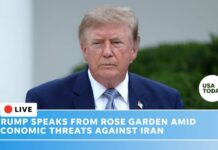
President Trump has hit pause on new strikes against Iran, saying the U.S. is “very far along” on a deal that could reopen the Strait of Hormuz and stop Iran from ever getting nuclear weapons.
Story Snapshot
- Trump has suspended planned U.S. attacks on Iran after saying key military goals have already been met.
- The White House and President Trump claim the pause is to give diplomacy time and finalize a deal on Hormuz and Iran’s nuclear program.
- Iran and several Middle East governments have asked Washington to hold off strikes while talks continue.
- The pause raises big questions at home: is this smart dealmaking, or a dangerous gamble that leaves Americans exposed to a hostile regime and unstable oil markets?
Trump Says Strikes Pause Is Tied To A Fast-Tracked Deal
President Trump has ordered a halt to new bombing and missile strikes on Iran, even after nearly two weeks of heavy U.S. attacks across the country and around the Strait of Hormuz. In a recent statement, he said the U.S. has “already met and exceeded all Military objectives” and is “very far along with a definitive Agreement” for long-term peace. He linked the pause directly to reaching a rapid deal that would fully reopen Hormuz and end Iran’s nuclear threat.
Trump has also told Americans that this pause is not a sign of weakness, but part of a larger plan. He said the U.S. received a 10‑point proposal from Iran that he believes is a “workable basis” for talks. The deal, as he describes it, would guarantee “NO NUCLEAR WEAPONS FOR IRAN!” and secure shipping through the Strait of Hormuz, a key waterway for global oil and trade. He has warned, however, that the pause is time‑limited and depends on Iran following through.
Middle East Allies And Iran Push For A Pause In Fighting
Trump says he hit the brakes in part because allies in the region pressed him to do it. Leaders from Saudi Arabia, Qatar, the United Arab Emirates, Pakistan, and others told him they were close to a diplomatic breakthrough and asked for a short window without new U.S. strikes. Reuters reports that Iran has responded by holding off its own attacks as long as Washington keeps its bombing pause, signaling that both sides are testing a fragile stop to open warfare.
These governments do not act out of pure goodwill. They rely on open sea lanes, stable oil exports, and some level of calm to protect their own economies and ruling elites. A wider U.S.–Iran war could wreck energy markets, spike fuel prices for American and European families, and threaten local regimes that already face angry populations. By urging Trump to pause, they are trying to shape a deal that protects their interests, even as many U.S. voters worry that foreign players and unelected “experts” have more sway over American policy than regular citizens do.
Diplomacy, Missile Stockpiles, And Deep State Concerns
Top officials close to Trump say openly that the main reason for the pause is diplomacy. The U.S. ambassador to the United Nations, Mike Waltz, told broadcasters that Trump is “giving talks some space” and “a little bit of room,” and that negotiations over Hormuz and Iran’s nuclear program are making progress. Analysts note that this kind of framing is common in wartime, when leaders need to look strong yet flexible while they weigh next steps.
President Trump has held off on ordering strikes against Iran after receiving assurances from regional intermediaries that a deal to secure shipping through the Strait of Hormuz is close. Officials said the pause came in the last 48 hours as Qatar and Oman relayed a framework… pic.twitter.com/SlXxQOUHFa
— AFRICA IS HOME GLOBAL (@AfricaisHOME2) August 2, 2026
At the same time, reports point to harder military and economic realities behind the scenes. Some coverage says U.S. missile and munition stockpiles have been stretched by days of constant strikes, and that oil prices have spiked back above $100 a barrel. That feeds a familiar fear on both the right and the left: Washington starts wars, then pauses them mid‑stream, not because working Americans are safer, but because elite planners, defense contractors, and global energy markets need a breather.
What This Pause Means For Americans At Home
For many citizens, the pause does not look like a clean win or loss. Conservatives who backed Trump’s “America First” stance want Iran’s nuclear program crushed and shipping lanes secured, but they also worry that the U.S. might settle for another half‑deal that lets a hostile regime regroup and threaten American troops and allies later. Liberals who distrust military action fear a return to full war, yet question whether Trump’s promises of “longterm PEACE” are realistic or simply political messaging.
Across the political map, a growing number of people see the same pattern. Washington pushes into another foreign conflict, then talks about “space for diplomacy” once things get messy and expensive. Deals are shaped in closed meetings with generals, ambassadors, and foreign leaders, while ordinary Americans deal with higher gas prices, market swings, and the risk of another forever war. Trump’s pause on Iran strikes could stop a dangerous escalation. It could also remind many that, once again, decisions that may change the course of their lives are being made far from any real public say.
Sources:
cnn.com, bbc.com, reuters.com, youtube.com, aljazeera.com, cnbc.com, foxnews.com, bbc.co.uk
© patriotnews.net 2026. All rights reserved.