
The Pentagon says it will livestream the December 3 firing squad execution of the Fort Hood shooter, an unprecedented step that could reset how America sees state punishment.
Story Snapshot
- Pentagon officials confirmed the execution will be livestreamed to the public.
- Officials scheduled the execution at Fort Hood at 1 p.m. Central Time on December 3, 2026.
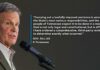
- Defense Secretary Pete Hegseth said the goal is to show “serious consequences” for mass attacks.
- Experts call the move unprecedented and raise moral and procedural concerns.
Pentagon Confirms Public Livestream of Execution
Pentagon officials told reporters the Army will stream the firing squad execution of Nidal Hasan, the former Army major convicted of killing 13 people and wounding 32 at Fort Hood in 2009. Officials said details on access would follow, but the decision stands. Reuters, the Associated Press, and major networks reported on-the-record confirmation after Defense Secretary Pete Hegseth publicly described the event as viewable by the public. This marks a first in U.S. practice, according to multiple outlets.
Officials set the execution for 1 p.m. Central Time on December 3 at Fort Hood, aligning with the weekday and time associated with the original attack, according to reporting that cited Hegseth and Army statements. Supporters frame the timing and location as symbolic accountability linked to the crime scene. Reporters also noted that further legal challenges remain possible before the date, which could affect timing or conditions even if the stream proceeds.
Government’s Rationale and What Is Still Unknown
Defense Secretary Hegseth said the public should be able to watch to understand that “there’s serious consequences” for such acts, presenting deterrence and transparency as the goals. However, officials have not shared the access rules, camera controls, delays, or survivor protections. There is no released directive that explains the legal authority for a livestream or how it fits with Army execution procedures, which normally limit observers and manage media after notifications. Those gaps invite questions now, not later.
Existing Army rules describe tight control of witness access and media activity in corrections facilities, with releases coordinated only after required notifications. Past military manuals banned photos or filming of executions except for official purposes. That history helps explain why legal and ethics experts call the livestream plan unusual and risky. Without a clear protocol, the public cannot judge how the government will protect dignity and safety while making the act visible.
Unprecedented Move Sparks Broad Ethical Debate
News outlets and scholars say the United States has never livestreamed an execution, underscoring how far this departs from standard practice. Legal experts warn public broadcasts could turn punishment into a spectacle or harm survivors. Geoffrey Corn said the plan raises serious moral questions, adding that normal protocols limit observers to victims’ families and certain media, not a mass audience. Critics argue that visibility without strict rules can desensitize viewers rather than educate them.
The Pentagon has confirmed plans to livestream the December 3 firing squad execution of Nidal Hasan, convicted of killing 13 people in the 2009 Fort Hood shooting. Defense Secretary Pete Hegseth backed the decision to make the execution public, which would mark the first U.S.… pic.twitter.com/uznGBO47H4
— TalkRadio 77 WABC (@77WABCradio) October 9, 2026
Supporters answer that the crime and sentence are already a matter of record, and that public access promotes accountability. They claim a visible penalty can deter future attacks and rebuild trust in a system many believe is too distant and opaque. But that claim remains an assertion, not proven fact. The strongest path forward is sunlight with guardrails: a written plan that sets access limits, delay buffers, content standards, and protections for families and personnel.
Sources:
cbsnews.com, reuters.com, nbcnews.com, straitstimes.com, abcnews.com, axios.com, thedailybeast.com, bbc.co.uk
© patriotnews.net 2026. All rights reserved.