The Pentagon quietly flew every U.S. bomber out of a British base after officials warned of a possible Iran-linked drone strike on the installation.
Story Snapshot
- The Pentagon confirmed all U.S. bombers left Royal Air Force Fairford for home stations in the United States.
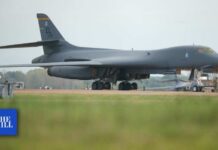
- Major outlets reported about a dozen B-1 bombers were moved after warnings tied to Iran’s Islamic Revolutionary Guard Corps.
- U.S. officials said the decision followed existing threat reporting and was a precaution, not panic.
- President Trump and Vice President Vance linked the move to a specific threat against the base.
Pentagon Confirms Complete Bomber Withdrawal From U.K.
U.S. European Command said all U.S. bombers deployed to Royal Air Force Fairford returned to their home stations in the United States on October 4. The statement confirmed a full withdrawal but did not list aircraft types or numbers. Associated Press and Reuters reporting identified the force as about a dozen B-1 bombers that had operated from the Gloucestershire base in recent months. The relocation ended a high-profile forward presence that supported strike and deterrence missions tied to ongoing tensions with Iran.
White House leaders framed the action as a protective step. Vice President JD Vance said the move came “out of an abundance of caution,” while President Trump said a direct threat targeted the installation. Pentagon officials avoided operational details. They cited force protection concerns as the reason for not sharing more. Federal leaders often balance public awareness with mission security in fast-moving threats, especially when aircraft on open ramps are at higher risk.
Threat Reporting Pointed to Possible Iran-Linked Drone Plot
The New York Times and other outlets reported that U.S. and British officials warned of a potential drone attack ordered by Iran’s Islamic Revolutionary Guard Corps, with the Royal Air Force Fairford base among the concerns. NBC News reported that the redeployment fit existing warnings and was not a response to a new and separate incident. Reuters and Associated Press said the Iran-linked threat picture helped drive the choice to move the bombers quickly from the exposed airfield back to the continental United States.
Recent law enforcement actions in the United Kingdom added urgency. Associated Press reported that a dual British-Iranian national was arrested in London after a late-September security incident near Royal Air Force Fairford. Officials did not release charging documents or timelines for the public. But the arrest, combined with multi-source intelligence reporting, pushed commanders toward a low-regret decision: remove valuable aircraft from a potential target while investigators worked the case.
Why Moving Bombers Matters: Protection, Deterrence, and Signaling
Bomber moves from forward bases are about more than flight plans. They are about risk and message. Commanders protect crews and aircraft if they believe a strike is possible. They also send signals to allies and rivals. The withdrawal reduces exposure but can affect sortie times and access to European logistics. Analysts noted that these choices are common in tense periods and are meant to keep options open while threats are assessed and mitigated.
The action also shows how drones have changed base defense. Unmanned systems can be cheap, quiet, and hard to stop. They threaten large aircraft parked in the open. That reality has forced the United States and allies to harden perimeters, improve radars, and disperse assets faster. The Washington Post highlighted the growing risk to overseas bases as drones and sabotage tactics spread to more actors tied to Iran and beyond.
What We Know, What We Don’t, and Why It Resonates at Home
The core facts are clear: the Pentagon confirmed the withdrawal; major outlets reported roughly a dozen B-1s moved; leaders tied the move to threat reporting about an Iran-linked plot; and a related arrest occurred in London. Officials have not shared the underlying intelligence or a full decision timeline, citing security needs. That is common in active cases. But it leaves the public with actions and attributions instead of documents.
The Pentagon has pulled all U-S aircraft from the U-K airbase that was the target of an alleged terror plot last week..
NewsNation's Joe Khalil…: “There was a sense that this needed to be done very quickly on the part of US European Command. This is the statement from the… pic.twitter.com/8dMpEyf6A8— Worldwide News Network (@WorldwideNNX) October 5, 2026
Many Americans see a bigger theme. They worry that powerful players make fast, secret calls while citizens face high costs and rising risks. In this case, the government acted to protect aircrews and billions in hardware. That is its job. But the pattern also shows how modern threats can outpace old systems. People on both the right and the left want strong defense and real accountability. They also want clear goals, fewer endless crises, and a government that puts safety and honesty first.
Sources:
pbs.org, nbcnews.com, abcnews.com, aljazeera.com, nytimes.com, politico.com, theintercept.com, foxnews.com
© patriotnews.net 2026. All rights reserved.