
Iran’s decision to pound U.S.-linked bases across the Gulf while claiming to shut the Strait of Hormuz shows just how quickly a distant fight can threaten America’s economy, energy supplies, and troops at the same time.
Story Snapshot
- Iran’s Islamic Revolutionary Guard Corps says it hit multiple U.S-linked bases in Kuwait, Bahrain, Qatar and Jordan with missiles and drones, calling the strikes “retaliation” for fresh U.S. attacks inside Iran.
- Tehran claims the Strait of Hormuz is “closed” until U.S. military strikes and what it calls “interference” in the region stop, directly threatening a waterway that carries about one-fifth of the world’s oil.
- U.S. Central Command says its recent strikes on Iranian military targets were responses to attacks on commercial shipping and earlier hits on American forces and assets.
- Gulf nations hosting U.S. bases are again caught in the middle, suffering damage, civilian fear, and economic risk because foreign powers are using their territory to wage a larger fight.
Iran’s New Wave of Strikes on U.S.-Linked Gulf Bases
Iran’s Islamic Revolutionary Guard Corps says it launched a major missile and drone attack on U.S-linked bases across the Persian Gulf, including sites in Kuwait, Bahrain, Qatar and Jordan. Press reports and state media describe coordinated night-time salvos hitting Ali Al-Salem Air Base in Kuwait and facilities tied to the U.S. Fifth Fleet in Bahrain. Iran frames the operation as direct payback for recent American strikes on Iranian territory and coastal targets. Video from the region shows explosions, air raid sirens, and interceptor missiles lighting up Gulf skies as local defenses tried to stop incoming fire.
Iranian officials say these attacks were carried out jointly by their navy and aerospace forces and timed closely after U.S. Central Command announced new strikes on more than one hundred Iranian military sites. U.S. releases describe those earlier actions as “self-defense” and “retaliatory” strikes after an Iranian attack on a commercial ship in or near the Strait of Hormuz. This latest round continues a pattern seen since 2023, where blows on Iranian nuclear or military facilities are quickly followed by Iranian missile and drone fire on U.S. bases in nearby countries.
Tehran’s Claim: Strait of Hormuz “Closed” Until U.S. Backs Off
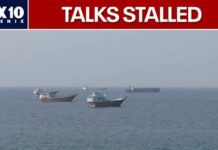
After the U.S. strikes, Iranian state media announced that the Strait of Hormuz is “closed” and will stay closed until American military actions in the region end. Iranian lawmakers and commanders have long warned they might shut this narrow waterway if they felt their survival was threatened by U.S. or Israeli attacks on nuclear sites. About twenty percent of the world’s oil and gas moves through this strait, so even talk of closing it shakes global markets and raises the risk of higher fuel prices for families back home.
At this stage, outside analysts say there is heavy disruption and risk in and around the strait, but they are still working to confirm how fully shipping has stopped. U.S. officials insist they are acting to protect commercial vessels and keep energy lanes open after Iran struck ships and tried to use the strait as a pressure point. Whatever the exact level of closure, ordinary people see the same troubling pattern: far-off military tit-for-tat can quickly hit gas prices, supply chains, and retirement accounts while the leaders driving it seem insulated from the pain.
Gulf Hosts Caught Between Foreign Forces and Local Lives
Kuwait, Bahrain, Qatar and other Gulf states host large U.S. military installations that Washington portrays as shields against Iranian aggression. Iran now says those very bases are the reason it attacks these countries, sending “thousands” of drones and missiles at sites that share space with civilian neighborhoods and vital infrastructure. Recent analysis suggests early Iranian strikes during this war caused about $800 million in damage to U.S-used military facilities, including radar stations and satellite communication hubs across the region.
Satellite imagery and independent reviews show repeated damage at air bases such as Ali Al-Salem in Kuwait and Al-Udeid in Qatar, along with hits on U.S. naval radar in Bahrain. Local people in these host nations report fear, economic strain, and rising anger about being turned into battlefields because powerful states placed major weapons hubs next to their homes. Many Americans watching from afar share a similar frustration: the United States government keeps expanding foreign commitments and bases, but ordinary citizens shoulder the costs when those sites are attacked and global energy markets surge.
Endless Retaliation and a Growing Sense of Betrayal
Since 2020, U.S. and Israeli airstrikes on Iranian nuclear and military targets have been followed again and again by Iranian “retaliation” against U.S. bases and assets in the wider Middle East. Iran and its allies call these responses lawful self-defense, while the United States and Gulf governments call them unprovoked assaults that break international rules. Each side uses legal language and patriotic slogans to justify the next round, but neither side has given the public a clear path to end the cycle.
Bandar Abbas, Qeshm, Sirik and Jask form a strategic chain around the Strait of Hormuz and the Gulf of Oman. Together these locations support the system Iran uses to monitor shipping, move naval forces and threaten access to the Gulf.
Reports of explosions do not confirm which… https://t.co/002Ns7Hatf
— EndGame Macro (@onechancefreedm) July 13, 2026
For many Americans on the right and left, this latest clash feeds a deeper belief that the federal government and foreign “elites” keep playing power games while regular people pay in money, risk, and trust. Conservatives angry about globalist wars and high energy costs see another example of Washington placing U.S. troops and assets in harm’s way without fixing problems at home. Liberals worried about inequality and endless conflict see more money for missiles and bases while communities struggle for basic security and opportunity. As Iran and the United States trade blows over ships, bases, and straits, both sides’ citizens are left wondering who is really being protected.
Sources:
feedpress.me, irishtimes.com, youtube.com, migflug.com, alhurra.com, nytimes.com, csis.org, centcom.mil, facebook.com, bbc.com, reddit.com
© patriotnews.net 2026. All rights reserved.