
President Trump told Americans to accept paying a bit more for gas to stop Iran from getting a nuclear weapon, tying family budgets to a high-stakes security goal.
Story Snapshot
- Trump said slightly higher gas prices are worth it to block Iran’s nuclear ambitions.
- He called the financial pinch “peanuts” next to the risks of a nuclear-armed Iran.
- Rising prices track global oil shocks worsened by tensions around the Strait of Hormuz.
- Americans across party lines see elites making choices that hit working families first.
Trump’s Message: Security Over Pump Prices
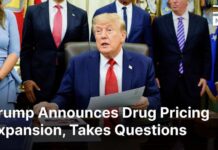
President Trump urged Americans to accept slightly higher gasoline prices while the conflict with Iran continues. At a rally in Garden City, New York, he said paying “a tiny little bit more” is worth ensuring Iran does not obtain a nuclear weapon, which he called an unacceptable threat. In earlier remarks, he framed the financial strain as “peanuts” compared with the danger of a nuclear-armed Iran, and said prices would not stay elevated for long. His message links daily costs to national security choices.
The president’s comments reflect a classic tradeoff. Leaders often argue that short-term economic pain supports long-term safety goals. Trump’s framing sets a clear priority: stopping Iran’s nuclear program is the higher aim, even if families feel the squeeze at the pump. The White House has also said prices should ease if a deal is reached, or after operations conclude, but it has not provided a firm timeline for relief. That uncertainty keeps pressure on household budgets.
Why Gas Prices Jump During Geopolitical Crises
Energy experts point to the mechanics behind the spike. Gas prices usually move with crude oil, which is priced on global markets. Disruptions abroad can raise pump prices at home, even when domestic production is strong. The Strait of Hormuz carries a large share of the world’s oil. When shipping slows or stops there, global supply tightens and prices climb. Analysts link recent increases to risks and restrictions in that narrow waterway. These forces filter quickly into American wallets.
Research shows that markets add a “risk premium” when conflict threatens supply routes. Major banks have estimated meaningful per-barrel add-ons tied to Gulf tensions, with the size depending on how long and how hard transit is hit. Past government and academic analyses reach the same point: sanctions, blockades, or strikes can upend flows and trigger broad price jumps that outlast the first shock. This is why policy moves far away can feel like an immediate tax on drivers at home.
The Human Impact and the Political Risk
Families living paycheck to paycheck notice even small jumps in gas prices. Higher fuel costs raise the price of commuting, food, and shipping. They also widen the gap between those with margin and those without. That strain fuels anger on the right and left toward leaders who appear insulated from the fallout. Trump’s “peanuts” line may land as blunt truth to some and as out of touch to others, but either way it acknowledges a cost many Americans cannot avoid.
For any president, gas prices are a political hazard. Voters often blame the person in the Oval Office, even when global events drive the change. Research has found that perceptions of pump prices and leadership are tightly linked, regardless of the complex market forces at work. This dynamic helps explain why the White House stresses that price pain is temporary and tied to a larger mission. It also explains why critics seize on every uptick as proof of policy failure.
What Relief Could Look Like—and Limits
Trump has said prices should fall “not much longer,” especially if talks succeed or operations wind down. Lower risk in the Strait of Hormuz would likely ease crude prices and, in time, gas prices. But such relief usually lags. Fuel inventories, refinery schedules, and shipping all take time to reset. Analysts warn that even partial disruptions can keep a floor under prices for months. The timing and scope of any decline depend on events well beyond a single policy lever.
Niall Stanage says Trump is leaning on defensive rhetoric to contain the political fallout from soaring gas prices arguing that an unpopular Iran war is becoming increasingly costly at home and forcing the administration to reshape its message#NYI pic.twitter.com/XJjHbBaWyO
— NewYork-Insight (@NewYork_Insight) August 15, 2026
Americans want safety and solvency at the same time. Many also feel the system asks working people to carry the heaviest load while elites make the calls. Trump’s argument puts a clear stake in the ground: accept a short-term hit to stop a long-term danger. The open question is how long “short-term” lasts. Until risk eases in the Gulf, the forces that set global oil prices will keep testing family budgets—and the promises made by those in power.
Sources:
feedpress.me, yahoo.com, usatoday.com, youtube.com, hks.harvard.edu, americansecurityproject.org, washingtonpost.com
© patriotnews.net 2026. All rights reserved.