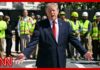

At a rescheduled White House Correspondents’ Dinner held after an assassination attempt, President Trump used a night meant to honor press freedom and bravery to both praise his protectors and hammer his critics in the media and politics.
Story Snapshot
- The dinner was moved to July 24 at the Waldorf Astoria after gunfire and an alleged attempt to kill President Trump shut down the April event.
- President Trump insisted the event be rescheduled, saying canceling it would let “lunatics” change American life and that “the show must go on.”
- The rescheduled dinner honored journalists, scholarship students, hotel staff, and a wounded Secret Service officer, but Trump also used his speech to attack the press and political opponents.
- Heavy security, a smaller venue, and Trump’s “unifying yet vicious” tone turned a traditional press gala into a stark picture of rising political tension and public distrust of national institutions.
From Shooting Scene to Symbolic Comeback
On April 25, the original White House Correspondents’ Dinner at the Washington Hilton ended suddenly when a man rushed a security checkpoint with guns and knives in what prosecutors call an attempt to assassinate President Trump and other officials. Secret Service agents shot the suspect, and one officer was hit, though his protective vest stopped the bullet. President Trump, Vice President JD Vance, lawmakers, and journalists were evacuated as the event was canceled and the ballroom cleared.
Within hours, President Trump said the dinner must be rescheduled and vowed it would not be canceled because of violence. White House Correspondents’ Association President Weijia Jiang later announced that the group would hold a “redo” of the annual gala, stressing that an act of violence would not “have the final say” over a tradition meant to celebrate the First Amendment and the role of a free press. Both Jiang and Trump confirmed the new date in July, framing it as a sign of resilience.
A Smaller, Heavily Guarded Press Gala
The rescheduled dinner took place on July 24 at the Waldorf Astoria hotel on Pennsylvania Avenue, a smaller and more tightly controlled venue than the Washington Hilton. Reporters described visible security barriers, separate entrances for hotel guests and dinner attendees, and Secret Service officers posted beyond the usual “clean zone” around the ballroom. The association also tightened access rules and promised “significantly enhanced safety measures and new access procedures” after facing criticism for security lapses at the April event.
White House officials said threats were “off the charts” ahead of the dinner, underscoring how political events now carry the feel of a high-risk operation rather than a civic celebration. For many Americans, that image fits a growing belief that Washington protects its own while regular citizens still face crime, economic strain, and chaos in daily life. The move to a hotel that previously operated as Trump’s own property also highlighted how the lines between government, media, and business elites can blur, feeding suspicion on both the right and left that powerful insiders share space even as they argue in public.
Trump’s Message: Honor, Humor, and Harsh Attacks
President Trump opened his speech by condemning political violence and praising the Secret Service officer wounded in the April incident, along with other agents who responded. The program honored that officer, hotel staff who helped evacuate guests, student scholarship winners, and reporters recognized for their work, reinforcing the dinner’s traditional role as a tribute to press freedom and public service. On the surface, this looked like a rare moment where government, media, and citizens were united against violence.
Trump to Attend White House Correspondents’ Dinner After April Assassination Attempthttps://t.co/c5k0kR5biG
— Nerd Nation (@Nerditupnation) July 25, 2026
The tone shifted as Trump moved deeper into his remarks. According to reporters in the room, he spoke for about an hour and “lobbed insults” at political rivals and media outlets, mocking specific journalists and Democrats rather than focusing on policy. White House press secretary Karoline Leavitt had previewed the speech as “unifying yet vicious and serious yet hilarious,” signaling that sharp attacks were part of the plan rather than off-the-cuff outbursts. In one notable line, Trump joked about a future “third term,” playing into fears held by some Americans that leaders on both sides want to bend rules to hold onto power.
Why This Night Matters Beyond Washington
For many conservatives, the attempted assassination confirms long-standing worries about growing political hatred and weak law and order, while the rescheduling looks like a needed show of strength against threats. For many liberals, the idea of Trump turning a violence-marked event into a stage for attacks on the press reinforces concerns about authoritarian behavior and shrinking space for dissent. Yet both sides share a deeper frustration: even an event built to honor a free press and courage under fire quickly became another arena for elite image-making, jokes, and partisan point-scoring.
The dinner’s return under higher security and sharper rhetoric illustrates a wider trend. Major national rituals now double as controlled spectacles where leaders claim unity while acting in ways that highlight division. Ordinary Americans watching from home see politicians, journalists, and corporate figures dining together in a guarded ballroom after an assassination attempt, and many conclude that the “show must go on” mainly for the insiders. That feeling feeds the belief, common on both the right and the left, that the federal government and its partners in big media protect their own status first and address the country’s deeper problems only when forced.
Sources:
feedpress.me, usatoday.com, politico.com, washingtonpost.com, youtube.com, abcnews.com, bbc.com, axios.com, npr.org, abcnews4.com
© patriotnews.net 2026. All rights reserved.