

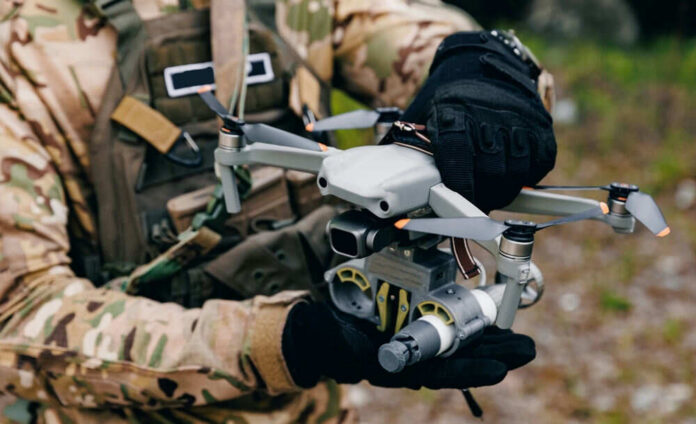
The Pentagon’s Drone Dominance program just moved to buy 4,000 U.S.-built one-way attack drones designed for swarm control by a single operator, marking a fast-track shift in how America fights and deters threats.
Story Snapshot
- Swarm Defense says it received an order for 4,000 Kiwi attack drones under Drone Dominance.
- The order has a minimum value of $25 million and includes munitions.
- The award followed “Gauntlet II” field tests with military operators at Fort Carson.
- Reports say Kiwi is a U.S.-built swarm platform geared for one-way attack missions.
What The Pentagon Ordered And Why It Matters
Swarm Defense Technologies announced a prototype delivery order for 4,000 Kiwi one-way attack drones as part of the Department of Defense’s Drone Dominance program. The company said the order’s minimum value is $25 million and includes munitions. This step signals the Pentagon’s push to buy low-cost, expendable drones at scale for rapid use. These systems are meant to saturate defenses, strike key targets, and give U.S. forces a fast, flexible option in future fights.
The company frames Kiwi as a coordinated one-way attack swarm system that a single operator can direct, linking the buy to the program’s emphasis on mass and control at scale. Media reports echo three points: 4,000 aircraft, a single-operator swarm-control concept, and U.S. production in Michigan, which ties to reshoring goals and supply security. Together, the order and messaging show how the Pentagon aims to cut costs, speed delivery, and field many drones rather than a few exquisite systems.
How The Drone Dominance Pathway Works
The award followed “Gauntlet II” at Fort Carson, Colorado, where military operators flew competing aircraft in live, unscripted missions. That format reflects a newer buying path that emphasizes hands-on trials followed by quick prototype orders. Earlier coverage showed the Pentagon named 25 vendors to compete in Phase I and planned about $150 million in prototype delivery orders, showing a clear competitive pipeline that moves from test events to deliveries. This model aims to speed results while keeping pressure on performance.
Program language like “prototype delivery order” signals this is not a full-rate production deal. It is a funded step to buy and field testable quantities fast. That can still be a big milestone. It means troops will receive real systems soon, and program leaders can judge them in more settings. This approach also lets the Pentagon back higher performers in later rounds while limiting risk if a design falls short under field use.
What Kiwi Brings To The Fight
Swarm Defense describes Kiwi as an “attritable” quadcopter built for coordinated attacks, training, and other roles. The company links Kiwi to the Drone Dominance gauntlet phases and highlights single-operator control for many drones, a concept that reduces manpower and speeds decisions. Syndicated reports on the order repeat these claims and note U.S. manufacturing, which supports the industrial base and reduces dependency on foreign parts during crises. These traits match the program’s need for mass, speed, and control at lower cost.
🇺🇸 Swarm Defense (@swarm_defense_) has received a prototype delivery order for 4,000 Kiwi one-way attack drones under the Department of War's Drone Dominance Program.
"The Drone Dominance Program has placed its confidence in both our aircraft and our ability to deliver them at… pic.twitter.com/d92lPN31Jn
— Counter Unmanned Systems (@CUAS_NEWS) September 23, 2026
Low-cost one-way attack drones matter because they can be produced and replaced quickly. They can stress enemy defenses by arriving in numbers and angles that are hard to stop. They also give commanders options when larger aircraft are too slow, expensive, or at risk. The Drone Dominance path encourages firms to prove value in field trials, then scale through staged orders that can expand if the systems keep meeting performance goals.
Reading The Fine Print And The Bigger Trend
Public material calls this a “prototype delivery order,” and it does not share the full contract scope, schedule, or acceptance terms. That limits visibility into exact timing and configuration. Still, the confirmed pieces are clear: a 4,000-drone buy order tied to Drone Dominance, a minimum value of $25 million including munitions, and selection after Gauntlet II testing with operators. Those facts support the view that the program is moving from trials into early fielding at meaningful scale.
This order also fits a larger shift in defense buying. The Pentagon is using competitive trials and quick-turn contracts to field many small, smart systems faster, instead of waiting years for a single perfect platform. Inside Unmanned Systems reporting on Phase I described a pathway to significant prototype deliveries across multiple vendors, showing how speed and competition now shape drone procurement. For citizens worried about waste and delay, this model aims to deliver real capability sooner and for less.
What To Watch Next
Key markers include delivery pace, unit cost trends, training timelines, and how often units actually use Kiwi in exercises. Program leaders may run more gauntlet events, adjust order sizes, or add new mission kits based on results. If single-operator swarm control proves reliable in the field, demand could rise across services. If not, the competition structure can shift awards to designs that perform better under real conditions.
For families who want a strong defense without blank checks, the signal is mixed but promising. The order is not a final program of record, but it is a concrete step to put thousands of U.S.-built drones into troops’ hands and learn fast. The country needs tools that work, at prices we can afford, from factories here at home. This milestone points in that direction while keeping pressure on results, not headlines.
Sources:
19fortyfive.com, interestingengineering.com, techwars.substack.com, swarmdefense.com
© patriotnews.net 2026. All rights reserved.