
(PatriotNews.net) – President Trump’s executive order directing federal agencies to expedite marijuana’s reclassification from Schedule I to Schedule III marks a seismic shift in drug policy, potentially ending a half-century of federal treatment that equated cannabis with heroin despite mounting scientific evidence and millions of Americans relying on state-sanctioned medical use.
Story Snapshot
- Trump signed executive order in December 2025 directing expedited rescheduling of marijuana to Schedule III, recognizing medical uses and lower abuse potential
- Over 6 million patients across 43 jurisdictions and 30,000 practitioners already use medical marijuana for 15+ conditions, creating decades-long federal-state conflict
- Rescheduling builds on 2023-2024 FDA and HHS scientific reviews but stops short of full legalization, maintaining federal controls while easing research and banking barriers
- Order also mandates new CBD/hemp regulatory framework with THC limits and real-world evidence research across multiple federal health agencies
Five Decades of Federal Prohibition Meet Scientific Reality
Since 1970, marijuana has been classified as Schedule I under the Controlled Substances Act, a designation reserved for drugs with no accepted medical use, high abuse potential, and lack of safe medical supervision. This placed cannabis alongside heroin, even as 38 states established medical marijuana programs by 2025. The disconnect intensified after California’s 1996 medical law sparked nationwide reform momentum. Between 2023 and 2024, comprehensive reviews by the FDA, HHS, and National Institute on Drug Abuse found credible scientific support for medical applications, including chronic pain management, chemotherapy-induced nausea, and treatment of anorexia. These agencies recommended Schedule III reclassification to the DEA, citing data showing more than 30,000 practitioners recommending marijuana to over 6 million patients for at least 15 medical conditions across state programs.
Trump’s Executive Action Accelerates Stalled Rulemaking Process
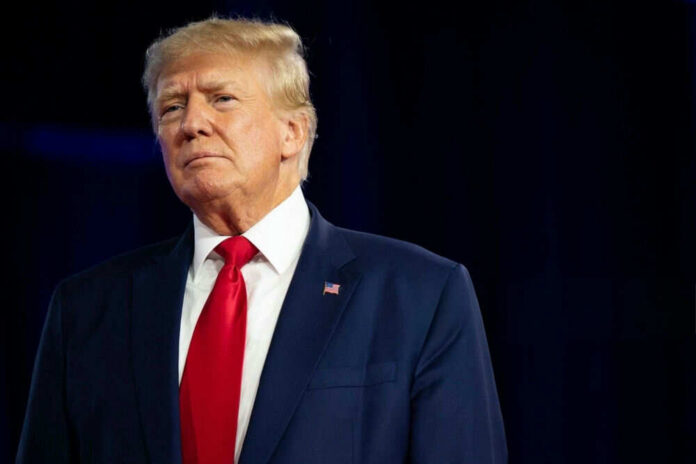
President Trump’s December 18-19, 2025 executive order directs the Attorney General and federal agencies to complete rescheduling rulemaking “in the most expeditious manner” under federal statute 21 U.S.C. 811. The DOJ had issued a proposed Schedule III rule in May 2024, receiving approximately 43,000 public comments, but the administrative process stalled pending hearings. Trump’s order injects executive pressure to finalize the change, which would reclassify marijuana alongside drugs like Tylenol with codeine rather than heroin. The administration framed the move as evidence-based policy responding to scientific consensus and patient need. Secretary Kennedy, likely Robert F. Kennedy Jr. at HHS, collaborated with Trump on the directive, which the president characterized as driven by “deep passion” for helping people access doctor-recommended treatments while protecting youth from abuse risks.
Practical Impacts for Patients, Research, and Industry
Rescheduling to Schedule III would eliminate longstanding barriers to medical marijuana research, banking access, and tax treatment that have hampered state-legal operations. In the short term, medical cannabis businesses could gain relief from Section 280E tax penalties that prohibit standard business deductions, while researchers would face fewer federal restrictions on clinical trials. Long-term implications include potential FDA approval pathways for cannabis-based medications, insurance coverage for medical marijuana, and reduced stigma for the millions of Americans using it under state law. The executive order also mandates development of a CBD and hemp regulatory framework addressing THC concentration limits, CBD-to-THC ratios, and real-world evidence collection by HHS, FDA, CMS, and NIH. These provisions respond to complexities created by the 2018 Farm Bill’s hemp legalization, which sparked an unregulated CBD market.
Bipartisan Relief Tempered by Persistent Federal-State Tensions
The ACLU hailed Trump’s action as “a significant step toward aligning federal policy with science and state realities,” with senior policy counsel Nina Patel noting it could end decades of federal-state conflict affecting 43 jurisdictions with medical programs. However, the order stops short of full legalization or descheduling, maintaining federal controls on THC products even as it acknowledges medical legitimacy. Critics note that marijuana remains a controlled substance, leaving recreational use and possession federally illegal despite state-level reforms. The approach reflects a pragmatic middle ground: recognizing medical evidence without embracing broader legalization demands. For frustrated Americans who see government paralysis on practical issues, the move demonstrates administrative action addressing a clear disconnect between federal law and scientific consensus, though many will question why it took over 50 years and executive intervention to align policy with evidence accepted by millions of patients and thousands of doctors.
BREAKING: Trump administration reclassifies medical marijuana under federal law.
Acting AG Todd Blanche signed the order shifting it from SCHEDULE I, a category of drugs with no medical use and high potential for abuse, to the much less strictly regulated SCHEDULE III.
While… pic.twitter.com/RdwcKQVw3r
— Fox News (@FoxNews) April 23, 2026
The rescheduling process now returns to DOJ rulemaking with presidential directive for swift completion, though administrative hearing requirements remain. If finalized, Schedule III classification would represent the most significant federal marijuana policy shift since the Controlled Substances Act’s enactment, potentially opening pathways for further reform while maintaining federal oversight. The order’s emphasis on data collection and real-world evidence research signals an administration attempting to balance medical access expansion with concerns about youth use and abuse potential, a reflection of the complex political terrain where bipartisan support for medical marijuana coexists with resistance to full recreational legalization.
Sources:
ACLU Responds to President Trump’s Announcement on Rescheduling Marijuana
White House Presidential Action: Increasing Medical Marijuana and Cannabidiol Research
Copyright 2026, PatriotNews.net