
(PatriotNews.net) – The fate of $4 billion in U.S. foreign aid hinges on an unprecedented legal battle that could redraw the boundaries of presidential power and congressional authority.
Story Snapshot
- Trump’s emergency Supreme Court appeal risks billions in global aid and sparks a constitutional showdown.
- “Pocket rescission” maneuver challenges historic limits on executive spending power.
- Congress, advocacy groups, and courts lock horns with the administration over aid obligations.
- Outcome may reshape future U.S. foreign aid and the balance of powers in Washington.
Trump’s Supreme Court Gambit: A Test of Power and Precedent
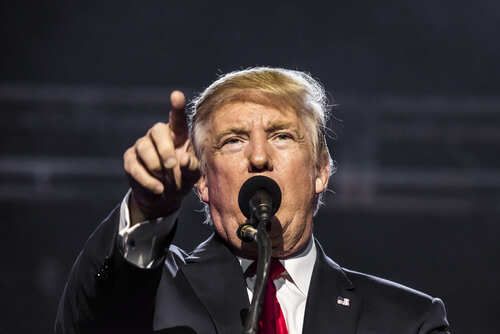
President Trump’s latest move, asking the Supreme Court to freeze $4 billion in foreign aid, has sent shockwaves through the corridors of Washington and far beyond. The administration’s request, filed on September 8, 2025, is more than a budget tussle; it’s a constitutional crucible that pits executive ambition against congressional authority. Trump’s team, led by Solicitor General D. John Sauer and Secretary of State Marco Rubio, invoked the little-known “pocket rescission,” rarely used in the past, to halt aid spending already greenlit by Congress. The maneuver sets the stage for a dramatic legal confrontation over who truly controls America’s purse strings.
Lower courts have repeatedly ordered the release of these funds, citing the Impoundment Control Act of 1974 as a firewall against presidential overreach. Judge Amir Ali’s order to obligate billions in aid within 36 hours is only the latest salvo in a year marked by rapid-fire legal battles. Congress, alarmed by perceived threats to its constitutionally enshrined “power of the purse,” stands firm against Trump’s attempts to claw back money earmarked for health, food, and development programs worldwide. Advocacy groups and foreign aid recipients, from global health NGOs to contractors, have joined the fray, arguing that any freeze would jeopardize life-saving projects from Africa to Asia.
The Pocket Rescission: Rare Executive Tool or Dangerous Precedent?
The “pocket rescission”, a procedural maneuver that allows the president to propose the cancellation of previously appropriated funds, sits at the heart of this clash. Historically, its use has been tightly circumscribed, checked by Congress and the courts since the Nixon era when impoundments prompted the passage of the 1974 Act. Trump’s reliance on this tactic, paired with repeated emergency appeals to the Supreme Court, signals a willingness to test, and perhaps shatter, established limits on executive power. Legal experts warn that if the Supreme Court sides with Trump, it could unleash a wave of future rescissions, giving presidents new latitude to reshape congressional budgets at will. Such a shift could destabilize foreign aid programs, undermining America’s diplomatic and humanitarian efforts abroad.
The administration argues that obligating the remaining $4 billion would be “self-defeating and senseless,” insisting that policy alignment and executive discretion must take precedence. Sauer’s brief describes the court injunction as a “grave and urgent threat to the separation of powers,” framing the dispute as a watershed moment for constitutional governance. Yet Congress and its allies counter that honoring appropriations is vital to maintaining the integrity of U.S. government processes. The courts, acting as arbiters, have thus far leaned toward preserving congressional authority, but the Supreme Court’s final word remains uncertain.
Ripple Effects: Aid Recipients, Contractors, and Global Stakes
The immediate fallout from the freeze is felt most acutely by aid recipients and U.S.-based contractors whose projects now dangle in legal limbo. Billions in contracts for food, medicine, and infrastructure risk disruption, with vulnerable populations facing the specter of shortages and delayed assistance. Health and AIDS advocacy organizations warn of severe humanitarian costs if the funds remain locked, while U.S. diplomatic interests could suffer as allies question the reliability of American commitments. The broader foreign aid sector braces for instability, with potential restructuring, such as Trump’s moves to dissolve USAID and transfer its duties to the State Department, adding to the uncertainty.
Economically, the freeze threatens to upend longstanding relationships between the U.S. government and its global partners. Politically, it intensifies the already fraught executive-legislative conflict, setting a precedent that may reverberate through future appropriations battles. If the Supreme Court grants Trump the authority to freeze billions in aid, Congress could see its spending powers eroded, shifting the landscape of American governance in ways not seen since the Watergate era.
The Supreme Court’s Crossroads: Constitutional Stakes and Expert Views
Legal scholars and industry experts agree that the Supreme Court’s decision will do more than resolve a budget impasse, it could redefine the checks and balances at the heart of the American system. Analysts highlight the rarity and significance of the “pocket rescission,” with some cautioning that unchecked executive authority over appropriated funds risks unraveling decades of bipartisan consensus on government spending. The Court’s upcoming ruling, expected within weeks, may either reinforce congressional primacy or mark a turning point in presidential control over the national wallet.
Coverage from major outlets such as CBS News, Axios, SCOTUSblog, and Anadolu Agency affirms the gravity of the situation. The facts are clear, the stakes are high, and the outcome will shape U.S. foreign aid, and the balance of power in Washington, for years to come.
Copyright 2025, PatriotNews.net